
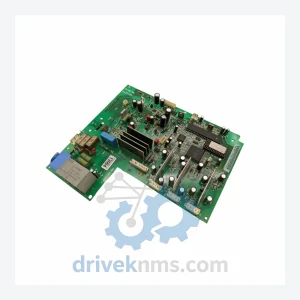
ABB SNAT-7120 Circuit Board – SNAZ7120J Series
ABB SNAT-7120 / SNAZ7120J Circuit Board: Sourcing Strategy & Asset Return Value in a Constrained Global Supply Chain The ABB…
Model: O4LE 1KHL015545R0002
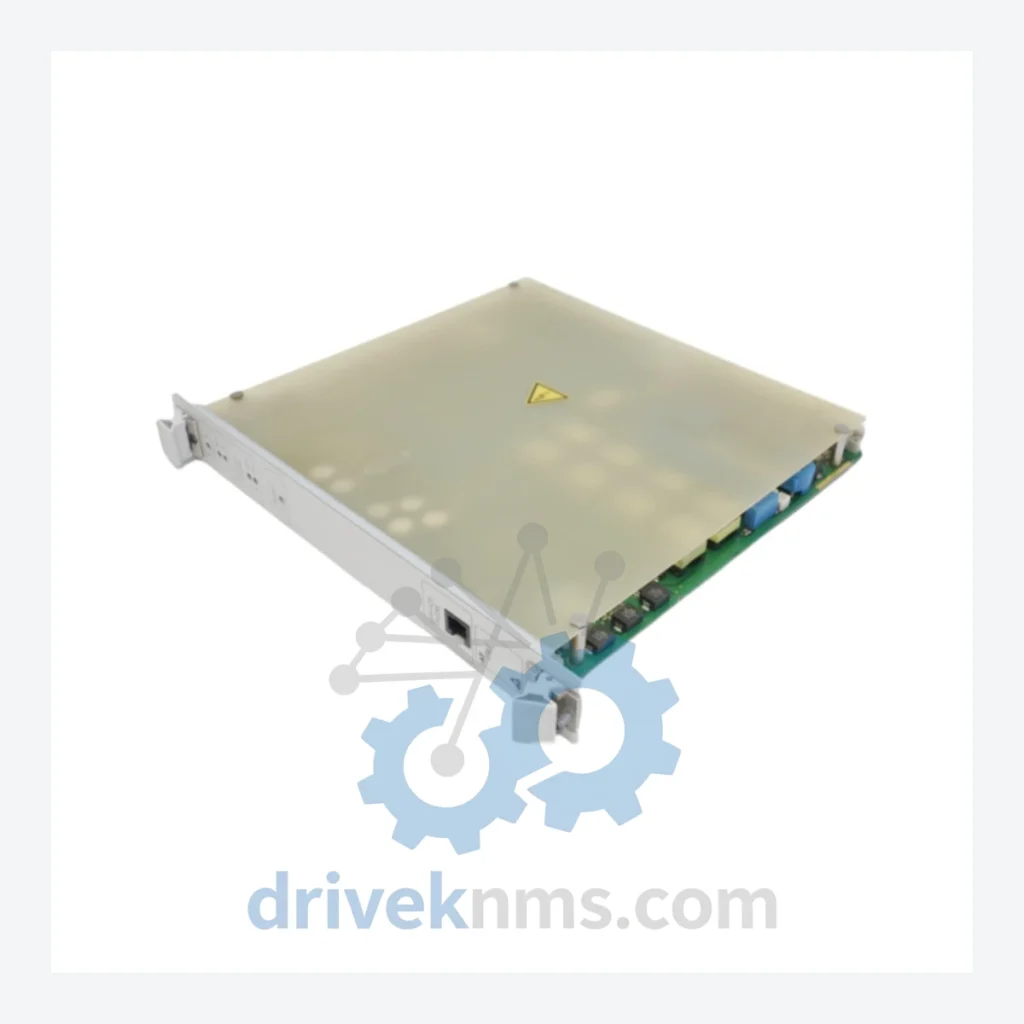
Product Overview
Commercial availability is handled through direct RFQ, model verification and export-oriented follow-up rather than public cart checkout.
Datasheet Preview
Use attached product manuals when available. If the manual is not public yet, request the full file directly through RFQ.
Commercial Path
Product pages on DRIVEKNMS are designed to verify model, brand and series first, then move the buyer into one clean quotation path.
Technical Dossier
The ABB O4LE series represents a family of auxiliary and control relay modules deployed extensively across global heavy industry verticals, including petrochemical refineries, nuclear power generation facilities, offshore platforms, and continuous-process chemical plants. Manufactured under ABB's SACE and Low Voltage Products division, O4LE relays are engineered to IEC 60947-5-1 standards and are routinely specified in safety-critical switching, motor protection, and interlocking circuits where contact reliability and coil insulation class directly affect plant uptime. Their compact DIN-rail footprint and standardized terminal layout have made them a default choice for panel builders integrating ABB contactors (A-series, AF-series) and circuit breakers (Tmax, SACE Emax) into MCC and PCC assemblies. Installed base across EMEA, Asia-Pacific, and the Americas runs into the millions of units, meaning lifecycle support for older catalog numbers remains a persistent operational requirement for maintenance engineering teams.
The O4LE designation identifies ABB's auxiliary contact block and control relay range within the broader OA/OE/O4 accessory ecosystem. Early-generation O4LE units introduced in the 1990s used silver-alloy bifurcated contacts rated for resistive loads up to 10 A at 240 V AC, with coil voltage options spanning 24 V DC to 240 V AC. These units were designed for direct mechanical coupling to A9–A95 contactor frames, establishing a modular interlocking architecture that persisted across subsequent generations.
Mid-generation revisions introduced gold-flashed contact surfaces for low-energy signal circuits (≤100 mA), expanded the operating temperature range to -25°C / +70°C, and added IEC 60068-2 vibration and shock ratings suitable for marine and rail applications. Coil suppression circuits (RC networks and varistors) were integrated to reduce inductive switching transients on 24 V DC bus systems common in PLC-controlled panels.
Current-generation O4LE modules maintain backward-compatible terminal geometry with legacy A-series contactors while meeting RoHS 2 (2011/65/EU) and REACH compliance requirements. Catalog numbers incorporating the 1KHL prefix (e.g., O4LE 1KHL015545R0002) reflect ABB's unified global ordering system introduced post-2005, replacing earlier regional part numbering schemes. For installations where original O4LE units have reached end-of-production, ABB's CA5 and CAL series auxiliary contact blocks provide the primary migration path, though terminal adapter plates are required in most retrofit scenarios.
The following SKUs represent verified catalog entries within the ABB O4LE and directly associated auxiliary relay range. Units are classified by primary function:
Control & Auxiliary Relays
Contactor-Mounted Auxiliary Contact Blocks
Timing & Interface Relays
ABB has progressively consolidated its auxiliary relay catalog, and several O4LE 1KHL-prefix part numbers have transitioned to limited-availability or end-of-production status. For maintenance teams operating legacy switchgear panels where direct replacement is the only viable option — due to panel space constraints, certification boundaries, or insurance requirements — DriveKNMS maintains a dedicated inventory program for obsolete ABB control components.
Our sourcing process for O4LE units includes cross-referencing ABB's historical catalog archives, direct procurement from decommissioned panel assemblies, and verified new-old-stock (NOS) channels. Each unit is individually cataloged with its original ABB part number, date code (where visible), and contact configuration before entering our inventory. For customers requiring documentation, we provide original ABB datasheet references and, where available, test certificates traceable to the specific production batch.
For plant operators running extended maintenance cycles (5–15 year intervals between major overhauls), we recommend establishing a consignment stock agreement to ensure O4LE availability aligns with scheduled shutdown windows rather than emergency procurement timelines.
All O4LE and associated auxiliary relay units processed by DriveKNMS undergo a structured inspection and functional test protocol before dispatch:
Related Paths
ABB SNAT-7120 / SNAZ7120J Circuit Board: Sourcing Strategy & Asset Return Value in a Constrained Global Supply Chain The ABB…
ABB AC500 Series: Comprehensive Module Range and Technical Overview The ABB AC500 is a scalable modular PLC platform deployed across…
ABB SCDCS-CON-4 Control Board – Obsolete DCS Spare Part When a single control board fails in a legacy distributed control…