
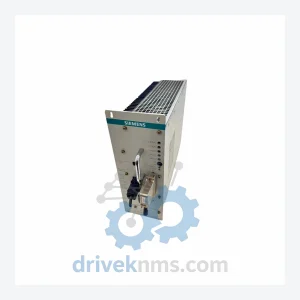
Siemens S31043 Rectifier Modules — S31043-K1166-X
Siemens S31043 Series: Comprehensive Module Range and Technical Overview The Siemens S31043 series comprises rectifier and power supply modules deployed…
Model: LDZ10500424.040
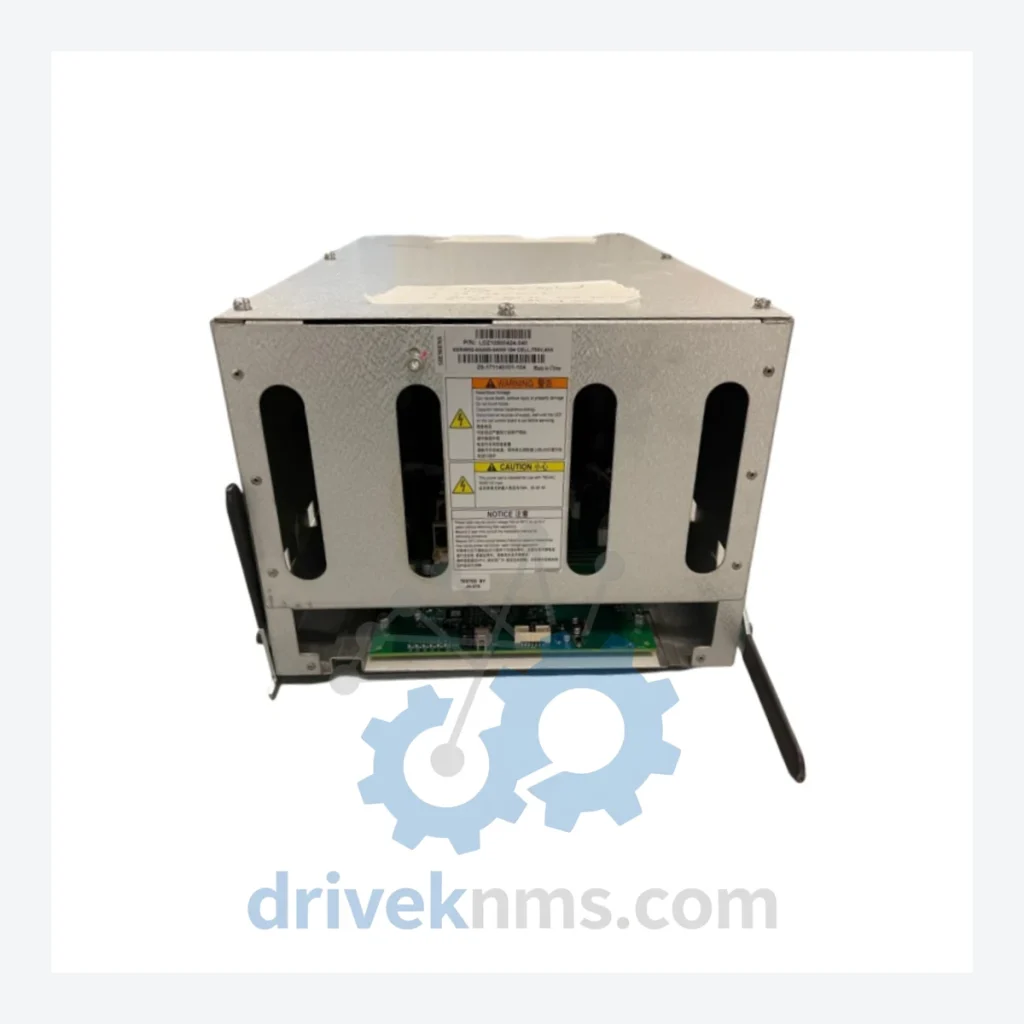
Product Overview
Commercial availability is handled through direct RFQ, model verification and export-oriented follow-up rather than public cart checkout.
Datasheet Preview
Use attached product manuals when available. If the manual is not public yet, request the full file directly through RFQ.
Commercial Path
Product pages on DRIVEKNMS are designed to verify model, brand and series first, then move the buyer into one clean quotation path.
Technical Dossier
The Siemens TELEPERM M is a distributed control system (DCS) platform engineered for continuous-process industries including petrochemical refineries, nuclear power generation facilities, chemical processing plants, and large-scale utility infrastructure. Introduced in the 1980s and deployed globally through the 1990s and 2000s, TELEPERM M established a dominant installed base across heavy industrial sectors where process reliability and long mean-time-between-failure (MTBF) are non-negotiable operational requirements. The system architecture is based on modular rack-mounted hardware communicating over a proprietary backplane bus, with centralized engineering via PROGRAF AP software. Thousands of TELEPERM M systems remain in active service worldwide, supported through lifecycle extension programs and third-party spare parts distributors such as DriveKNMS.
TELEPERM M was developed by Siemens as a successor to earlier pneumatic and analog control systems, providing a fully digital, rack-based DCS architecture. The system is organized around the AS 230 automation station, which houses CPU modules, I/O modules, and communication adapters in standardized 19-inch subrack assemblies. Early hardware generations used discrete TTL logic and proprietary ASICs; later revisions introduced improved noise immunity and expanded channel counts per module. The backplane bus operates on a time-division multiplexed protocol, and all analog I/O modules interface via this bus to the central processor. Compatibility between hardware generations is constrained by firmware revision and subrack type — mixing early-generation and late-generation modules requires careful verification of bus protocol versions. As of 2026, Siemens has officially discontinued TELEPERM M production and first-line support, placing the entire series in the End-of-Life (EOL) phase. This makes third-party lifecycle support, refurbished spare parts, and independent repair services the primary maintenance pathway for plant operators.
The following SKUs represent verified, commonly deployed modules within the Siemens TELEPERM M platform. Each entry reflects a distinct hardware function within the DCS architecture.
LDZ10500424.040: Analog input/output module, multi-channel, 4–20 mA process signal interface for AS 230 subrack.
LDZ10500424.010: Analog input module, 8-channel, 4–20 mA current input, galvanically isolated per channel.
LDZ10500424.020: Analog output module, 4-channel, 4–20 mA current output, for final control element actuation.
LDZ10500424.030: Analog input module, thermocouple/RTD input, 8-channel, cold junction compensation integrated.
LDZ10500424.050: Analog mixed I/O module, 4 inputs / 4 outputs, 4–20 mA, for compact loop control applications.
LDZ10500410.010: Digital input module, 16-channel, 24 VDC, for binary process signal acquisition.
LDZ10500410.020: Digital output module, 16-channel, 24 VDC relay, for discrete actuator control.
LDZ10500410.030: Digital input module, 32-channel, 24 VDC, high-density binary input for large I/O counts.
LDZ10500410.040: Digital output module, 32-channel, 24 VDC transistor output, fast switching applications.
LDZ10500401.010: CPU module for AS 230 automation station, primary process controller, PROGRAF AP compatible.
LDZ10500401.020: CPU module, extended memory variant, for large control program applications.
LDZ10500450.010: Power supply module, 24 VDC output, for TELEPERM M subrack internal bus power.
LDZ10500450.020: Redundant power supply module, hot-standby configuration, for high-availability installations.
LDZ10500460.010: Communication adapter, SINEC H1 Ethernet interface, for plant network integration.
LDZ10500460.020: Communication adapter, PROFIBUS DP master interface, for field device connectivity.
LDZ10500460.030: Communication adapter, serial RS-232/RS-485, for legacy SCADA and historian integration.
LDZ10500470.010: Subrack bus coupler module, for multi-subrack expansion in large AS 230 configurations.
LDZ10500480.010: Pulse input module, 8-channel, for flow meter and encoder signal acquisition.
With Siemens having formally ended TELEPERM M production and support, procurement of replacement modules relies entirely on the secondary market, certified refurbishers, and specialist distributors. DriveKNMS maintains a dedicated inventory of TELEPERM M hardware sourced from decommissioned plant assets, controlled-environment storage, and verified supplier networks. All units are cataloged by part number, hardware revision, and functional test status prior to listing. For plant operators managing extended asset lifecycles — common in nuclear, refinery, and chemical sectors where DCS replacement projects span 5–15 years — DriveKNMS provides consignment sourcing, bulk lot procurement, and priority reservation for critical spare modules. Inquiries for specific revision levels, matched hardware sets, or large-quantity requirements are handled directly by the technical sales team.
TELEPERM M analog modules such as the LDZ10500424.040 incorporate multi-layer PCBs with proprietary Siemens ASICs, precision analog front-end circuitry, and backplane bus interface logic. DriveKNMS applies a structured test protocol to all TELEPERM M modules prior to dispatch: visual inspection for component damage, corrosion, and capacitor condition; powered functional test using a compatible AS 230 subrack test bench; analog channel accuracy verification against calibrated reference signals (4 mA, 12 mA, 20 mA); digital I/O channel continuity and switching verification; backplane bus communication handshake confirmation; and final burn-in cycle to screen for latent component failures. Modules that do not pass all test stages are quarantined and not offered for sale. Test records are retained and available upon request for quality-critical procurement processes.
Related Paths
Siemens S31043 Series: Comprehensive Module Range and Technical Overview The Siemens S31043 series comprises rectifier and power supply modules deployed…
Siemens ULC Series: Comprehensive Module Range and Technical Overview The Siemens ULC (Unitary Logic Controller) series is a purpose-built line…
Siemens RW3045-1AB14 Soft Starter: Supply Chain Acquisition Strategy & Asset Return Value The Siemens RW3045-1AB14 is a SIRIUS-series soft starter…