
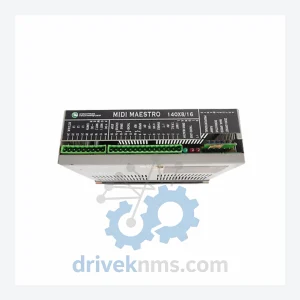
Control Techniques MAESTRO Modules: MAESTRO 140X8/16
Control Techniques MAESTRO Series: Comprehensive Module Range and Technical Overview The Control Techniques MAESTRO series is a multi-axis motion controller…
Model: UNI1405
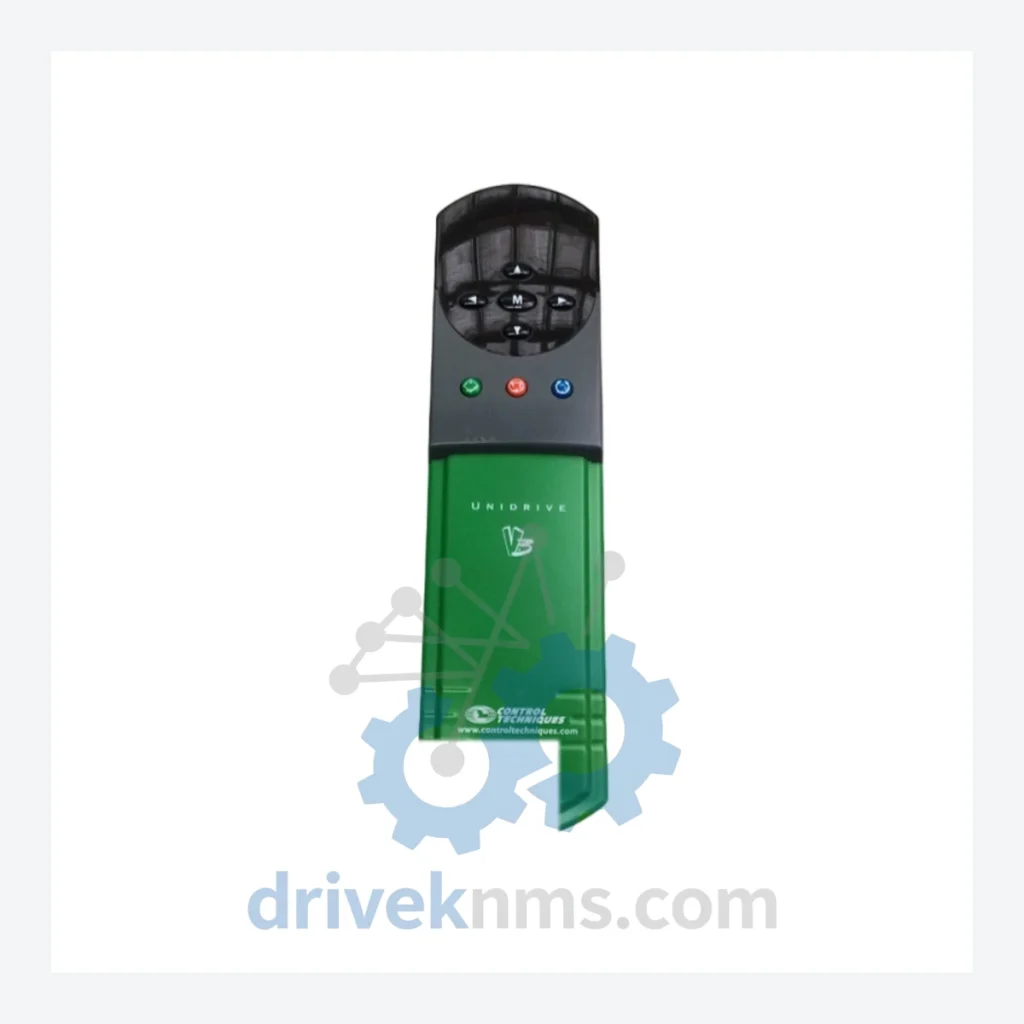
Product Overview
Commercial availability is handled through direct RFQ, model verification and export-oriented follow-up rather than public cart checkout.
Datasheet Preview
Use attached product manuals when available. If the manual is not public yet, request the full file directly through RFQ.
Commercial Path
Product pages on DRIVEKNMS are designed to verify model, brand and series first, then move the buyer into one clean quotation path.
Technical Dossier
The Control Techniques Unidrive series is a high-performance AC variable speed drive platform deployed across global heavy industry sectors including petrochemical refineries, nuclear power generation auxiliaries, offshore platforms, and large-scale chemical processing facilities. The Unidrive platform supports open-loop and closed-loop vector control, servo control, and regenerative operation within a single hardware architecture — a design philosophy that made it a preferred choice for OEMs and system integrators requiring a unified drive solution across multiple machine axes. Installed base spans hundreds of thousands of units across Europe, Asia-Pacific, and the Americas, with active maintenance programs still running on legacy installations commissioned in the late 1990s and early 2000s.
The Unidrive platform was introduced by Control Techniques (a division of Emerson Industrial Automation, later acquired by Nidec) in the mid-1990s as a modular, multi-mode drive system. The original Unidrive Classic (UNI prefix) established the foundational architecture: a power stage chassis accepting plug-in option modules for encoder feedback, fieldbus communication, and I/O expansion. Frame sizes ranged from size 1 (0.75 kW) through size 5 (75 kW) for standard models, with larger frame variants extending to several hundred kilowatts.
The transition from Unidrive Classic to Unidrive SP (SPxxxx series) in the early 2000s introduced enhanced DSP processing, improved EMC compliance to EN 61800-3, and a revised option module slot architecture (four slots versus the Classic's two). The SP series added native support for PROFIBUS-DP, DeviceNet, CANopen, and Ethernet/IP via dedicated SM (Solutions Module) cards. Unidrive M (Mxxx series), introduced circa 2012, further evolved the platform with integrated safety functions (STO — Safe Torque Off to SIL 2 / PLd), onboard Ethernet, and a revised parameter structure. Compatibility between generations is limited: Classic option modules are not interchangeable with SP or M series slots. Firmware and parameter sets are generation-specific. Installations running UNI-prefix Classic drives must source Classic-compatible option modules and spares; cross-generation substitution requires engineering validation.
The following SKUs represent verified, commonly stocked models within the Unidrive Classic (UNI prefix) and adjacent series. Each entry reflects a distinct power rating, frame size, or voltage class.
UNI1401: Unidrive Classic, Frame 1, 0.75 kW / 1.0 HP, 200–240 V single/three-phase input, open-loop and closed-loop vector.
UNI1402: Unidrive Classic, Frame 1, 1.5 kW / 2.0 HP, 200–240 V, enhanced current rating over UNI1401.
UNI1403: Unidrive Classic, Frame 1, 2.2 kW / 3.0 HP, 200–240 V, standard I/O complement, two option slots.
UNI1404: Unidrive Classic, Frame 1, 3.0 kW / 4.0 HP, 200–240 V, suitable for pump and fan duty cycles.
UNI1405: Unidrive Classic, Frame 1, 4.0 kW / 5.5 HP, 200–240 V three-phase, closed-loop vector and servo modes, two option module slots, RS485 Modbus RTU standard.
UNI2401: Unidrive Classic, Frame 2, 5.5 kW / 7.5 HP, 200–240 V, increased heatsink volume for continuous duty.
UNI2402: Unidrive Classic, Frame 2, 7.5 kW / 10 HP, 200–240 V, suitable for conveyor and compressor applications.
UNI3401: Unidrive Classic, Frame 3, 11 kW / 15 HP, 200–240 V, integrated DC bus choke.
UNI3402: Unidrive Classic, Frame 3, 15 kW / 20 HP, 200–240 V, enhanced braking transistor rating.
UNI1405-A: Unidrive Classic UNI1405 with factory-fitted EMC filter, Frame 1, 4.0 kW, 200–240 V, C2 emission class.
UNI5401: Unidrive Classic, Frame 5, 37 kW / 50 HP, 200–240 V, cabinet-mount configuration.
UNI5402: Unidrive Classic, Frame 5, 45 kW / 60 HP, 200–240 V, high-overload rating for hoist duty.
UNI3403: Unidrive Classic, Frame 3, 18.5 kW / 25 HP, 200–240 V, extended ambient temperature rating.
UNI4401: Unidrive Classic, Frame 4, 22 kW / 30 HP, 200–240 V, dual option slots, encoder feedback standard.
UNI4402: Unidrive Classic, Frame 4, 30 kW / 40 HP, 200–240 V, regenerative braking capable with external resistor.
UD70: Applications module for Unidrive Classic; onboard IEC 61131-3 PLC, DPL (Drive Programming Language) execution, 128 KB user memory.
UD73: PROFIBUS-DP option module for Unidrive Classic; DP-V0/V1, up to 12 Mbit/s, cyclic and acyclic data exchange.
UD74: DeviceNet option module for Unidrive Classic; Group 2 Only Server, up to 500 kbit/s.
UD75: CANopen option module for Unidrive Classic; DS301 v4.02, PDO/SDO mapping, NMT master/slave.
Unidrive Classic drives present specific test challenges due to their dual-slot option module backplane, proprietary RS485 parameter interface, and IGBT power stage architecture. DriveKNMS applies the following test protocol to all Unidrive Classic units processed through its facility: (1) Visual inspection: PCB contamination, capacitor condition (ESR measurement), IGBT gate driver integrity, and connector pin condition on both option module slots. (2) Power-up sequence verification: Controlled ramp-up via variac to rated DC bus voltage; monitoring of inrush current and pre-charge relay operation. (3) Parameter restore and firmware check: Default parameter load via CT Soft or UniSoft; firmware version verification against known stable releases. (4) No-load run test: Output voltage symmetry across all three phases at 25 Hz and 50 Hz; current balance check. (5) Option module slot test: Slot communication verified using UD70 or UD73 loopback where applicable. (6) Thermal cycling: Unit operated at rated output for minimum 30 minutes; heatsink temperature monitored via IR thermometry. All units are issued a test report prior to dispatch.
Related Paths
Control Techniques MAESTRO Series: Comprehensive Module Range and Technical Overview The Control Techniques MAESTRO series is a multi-axis motion controller…
Control Techniques UNI2402 AC Drive – Obsolete Unidrive Spare Part When a UNI2402 drive fails on a production line built…
Control Techniques Unidrive Series: Comprehensive Module Range and Technical Overview The Control Techniques Unidrive series is a family of AC…