
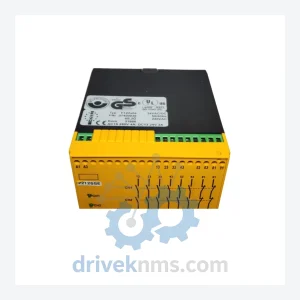
TESCH F123-A04 Safety Relay – Obsolete TESCH Spare Part
TESCH F123-A04 Safety Relay – Obsolete TESCH Spare Part When a safety relay fails on a legacy production line, the…
Model: F121X04
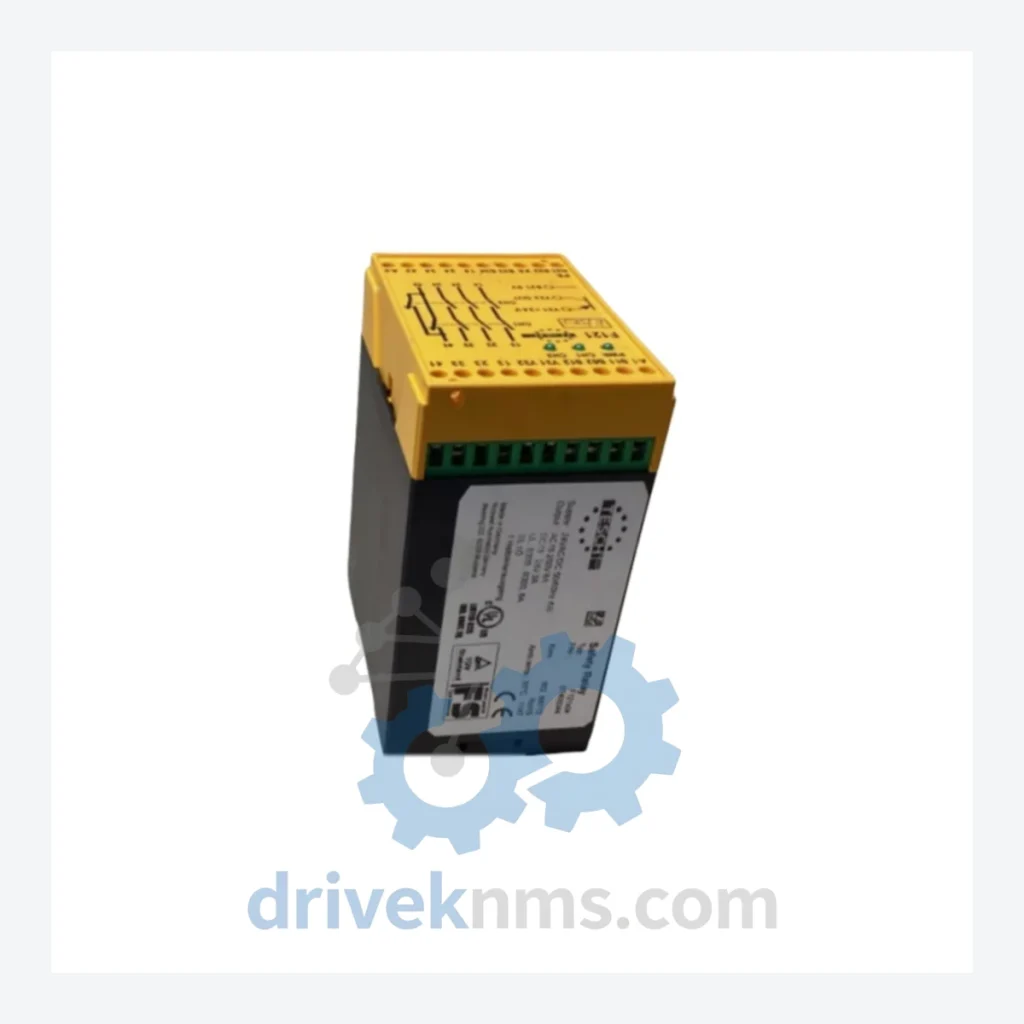
Product Overview
Commercial availability is handled through direct RFQ, model verification and export-oriented follow-up rather than public cart checkout.
Datasheet Preview
Use attached product manuals when available. If the manual is not public yet, request the full file directly through RFQ.
Commercial Path
Product pages on DRIVEKNMS are designed to verify model, brand and series first, then move the buyer into one clean quotation path.
Technical Dossier
When a TESCH F121X04 proximity sensor fails in a legacy production line, the consequences extend far beyond a single component. For facilities still operating automation architectures built around discontinued TESCH inductive sensors, the alternative to sourcing this exact part is a forced system upgrade — a process that routinely costs manufacturers between $500,000 and $3,000,000 USD when engineering labor, downtime, revalidation, and retraining are factored in. DriveKNMS maintains verified stock of the F121X04 specifically to protect that capital investment and keep aging but productive assets running.
| Attribute | Detail |
|---|---|
| Manufacturer | TESCH |
| Part Number / SKU | F121X04 |
| Product Category | Inductive Proximity Sensor |
| Discontinuation Status | Obsolete – No longer in production |
| Country of Origin | Germany |
| Typical Application | Position detection, end-of-travel sensing, machine tool feedback in legacy PLC-controlled systems |
| Compatible Systems | Legacy Siemens SIMATIC S5, older Allen-Bradley PLC-2/PLC-5 architectures, and equivalent relay-logic or early PLC-based control panels that rely on discrete inductive sensing inputs |
Note: Electrical parameters (voltage range, output type, sensing distance) are not published here to prevent specification errors. Contact us directly for datasheet confirmation before ordering.
The TESCH F121X04 was designed for industrial environments where reliability over a 15–25 year service life was the primary engineering requirement. Many of the control systems it was integrated into — particularly older Siemens S5 and equivalent relay-logic panels — remain in active production service today, not because operators are unaware of their age, but because the cost and risk of replacement outweigh the cost of maintenance.
The core problem with discontinued sensors like the F121X04 is that modern replacements are rarely true drop-in substitutes. Connector pinouts, housing dimensions, output signal characteristics, and cable entry configurations frequently differ enough to require wiring modifications, PLC input card changes, or mechanical bracket fabrication. Each of those changes introduces engineering hours, validation cycles, and production downtime that compound rapidly.
Sourcing an original F121X04 eliminates that entire chain of risk. The sensor installs into the existing mounting position, connects to the existing wiring harness, and operates within the existing PLC input parameters — no engineering intervention required.
For plant managers operating under capital expenditure constraints, maintaining a buffer stock of two to four F121X04 units represents a low-cost insurance policy against unplanned downtime. At current market pricing for obsolete sensors, that buffer stock costs a fraction of a single hour of lost production on most automated lines.
How to extend your automation asset life by 5–10 years through strategic spare parts management:
Every F121X04 unit processed through DriveKNMS undergoes a structured five-stage inspection before it is offered for sale. This protocol is designed specifically for the failure modes common to inductive proximity sensors that have been in storage or service for extended periods.
Units that do not pass all five stages are not sold as serviceable parts. Condition grade is disclosed at the time of quotation.
Q: What warranty applies to obsolete parts?
A: DriveKNMS provides a 90-day warranty covering functional defects identified under normal operating conditions. Warranty terms are confirmed in writing at the time of sale.
Q: How do I know the unit is genuine and not a counterfeit?
A: All units are sourced through documented supply channels. Physical markings, housing construction, and electrical behavior are cross-referenced against known-good reference units during inspection. Provenance documentation is available on request.
Q: Should I buy more than one unit?
A: For any obsolete sensor with no modern equivalent, purchasing two to four units at the time of initial sourcing is the standard recommendation. Global inventory of discontinued TESCH sensors is finite and depletes without replenishment. The cost of a second unit today is substantially lower than emergency sourcing costs after a line-down event.
Q: Can you source other TESCH obsolete parts?
A: Yes. DriveKNMS specializes in hard-to-find and discontinued industrial components across multiple brands. Submit your full parts list for a consolidated quotation.
© 2026 DriveKNMS. (Status: DRAFT)
Related Paths
TESCH F123-A04 Safety Relay – Obsolete TESCH Spare Part When a safety relay fails on a legacy production line, the…
ALSTOM MVAJ105RA0802A Protection Relay: Supply Continuity Strategy for a Discontinued Critical Component The ALSTOM MVAJ105RA0802A is a numerical protection relay…
MOORE 16137 Series: Comprehensive Module Range and Technical Overview The MOORE 16137 Series represents a core component family within Moore…