
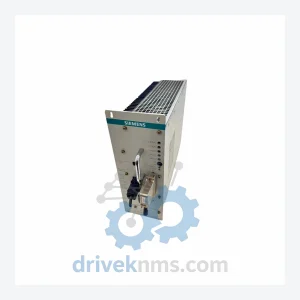
Siemens S31043 Rectifier Modules — S31043-K1166-X
Siemens S31043 Series: Comprehensive Module Range and Technical Overview The Siemens S31043 series comprises rectifier and power supply modules deployed…
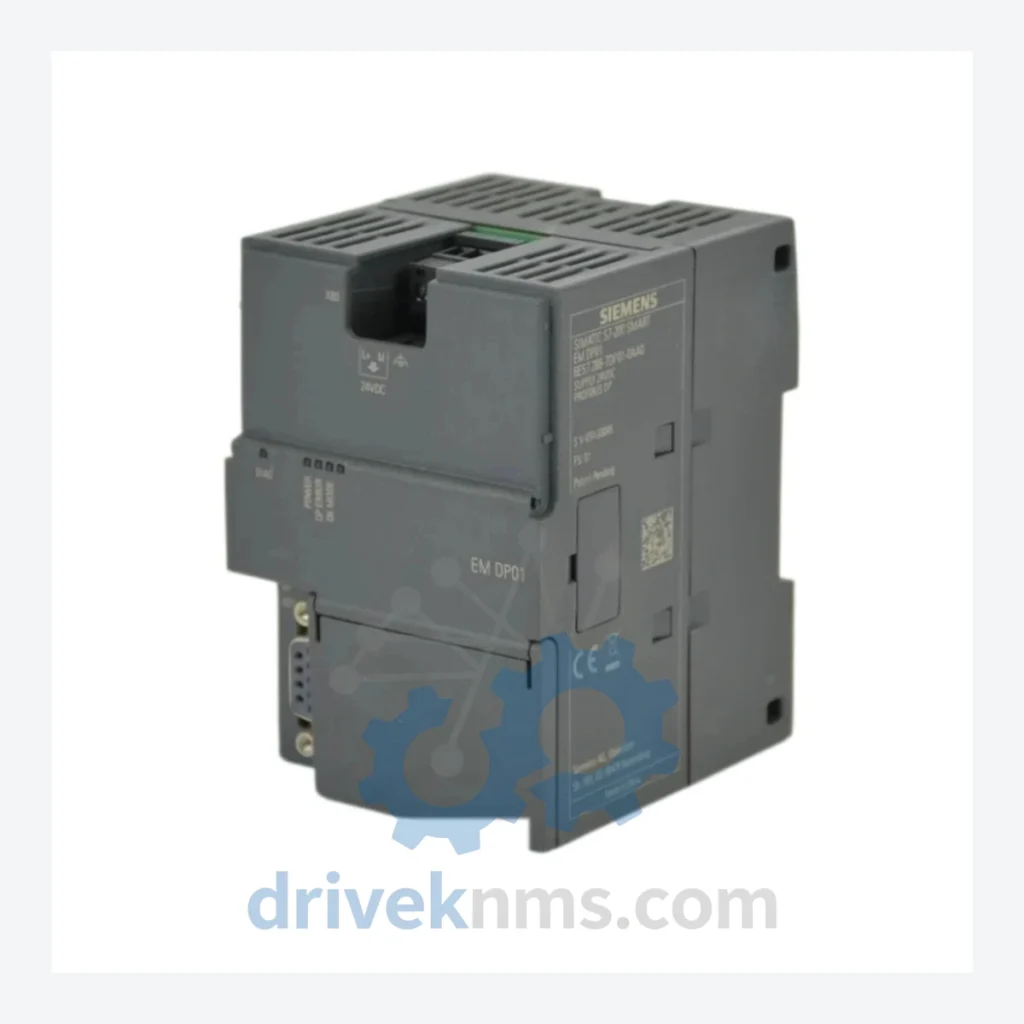
Model: 6ES7288-7DP01-0AA0
Product Overview
Commercial availability is handled through direct RFQ, model verification and export-oriented follow-up rather than public cart checkout.
Datasheet Preview
Use attached product manuals when available. If the manual is not public yet, request the full file directly through RFQ.
Commercial Path
Product pages on DRIVEKNMS are designed to verify model, brand and series first, then move the buyer into one clean quotation path.
Technical Dossier
The Siemens S7-200 SMART series is a compact programmable logic controller (PLC) platform developed by Siemens AG and manufactured primarily at the Siemens Chengdu facility in China. It is positioned as the successor to the S7-200 series within the SIMATIC product family, targeting small-to-medium automation applications across process industries including chemical processing plants, oil refinery auxiliary systems, water treatment facilities, pharmaceutical production lines, and building automation infrastructure.
The S7-200 SMART platform is deployed globally in installations where the S7-200 has reached end-of-life but where full migration to S7-1200 or S7-300 is not economically justified. Its architecture supports Ethernet-native programming via STEP 7 Micro/WIN SMART, eliminating the proprietary PPI cable dependency of its predecessor. The series maintains backward compatibility with a subset of S7-200 instruction sets, making it a viable drop-in upgrade path for legacy installations.
In heavy industrial environments — including offshore platforms, nuclear auxiliary control systems, and petrochemical distributed control architectures — the S7-200 SMART serves as a field-level controller interfacing with SCADA systems via PROFIBUS DP, Modbus RTU/TCP, and USS protocol. Its compact DIN-rail form factor and wide operating temperature range (−20°C to +60°C for standard modules) make it suitable for cabinet-mounted deployments in harsh environments.
The S7-200 SMART was introduced in 2012 as a direct market response to the discontinuation roadmap of the original S7-200 series (which reached official end-of-sale in 2017 in most regions). The architectural evolution from S7-200 to S7-200 SMART involved three principal changes: the replacement of the PPI/MPI serial bus with an integrated 10/100 Mbps Ethernet port on all CPU variants; the introduction of a signal board (SB) expansion slot on the CPU faceplate for single-module I/O expansion without additional rail space; and the adoption of a revised expansion bus connector that is physically incompatible with original S7-200 expansion modules.
The first-generation S7-200 SMART CPUs (CR20, CR30, CR40, CR60) used relay output configurations only. The second generation introduced transistor output variants (ST20, ST30, ST40, ST60) with higher-frequency pulse output capability (up to 100 kHz), enabling stepper motor and servo drive control via open-loop positioning. Subsequent firmware revisions added PID auto-tuning, motion control wizards, and expanded Modbus TCP client/server functionality.
Compatibility constraints are a critical operational consideration. S7-200 SMART expansion modules (EM series, 6ES7288-2xx and 6ES7288-3xx prefix) are not interchangeable with S7-200 EM modules (6ES7221/222/223/231/232/235 prefix). The expansion bus voltage and communication protocol differ. Similarly, S7-200 SMART signal boards (SB series, 6ES7288-5xx prefix) are CPU-slot-specific and cannot be used as standalone modules. The PROFIBUS DP slave module (6ES7288-7DP01-0AA0) requires a dedicated EM bus connection and is not compatible with S7-200 SMART CPUs below firmware V2.3.
As of 2024, the S7-200 SMART series remains in active production and sale, though Siemens has positioned the S7-1200 as the strategic successor for new designs. The S7-200 SMART is expected to remain available through at least 2030 based on Siemens published lifecycle documentation, making long-term spare parts planning a relevant operational requirement for existing installations.
CPU Modules (Standard Relay Output)
CPU Modules (Transistor Output — High-Speed Pulse)
Digital Input Expansion Modules (EM DI)
Digital Output Expansion Modules (EM DO)
Analog Input/Output Expansion Modules (EM AI/AO)
Thermocouple / RTD Input Modules
Communication & Fieldbus Modules
Signal Boards (CPU Slot Expansion)
DriveKNMS maintains a dedicated inventory program for Siemens S7-200 SMART modules, with particular focus on variants that have entered allocation or extended lead-time status through standard distribution channels. Our sourcing network covers manufacturer-authorized distributors, certified secondary market suppliers, and decommissioned equipment recovery channels across Europe, North America, and Asia-Pacific.
For installations where specific CPU firmware versions are required for compatibility with existing STEP 7 Micro/WIN SMART projects, DriveKNMS can source modules with verified firmware baselines. All sourced units are accompanied by documentation of origin and, where available, original manufacturer test records.
For the EM DP01 (6ES7288-7DP01-0AA0) specifically — a module with historically constrained availability due to its specialized PROFIBUS DP slave function — DriveKNMS maintains buffer stock to support emergency replacement requirements in chemical and refinery DCS environments where PROFIBUS DP backbone integrity is critical to process continuity.
Customers operating end-of-life S7-200 installations who are evaluating migration to S7-200 SMART as an intermediate step before full S7-1200 migration can contact DriveKNMS for lifecycle planning consultation and bulk module procurement.
All S7-200 SMART modules processed through DriveKNMS undergo a structured inspection and functional verification protocol prior to dispatch. The procedure addresses the specific failure modes documented for this series, including expansion bus connector wear, backplane communication faults, and analog input drift in AE-series modules.
The test protocol includes: visual inspection of PCB, connector pins, and housing integrity; power-on verification at rated 24 VDC supply with current draw measurement against specification baseline; functional I/O test using a dedicated S7-200 SMART CPU test rig — each digital input and output point is individually exercised; for analog modules, calibration verification against a traceable reference source with tolerance check per Siemens published accuracy specifications; for the EM DP01 PROFIBUS slave module, a live PROFIBUS DP network integration test at 1.5 Mbps and 12 Mbps baud rates is performed to verify GSD-based configuration, data exchange integrity, and diagnostic response; signal board (SB) modules are tested in-slot on a compatible CPU to verify faceplate bus communication and I/O function.
Modules that fail any test stage are quarantined, documented, and not returned to inventory. Test records are retained for a minimum of 36 months and are available to customers upon request for critical infrastructure procurement.
Related Paths
Siemens S31043 Series: Comprehensive Module Range and Technical Overview The Siemens S31043 series comprises rectifier and power supply modules deployed…
Siemens ULC Series: Comprehensive Module Range and Technical Overview The Siemens ULC (Unitary Logic Controller) series is a purpose-built line…
Siemens RW3045-1AB14 Soft Starter: Supply Chain Acquisition Strategy & Asset Return Value The Siemens RW3045-1AB14 is a SIRIUS-series soft starter…