
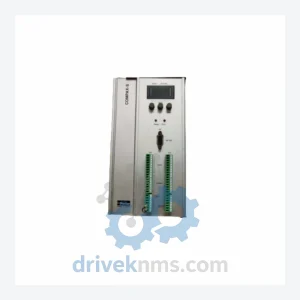
Parker COMPAX-S Modules: CPX2500S
Parker COMPAX-S Series: Comprehensive Module Range and Technical Overview The Parker COMPAX-S series is a compact, high-performance servo drive platform…
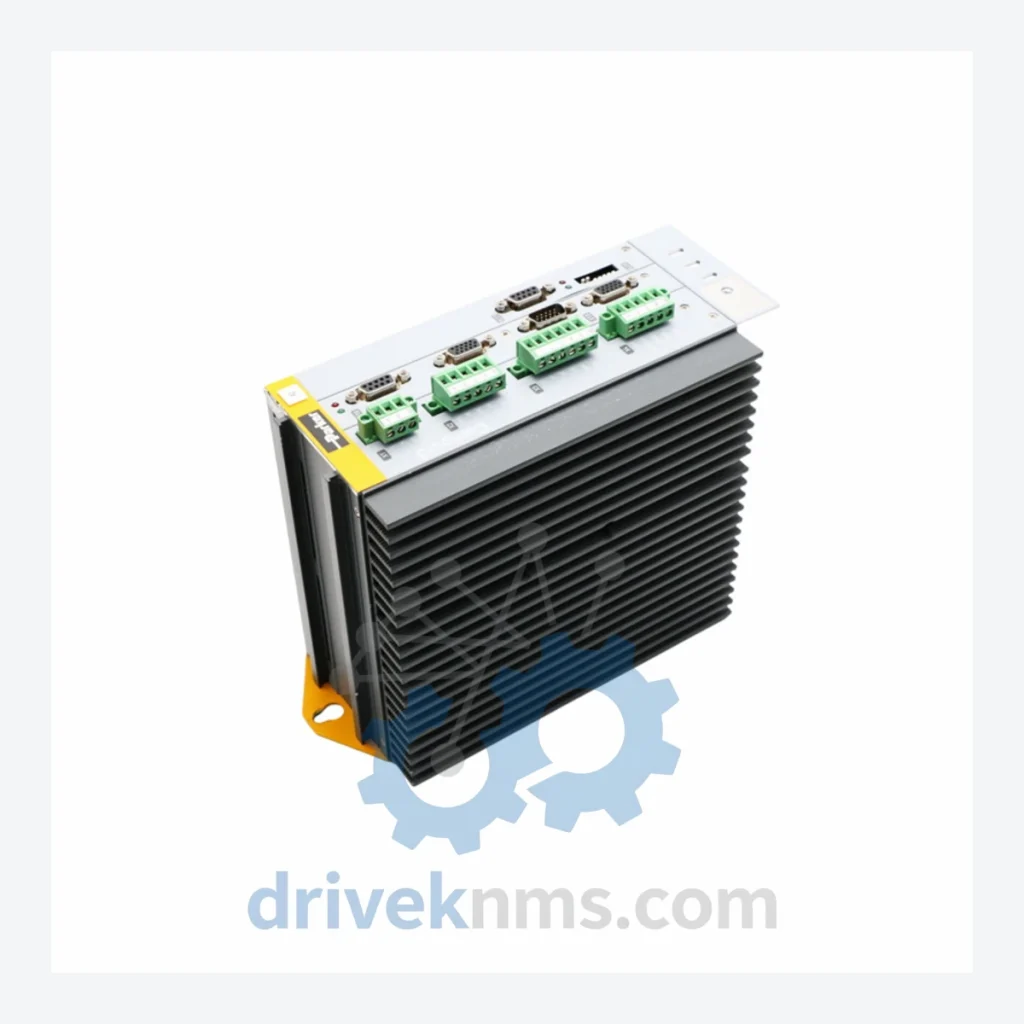
Model: C3S075V4F10 I20 T40 M11
Product Overview
Commercial availability is handled through direct RFQ, model verification and export-oriented follow-up rather than public cart checkout.
Datasheet Preview
Use attached product manuals when available. If the manual is not public yet, request the full file directly through RFQ.
Commercial Path
Product pages on DRIVEKNMS are designed to verify model, brand and series first, then move the buyer into one clean quotation path.
Technical Dossier
The Parker Compax3 series is a family of single-axis intelligent servo drives developed by Parker Hannifin, one of the world's leading motion and control technology manufacturers. Compax3 drives are deployed across heavy industrial sectors including chemical processing plants, nuclear power facilities, oil refineries, pulp and paper mills, and precision machine tool manufacturing. Their modular architecture — combining drive intelligence, motion control, and fieldbus communication in a single compact unit — has made them a standard specification in both OEM machine builds and plant-wide DCS/PLC automation architectures. The series covers a continuous current range from 3 A to 85 A, supporting motor power ratings from sub-kilowatt positioning axes to multi-kilowatt high-dynamic servo applications. The C3S075V4F10 I20 T40 M11 specifically is a 7.5 A continuous / 15 A peak, 400 V AC three-phase input variant, configured with the F10 (IEC 61131-3 onboard motion controller), I20 (PROFIBUS DP interface), T40 (resolver feedback), and M11 (standard I/O expansion) option modules.
Parker introduced the Compax3 platform in the early 2000s as a successor to the Compax2 and earlier Digiax servo drive families. The architecture was designed around a modular slot system: a base drive unit (the C3S or C3H chassis) accepts up to four option cards occupying the I, T, M, and F positions, allowing a single hardware platform to be configured for dozens of application profiles without changing the base unit.
Generation 1 (2001–2006): Initial release supported resolver (T10/T40) and SinCos encoder (T30) feedback, with RS232/RS485 serial communication (I10) and basic analog I/O. Motion programming relied on the C3 ServoManager software suite.
Generation 2 (2006–2012): Introduction of PROFIBUS DP (I20), CANopen (I21), and DeviceNet (I22) fieldbus option cards expanded integration into plant-wide DCS environments. The F10 IEC 61131-3 onboard controller option enabled standalone motion sequencing without an external PLC, a critical feature for distributed axis control in chemical and refinery applications.
Generation 3 (2012–2018): EtherNet/IP (I31) and PROFINET (I34) communication cards were added to address the shift toward Industrial Ethernet. EnDat 2.2 and HIPERFACE encoder feedback (T11, T30) were refined for higher-resolution positioning. Safe Torque Off (STO) per IEC 62061 SIL 2 became standard on later production runs.
End-of-Life / Successor Transition (2018–present): Parker has transitioned new designs to the Compax3 M (multi-axis) and the Parker ACR/IPA series for high-axis-count applications. The Compax3 single-axis (C3S) line entered the mature/declining phase of its product lifecycle. Parker's official last-time-buy and extended support programs apply to most C3S variants. Installed base in legacy plants remains substantial, making spare parts availability a critical operational concern for maintenance engineers.
The following SKUs represent verified, commonly deployed Compax3 single-axis drive configurations. Each entry reflects a specific combination of base drive rating and option card set.
C3S004V4F10 I10 T10 M00: 0.4 A / 400 V base drive, RS232 comms, resolver feedback, no I/O expansion — minimal-footprint positioning axis.
C3S008V4F10 I10 T10 M00: 0.8 A / 400 V, RS232, resolver — standard low-power single-axis configuration for light-duty servo applications.
C3S015V4F10 I20 T10 M00: 1.5 A / 400 V, PROFIBUS DP, resolver — entry-level fieldbus-integrated axis for distributed PLC architectures.
C3S025V4F10 I20 T10 M11: 2.5 A / 400 V, PROFIBUS DP, resolver, standard I/O — mid-range axis with expanded digital I/O for machine tool integration.
C3S038V4F10 I20 T30 M11: 3.8 A / 400 V, PROFIBUS DP, SinCos encoder, standard I/O — higher-resolution feedback for precision positioning.
C3S038V4F10 I31 T30 M11: 3.8 A / 400 V, EtherNet/IP, SinCos encoder, standard I/O — Industrial Ethernet variant for modern DCS integration.
C3S075V4F10 I20 T40 M11: 7.5 A / 400 V, PROFIBUS DP, resolver (T40 high-resolution), standard I/O — the subject SKU; widely used in refinery and chemical plant servo axes.
C3S075V4F10 I31 T30 M11: 7.5 A / 400 V, EtherNet/IP, SinCos encoder, standard I/O — Ethernet-capable variant of the 7.5 A chassis.
C3S075V4F10 I34 T30 M11: 7.5 A / 400 V, PROFINET, SinCos encoder, standard I/O — PROFINET variant for Siemens TIA Portal integrated plants.
C3S150V4F10 I20 T10 M11: 15 A / 400 V, PROFIBUS DP, resolver, standard I/O — high-current axis for larger servo motors in heavy machinery.
C3S150V4F10 I20 T30 M11: 15 A / 400 V, PROFIBUS DP, SinCos encoder, standard I/O — high-current precision variant.
C3S150V4F10 I31 T30 M11: 15 A / 400 V, EtherNet/IP, SinCos encoder, standard I/O — Ethernet-capable 15 A drive for modern retrofit projects.
C3S300V4F10 I20 T30 M11: 30 A / 400 V, PROFIBUS DP, SinCos encoder, standard I/O — high-power axis for large-frame servo motors in press and extruder applications.
C3S450V4F10 I20 T30 M11: 45 A / 400 V, PROFIBUS DP, SinCos encoder, standard I/O — heavy-duty axis for high-inertia load applications in steel and paper mills.
C3S850V4F10 I20 T30 M11: 85 A / 400 V, PROFIBUS DP, SinCos encoder, standard I/O — maximum-current Compax3 single-axis variant for the highest-power servo applications in the series.
C3H044V4 I20 T30 M11: High-power chassis variant (44 A), PROFIBUS DP, SinCos encoder — C3H (high-power) series for applications exceeding standard C3S thermal limits.
As the Compax3 C3S series has entered its end-of-life phase, Parker Hannifin has progressively reduced factory stock of specific option card combinations. Lead times for new units — where still available — can extend to 26–52 weeks. For plants operating Compax3-based servo systems, unplanned downtime caused by a failed drive unit represents a critical operational risk.
DriveKNMS maintains a dedicated inventory of Compax3 C3S drives and option modules sourced through authorized surplus channels, factory overstock, and decommissioned plant equipment. All units are catalogued by full part number including option card suffix (I, T, M, F positions) to ensure exact-match replacement. DriveKNMS supports lifecycle extension for the following obsolete and hard-to-find configurations: early I10/I11 serial communication variants, T10 resolver cards, M00 (no I/O) base configurations, and legacy F10 firmware versions compatible with older C3 ServoManager project files. Customers requiring cross-reference support — for example, identifying a compatible replacement when the exact option card combination is no longer available — can submit their existing drive nameplate data for engineering review.
Compax3 drives present specific test challenges due to their multi-card backplane architecture. A fault in any single option card (I, T, M, or F slot) can produce symptoms that appear as a base drive failure. DriveKNMS applies a structured test protocol to all Compax3 units prior to dispatch:
Backplane integrity check: Each option card slot is tested independently using known-good reference cards to isolate faults to the base drive or a specific option module. Fieldbus communication validation: I20 (PROFIBUS), I31 (EtherNet/IP), and I34 (PROFINET) cards are tested against a live fieldbus master to confirm correct node addressing, data exchange, and diagnostic telegram response. Feedback interface test: T10/T40 resolver interfaces and T30 SinCos encoder interfaces are verified using calibrated signal sources to confirm correct position feedback resolution and signal integrity. Power stage load test: Each drive is run under resistive load at rated continuous current to verify thermal performance, current regulation accuracy, and protection circuit response (overcurrent, overvoltage, undervoltage, overtemperature). Firmware version verification: Firmware version is recorded and disclosed. Customers requiring a specific firmware version for compatibility with existing C3 ServoManager projects can request version-matched units.
Related Paths
Parker COMPAX-S Series: Comprehensive Module Range and Technical Overview The Parker COMPAX-S series is a compact, high-performance servo drive platform…
Parker CPX2500 Series: Comprehensive Module Range and Technical Overview The Parker CPX2500 series is a compact, high-performance servo controller platform…
Parker HSSI-ED2 Controller Interface Board: Global Sourcing Strategy & Asset Return Value The Parker HSSI-ED2 is a Controller Interface Board…