
KUKA KCP2 VKCP2 Robot Control Panel – KCP Series
KUKA KCP2 VKCP2 Robot Control Panel: Sourcing Strategy & Asset Return Value in a Constrained Global Supply Chain The KUKA…
Model: KCP2
Product Overview
Commercial availability is handled through direct RFQ, model verification and export-oriented follow-up rather than public cart checkout.
Datasheet Preview
Use attached product manuals when available. If the manual is not public yet, request the full file directly through RFQ.
Commercial Path
Product pages on DRIVEKNMS are designed to verify model, brand and series first, then move the buyer into one clean quotation path.
Technical Dossier
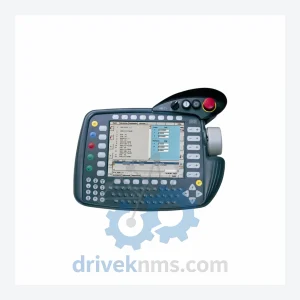
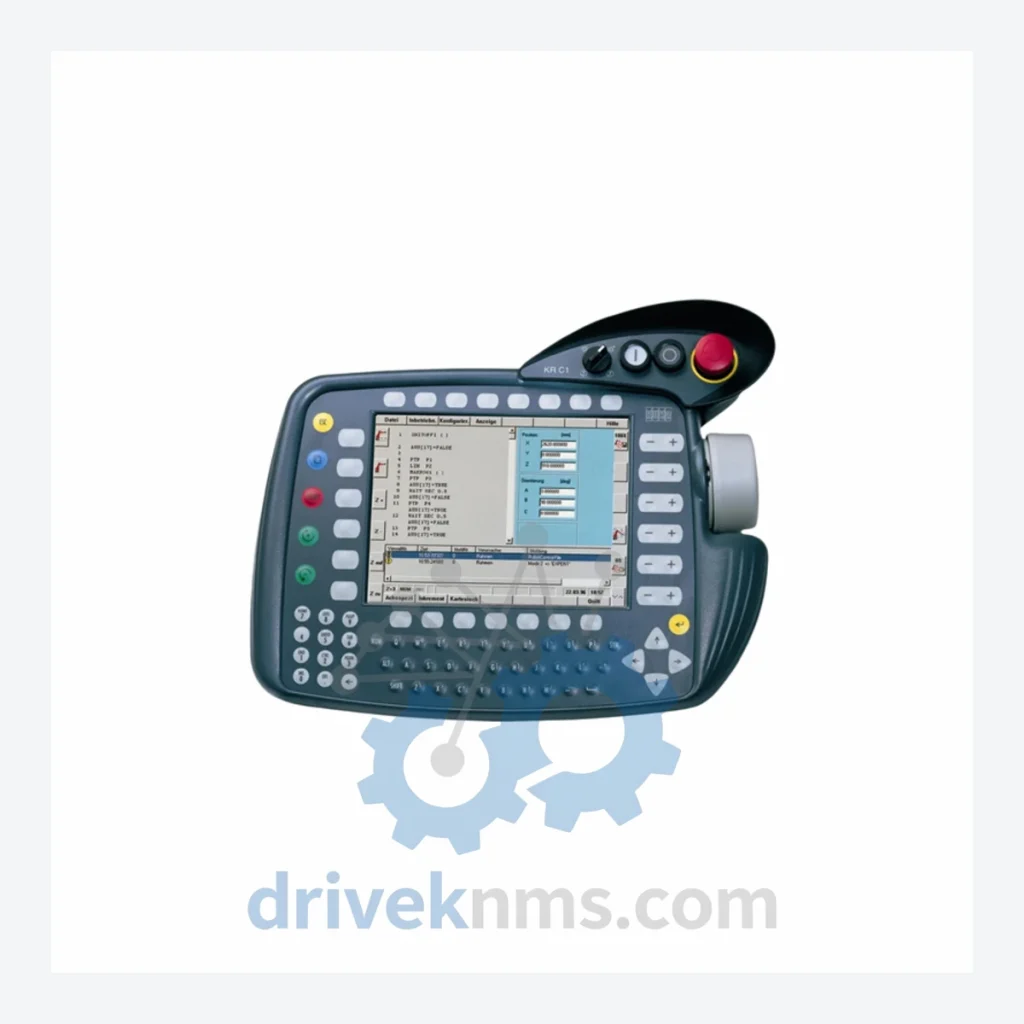
The KUKA KCP2 (KUKA Control Panel 2) teach pendant is the primary human-machine interface deployed across KUKA KR C2 and KR C4 robot controller platforms. It is installed in high-density industrial environments including automotive body-in-white assembly lines, chemical processing facilities, nuclear decommissioning cells, and petroleum refinery material handling systems. The KCP2 provides 6D SpaceMouse navigation, a color display, and a dedicated safety-rated enabling device, making it the standard operator interface for KUKA industrial robots in the 5 kg to 1,000 kg payload range. Its global installed base spans hundreds of thousands of units across North America, Europe, and Asia-Pacific, establishing it as one of the most widely maintained teach pendant platforms in heavy industry.
The KCP2 platform was introduced alongside the KR C2 controller generation in the late 1990s as a replacement for the earlier KCP1 pendant used with the KR C1 system. The KCP2 introduced a color TFT display, USB connectivity, and an integrated 6D SpaceMouse for Cartesian jogging — features absent from its predecessor. Communication between the KCP2 and the KR C2 controller cabinet is handled via a proprietary serial interface over a dedicated cable harness (part reference 00-108-747). The KCP2 is not electrically compatible with KR C1 controllers without a hardware adapter.
With the introduction of the KR C4 platform circa 2009, KUKA transitioned to the smartPAD (KCP4) as the primary teach pendant. The KCP2 remained in production support for KR C2 installations. As of 2026, the KR C2 controller and KCP2 pendant are classified as End-of-Life (EOL) by KUKA AG, meaning no new units are manufactured. All procurement is sourced from certified secondary market suppliers and refurbished stock. Long-term maintenance support for KCP2 installations is a critical operational requirement for facilities running legacy KUKA fleets without a near-term migration budget.
Key compatibility matrix: KCP2 ↔ KR C2 (all variants including KR C2 ed05). The KCP2 is not compatible with KR C4, KR C5, or iiwa controllers without a full controller replacement.
The following SKUs represent the verified KCP2 product family and directly associated interface components. Each entry reflects a distinct hardware configuration or accessory within the KCP2 ecosystem.
KCP2: Standard KCP2 teach pendant, color TFT display, 6D SpaceMouse, enabling device, USB port, for KR C2 controllers.
KCP2-200: KCP2 variant with extended cable length (10 m), suited for large-footprint robot cells requiring increased operator reach.
KCP2-USB: KCP2 unit with active USB host port enabled for program transfer and log extraction via USB flash drive.
00-108-747: OEM KCP2 connection cable assembly, 7-pin circular connector to KR C2 cabinet interface, standard 7 m length.
00-108-748: Extended KCP2 connection cable, 15 m, for installations with remote pendant storage or extended reach requirements.
00-130-293: KCP2 display assembly replacement unit, TFT panel and backlight module, field-replaceable sub-assembly.
00-130-294: KCP2 keypad membrane replacement kit, includes all tactile key overlays and connector ribbon.
00-130-295: KCP2 enabling device (dead-man switch) replacement assembly, 3-position safety-rated, IEC 60204-1 compliant.
00-130-296: KCP2 6D SpaceMouse module replacement, plug-in sub-assembly for Cartesian jogging axis restoration.
00-130-297: KCP2 housing upper shell replacement, ABS enclosure with integrated cable strain relief.
00-130-298: KCP2 housing lower shell replacement, includes battery compartment cover and mounting lugs.
00-130-299: KCP2 main PCB (controller board), handles display driver, keypad scanning, USB host, and serial communication.
00-130-300: KCP2 power supply board, regulates 24 VDC input from KR C2 cabinet to pendant internal rails.
KCP2-HOLDER: OEM pendant holder bracket, mounts to KR C2 cabinet door or external post, rated for KCP2 weight and cable management.
KCP2-STRAP: Operator wrist strap and lanyard assembly for KCP2, anti-drop rated, compatible with all KCP2 housing variants.
00-108-749: KCP2 to KR C2 interface adapter board, installed inside KR C2 cabinet, provides pendant port termination and ESD protection.
KCP2-REFURB: Factory-grade refurbished KCP2 unit, full functional test, 90-day warranty, supplied by DriveKNMS certified refurbishment program.
KUKA AG discontinued new production of KCP2 units and associated spare parts following the EOL declaration of the KR C2 platform. Facilities operating KR C2-based robot cells — common in automotive stamping, arc welding, and palletizing applications — face a constrained supply chain for replacement pendants, cable assemblies, and sub-assemblies.
DriveKNMS maintains a dedicated inventory of KCP2 units and components sourced from decommissioned production lines, certified refurbishment programs, and verified secondary market channels. All units undergo functional verification prior to dispatch. DriveKNMS provides the following lifecycle extension services for KCP2 installations: replacement pendant supply (new-surplus and refurbished), cable harness fabrication to OEM specification, sub-assembly component sourcing (display, keypad, enabling device), and cross-reference support for identifying equivalent replacement parts across KUKA part number revisions.
KCP2 units processed by DriveKNMS undergo a structured multi-stage inspection protocol designed to validate all functional subsystems before dispatch. The test sequence covers: (1) visual inspection of housing, cable jacket, and connector pins for mechanical damage; (2) display verification — full pixel mapping, backlight uniformity, and contrast ratio check; (3) keypad actuation test — 100% key coverage using automated scan matrix; (4) enabling device (dead-man switch) functional test — verification of all three positions (released, mid-position, fully depressed) against IEC 60204-1 safety switch specification; (5) 6D SpaceMouse axis response test — all six degrees of freedom verified for signal linearity and dead-zone calibration; (6) USB port enumeration test — host port verified for device detection and data transfer; (7) serial communication loopback test — pendant communication protocol verified against KR C2 interface specification; (8) 48-hour burn-in cycle under simulated operational load. Units that fail any stage are quarantined for component-level repair or parts recovery. Test records are retained and available upon request for quality-critical procurement processes.
Related Paths
KUKA KCP2 VKCP2 Robot Control Panel: Sourcing Strategy & Asset Return Value in a Constrained Global Supply Chain The KUKA…
KUKA KSD1-16 Servo Drive – Obsolete KSD Series Spare Part When a KUKA KSD1-16 servo drive fails on the production…
KUKA KVGA Series: Comprehensive Module Range and Technical Overview The KUKA KVGA (KRC Video Graphics Adapter) series is a family…