
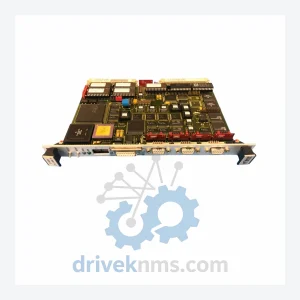
FORCE SYS68K/CPU-30BE16 REV 3 VME CPU Board – Obsolete SYS68K Spare Part
FORCE SYS68K/CPU-30BE16 REV 3 VME CPU Board – Obsolete SYS68K Spare Part When a VME-based CPU board fails on a…
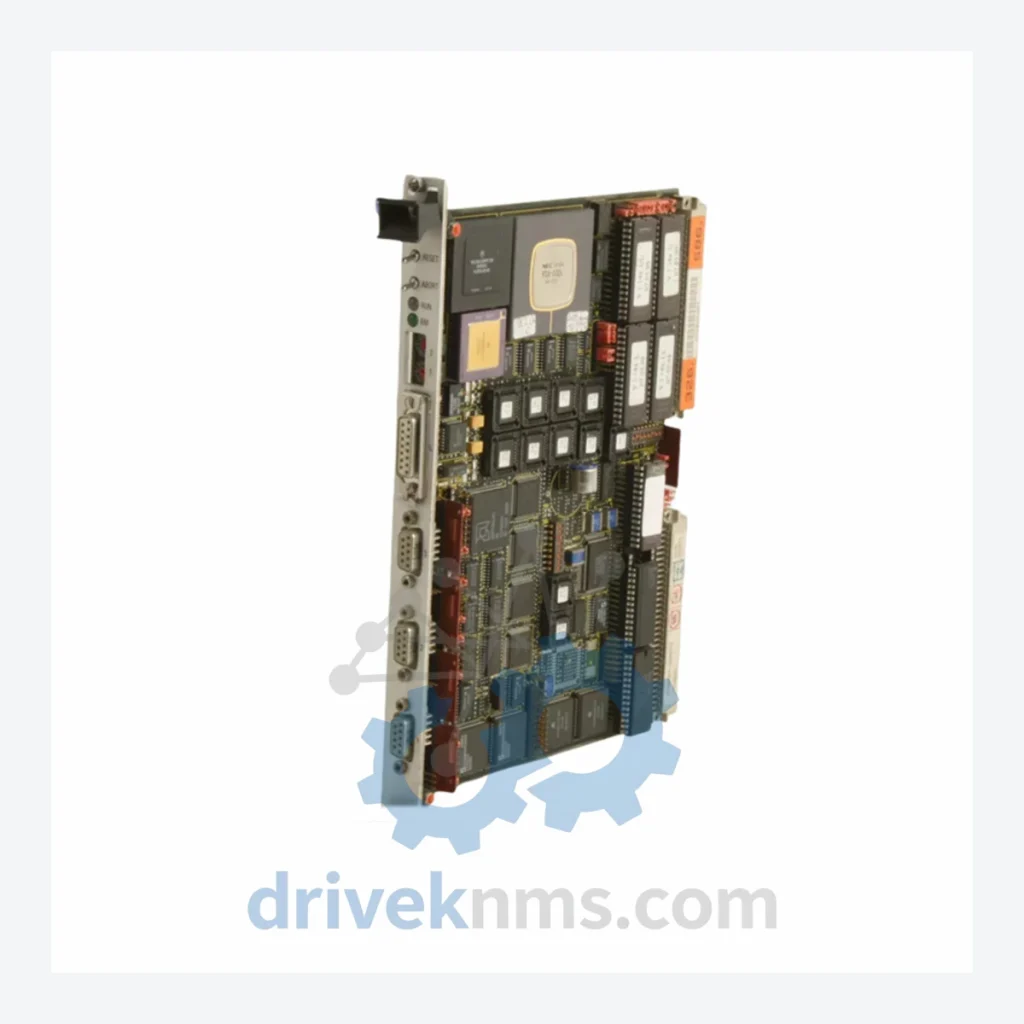
Model: SYS68K/CPU-30ZBE
Product Overview
Commercial availability is handled through direct RFQ, model verification and export-oriented follow-up rather than public cart checkout.
Datasheet Preview
Use attached product manuals when available. If the manual is not public yet, request the full file directly through RFQ.
Commercial Path
Product pages on DRIVEKNMS are designed to verify model, brand and series first, then move the buyer into one clean quotation path.
Technical Dossier
The FORCE Computers SYS68K series represents one of the most widely deployed VMEbus-based single board computer (SBC) platforms in global heavy industry. Installed across petrochemical refineries, nuclear power generation facilities, offshore platforms, and continuous-process chemical plants, the SYS68K architecture established a benchmark for deterministic real-time control in the 1980s and 1990s. Its Motorola 68000-family CPU backbone, combined with IEEE 1014-1987 (VMEbus) compliance, made it the preferred embedded computing platform for distributed control systems (DCS) integrators and OEM machine builders operating in environments where long-term hardware stability is non-negotiable. Installed bases in legacy SCADA and DCS architectures continue to operate in facilities across Europe, North America, and Asia-Pacific, creating sustained demand for verified spare parts and lifecycle extension support.
The SYS68K platform was introduced by FORCE Computers GmbH (Paderborn, Germany) in the early 1980s, initially targeting the emerging VMEbus ecosystem standardized under IEEE 1014. The first-generation boards were built around the Motorola MC68000 processor running at 8–10 MHz, with on-board EPROM, static RAM, and serial I/O via the MC68681 DUART. These early CPUs — including the SYS68K/CPU-1 and CPU-2 — established the physical form factor (6U VME) and bus interface conventions that persisted across the entire product family.
The second generation introduced the MC68010 and MC68020 processors, enabling virtual memory support and significantly higher throughput for floating-point-intensive control loops. Boards such as the SYS68K/CPU-21 and CPU-22 added on-board FPU coprocessors (MC68881/MC68882) and expanded local DRAM to 4–16 MB. The third generation, anchored by the MC68030 and MC68040 processors, delivered integrated MMU and cache, with boards like the SYS68K/CPU-30ZBE representing the mature expression of this architecture — combining a 25–40 MHz MC68030 CPU, on-board SCSI, Ethernet (AMD LANCE), and dual serial ports in a single 6U VME slot.
Compatibility across generations is constrained by bus arbitration differences between 68000 and 68030-class boards, EPROM vs. Flash boot device pinout changes, and OS-level dependencies (OS-9, VxWorks, pSOS). Integrators maintaining mixed-generation SYS68K racks must verify backplane slot addressing and interrupt vector assignments before substituting CPU boards across generations.
CPU / Single Board Computers
Memory Expansion Modules
I/O and Communication Modules
Power and Utility Modules
FORCE Computers GmbH ceased active production of the SYS68K series in the late 1990s following acquisition and portfolio consolidation. The entire product line is classified as end-of-life (EOL) with no manufacturer repair or replacement support available. For operators of legacy DCS, SCADA, and embedded control systems built on SYS68K hardware, DriveKNMS provides structured lifecycle extension services covering the full module range.
DriveKNMS maintains a rotating inventory of tested SYS68K boards sourced from decommissioned industrial systems, verified OEM overstock, and controlled disassembly of functional racks. Each unit entering inventory is logged by serial number, firmware revision, and physical condition grade before entering the test queue. For critical-path spares — particularly CPU boards such as the SYS68K/CPU-30ZBE where a single board failure can halt an entire process line — DriveKNMS offers advance exchange programs that ship a tested replacement before the failed unit is returned, minimizing unplanned downtime.
Long-lead and low-availability models including the SYS68K/FDDI-1, SYS68K/GPIB-1, and early-generation CPU-1/CPU-2 boards are sourced through a global network of industrial surplus partners. Customers are encouraged to submit complete BOM lists for multi-board requirements to enable consolidated sourcing and reduce per-unit logistics cost.
SYS68K boards present specific test challenges due to their VMEbus backplane dependency, on-board SCSI and Ethernet controllers, and the use of through-hole and early SMD mixed-technology PCBs that are susceptible to solder joint fatigue after decades of thermal cycling.
DriveKNMS applies the following test protocol to all SYS68K units:
All test results are documented and available to customers on request. Units that fail any stage of the protocol are either repaired to specification or quarantined and not offered for sale.
Related Paths
FORCE SYS68K/CPU-30BE16 REV 3 VME CPU Board – Obsolete SYS68K Spare Part When a VME-based CPU board fails on a…
FORCE SYS68K CPU-30BE/16 VMEbus CPU Board: Securing Supply for Legacy Industrial Systems The FORCE SYS68K CPU-30BE/16 is a 68030-based VMEbus…
FORCE CPU-30ZBE Single Board Computer – Obsolete CPU-30 Spare Part When a FORCE CPU-30ZBE fails in a production environment, the…