
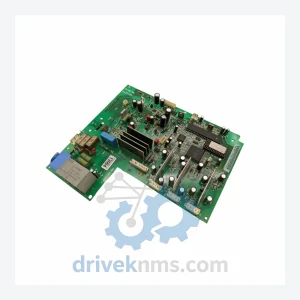
ABB SNAT-7120 Circuit Board – SNAZ7120J Series
ABB SNAT-7120 / SNAZ7120J Circuit Board: Sourcing Strategy & Asset Return Value in a Constrained Global Supply Chain The ABB…
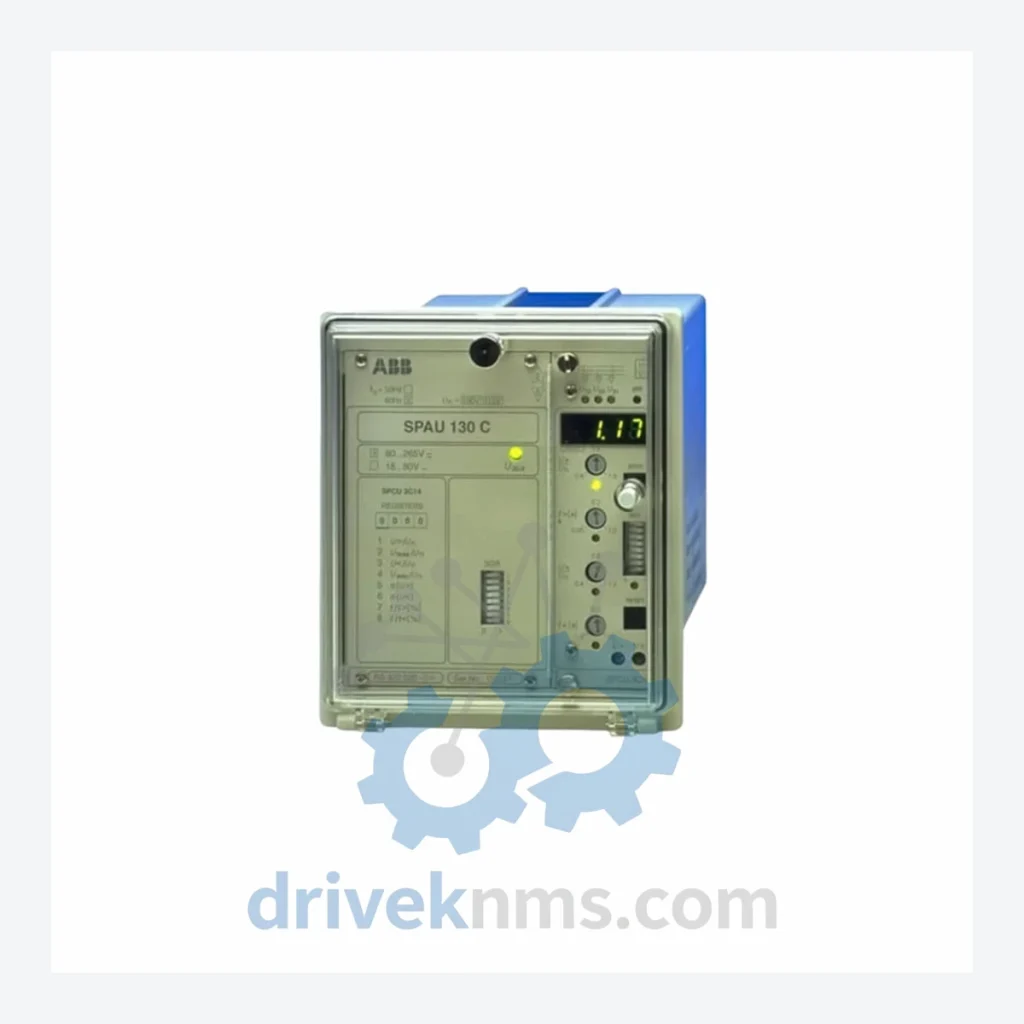
Model: SPAU130C-AA SPAU 130 C-AA
Product Overview
Commercial availability is handled through direct RFQ, model verification and export-oriented follow-up rather than public cart checkout.
Datasheet Preview
Use attached product manuals when available. If the manual is not public yet, request the full file directly through RFQ.
Commercial Path
Product pages on DRIVEKNMS are designed to verify model, brand and series first, then move the buyer into one clean quotation path.
Technical Dossier
When an ABB SPAU130C-AA fails in a live substation or industrial power protection panel, the consequences extend far beyond a single relay. The SPAU series was the backbone of ABB's numerical protection relay architecture deployed across power utilities, heavy industry, and process plants throughout the 1990s and 2000s. ABB discontinued the SPAU product line, and no direct OEM replacement exists. Migrating to a modern protection relay platform — including new IEDs, communication infrastructure, panel re-engineering, and protection scheme re-commissioning — routinely costs plant operators USD $150,000 to over $1,000,000 per bay, depending on system complexity. A single verified SPAU130C-AA unit from DriveKNMS's controlled inventory eliminates that capital expenditure entirely and restores protection coverage within hours, not months.
| Parameter | Detail |
|---|---|
| Manufacturer | ABB (Asea Brown Boveri) |
| Part Number | SPAU130C-AA / SPAU 130 C-AA |
| Product Series | SPAU (Numerical Protection Relay Series) |
| Function | Voltage Protection Relay (Over/Undervoltage) |
| Country of Origin | Finland |
| OEM Status | Discontinued – No longer manufactured by ABB |
| Compatible Systems | ABB SPACOM, ABB MicroSCADA, legacy ABB SPAC/SPAD/SPAU relay panels |
| Typical Application | Medium voltage switchgear, substation automation, industrial power protection |
Note: Electrical parameters such as rated voltage, frequency range, and I/O configuration vary by sub-variant and firmware revision. DriveKNMS will confirm exact specifications against your system documentation prior to shipment. No parameters are assumed or fabricated.
The ABB SPAU series was engineered for deterministic protection performance in an era when relay reliability was measured in decades, not product cycles. Substations and industrial plants that commissioned SPAU-based protection schemes in the 1990s built their entire protection philosophy — zone definitions, intertripping logic, SCADA integration — around these relays. The SPAU130C-AA specifically handles voltage supervision functions that are deeply embedded in protection coordination studies already approved by grid operators and safety authorities.
Replacing this relay with a modern IED is not a plug-and-play exercise. It requires new protection settings calculations, updated single-line diagrams, revised relay coordination studies, re-approval from the relevant grid authority or safety body, and a planned outage window that may span days. For a facility running continuous production — a refinery, a steel mill, a data center substation — that outage window alone carries a cost that dwarfs the price of sourcing a verified spare.
The rational asset management decision, endorsed by IEC 60300-3-3 lifecycle cost principles, is to maintain a buffer stock of critical discontinued relays and extend the operational life of the existing protection scheme until a planned, budgeted migration can be executed on the facility's own schedule — not under emergency conditions.
Plant managers facing pressure to retire legacy protection systems before capital budgets are available have a documented, low-cost alternative: structured spare parts provisioning combined with periodic condition assessment. The following strategy has been applied successfully across power utilities and heavy industry to defer system retirement by 5 to 10 years without compromising protection integrity.
1. Criticality mapping: Identify every SPAU-series relay in the protection scheme. Classify each by consequence of failure — loss of protection, production shutdown, or safety system impairment. The SPAU130C-AA, as a voltage supervision relay, typically sits in the highest criticality tier.
2. Minimum buffer stock: For highest-criticality relays with no modern drop-in equivalent, maintain a minimum of two verified spare units per protection zone. One unit covers immediate replacement; the second covers the time required to source a further replacement from the secondary market.
3. Controlled storage: Electromechanical and early numerical relays are sensitive to humidity and electrostatic discharge. Store spares in anti-static packaging, in a climate-controlled environment, with annual inspection records.
4. Firmware and configuration documentation: Archive the relay's current settings file, firmware version, and protection coordination study. This eliminates re-commissioning uncertainty when a spare is installed.
5. Planned replacement windows: Schedule spare installation during planned maintenance outages, not emergency conditions. Emergency relay replacement under time pressure is the primary cause of commissioning errors in protection systems.
This approach converts an uncontrolled obsolescence risk into a managed, budgeted maintenance program. The cost of two SPAU130C-AA spare units is a fraction of a single unplanned production outage.
DriveKNMS applies a 5-step quality process to all discontinued relay inventory before shipment:
Step 1 – Visual and mechanical inspection: Full external inspection for physical damage, terminal corrosion, case integrity, and label legibility. Units with pin corrosion or terminal oxidation are rejected at this stage.
Step 2 – Electrolytic capacitor assessment: Electrolytic capacitors are the primary age-related failure mode in numerical relays of this generation. Each unit undergoes capacitor ESR measurement. Units showing elevated ESR indicative of capacitor degradation are quarantined.
Step 3 – Firmware version verification: The firmware revision is read and documented. Customers are informed of the exact firmware version prior to shipment so compatibility with their existing protection scheme can be confirmed.
Step 4 – Functional power-on test: The unit is powered and basic operational status is verified. Relay output contacts and LED indicators are checked for correct response.
Step 5 – Documentation and traceability: Each unit is assigned a DriveKNMS inspection record with test date, technician ID, and findings. This record ships with the unit.
Units are classified as New Old Stock (NOS), Tested Surplus, or Professionally Refurbished. The classification is stated explicitly in the order confirmation. No unit is shipped without a completed inspection record.
Drop-in replacement: The SPAU130C-AA installs directly into the existing relay panel without mechanical modification. Terminal assignments, case dimensions, and mounting format are identical to the original installation.
No reprogramming required: Protection settings are stored in the relay's non-volatile memory. When replacing a failed unit, settings are re-entered from the archived settings file — a procedure that takes minutes, not days, and requires no specialist engineering contractor.
No protection scheme re-approval: Because the replacement relay is the same model and firmware generation as the original, the existing protection coordination study and grid authority approval remain valid. This is the single most significant cost avoidance factor in the entire replacement decision.
Immediate availability: DriveKNMS maintains physical inventory. Lead time is days, not the weeks or months typical of OEM back-order channels for discontinued parts.
Q: What warranty applies to a discontinued relay?
A: DriveKNMS provides a 90-day functional warranty on all tested and refurbished units. New Old Stock units carry a 30-day inspection warranty. Warranty terms are confirmed in writing at the time of order.
Q: How do I know the unit is genuine ABB and not a counterfeit?
A: All units are sourced from documented industrial decommissioning projects, licensed distributors, or verified surplus dealers. ABB SPAU relays carry internal serial number structures and firmware signatures that are checked during our inspection process. Counterfeit risk for this product class is low due to the specialized nature of the market, but our sourcing documentation is available for customer review on request.
Q: Should I buy more than one unit?
A: For any protection relay classified as critical and discontinued, purchasing a minimum of two units is the standard recommendation in IEC 60300-based asset management practice. Secondary market availability for SPAU-series relays is finite and declining. Prices will increase as inventory is absorbed. Securing buffer stock now is the lowest-cost option available.
Q: Can DriveKNMS source other SPAU-series variants?
A: Yes. DriveKNMS specializes in the full ABB SPAU, SPAC, SPAD, and SPACOM relay families. Contact us with your full part number and quantity requirement.
Status: DRAFT
Related Paths
ABB SNAT-7120 / SNAZ7120J Circuit Board: Sourcing Strategy & Asset Return Value in a Constrained Global Supply Chain The ABB…
ABB AC500 Series: Comprehensive Module Range and Technical Overview The ABB AC500 is a scalable modular PLC platform deployed across…
ABB SCDCS-CON-4 Control Board – Obsolete DCS Spare Part When a single control board fails in a legacy distributed control…