
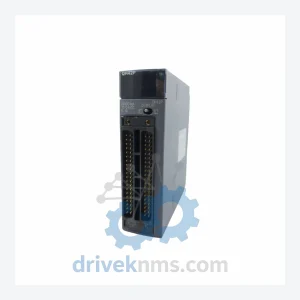
Mitsubishi QX48Y57 BD627B662G51 Combination Unit – PLC Module
Mitsubishi QX48Y57 BD627B662G51 PLC Combination Unit: Supply Continuity Strategy for Mission-Critical Operations The Mitsubishi QX48Y57 BD627B662G51 is a combination I/O…
Model: K62P
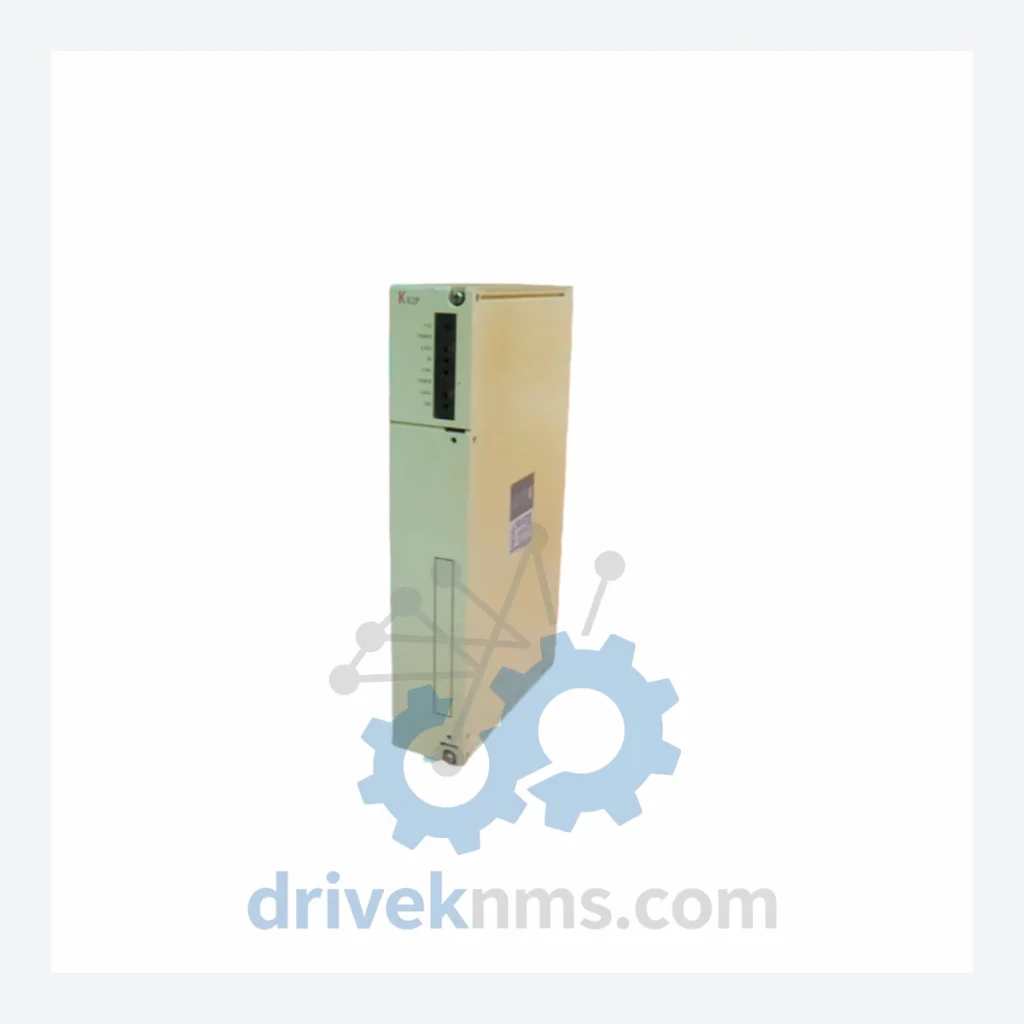
Product Overview
Commercial availability is handled through direct RFQ, model verification and export-oriented follow-up rather than public cart checkout.
Datasheet Preview
Use attached product manuals when available. If the manual is not public yet, request the full file directly through RFQ.
Commercial Path
Product pages on DRIVEKNMS are designed to verify model, brand and series first, then move the buyer into one clean quotation path.
Technical Dossier
The Mitsubishi MELSEC-K Series is a mid-range programmable logic controller platform developed by Mitsubishi Electric for deployment in heavy industrial environments. It has accumulated significant installed base across petrochemical complexes, nuclear auxiliary systems, refinery process control loops, and large-scale discrete manufacturing lines. The K Series occupies the architectural tier between the earlier MELSEC-A Series and the later MELSEC-Q Series, providing a stable, rack-based control infrastructure that remains operational in thousands of facilities globally. Its continued presence in aging plant infrastructure makes lifecycle parts sourcing a critical operational requirement for maintenance engineers and procurement teams.
The MELSEC-K Series was introduced by Mitsubishi Electric as a successor to the MELSEC-A Series, incorporating an enhanced backplane bus architecture capable of higher I/O throughput and improved noise immunity for industrial environments. The platform uses a proprietary parallel bus structure across its base units, with module slots governed by a fixed addressing scheme that differs from the later MELSEC-Q Series' dynamic slot assignment model.
Early K Series deployments used discrete wiring for I/O termination. Later revisions introduced connector-type terminal blocks and compatibility with MELSEC-NET/MINI-S3 network adapters, enabling limited distributed I/O configurations. The series does not natively support CC-Link or PROFIBUS, which creates integration constraints when interfacing with modern field devices. Engineers maintaining K Series installations must account for this protocol gap when planning system expansions or hybrid architectures.
The MELSEC-K Series has entered the end-of-life phase. Mitsubishi Electric has formally discontinued production of most K Series modules. The recommended migration path is to the MELSEC-Q Series or MELSEC-iQ-R Series, both of which offer backward-compatible programming environments via GX Works2 and GX Works3. However, full migration carries significant re-engineering cost, making long-term spare parts support the preferred strategy for the majority of existing K Series installations.
Power Supply Modules
CPU Modules
Digital Input (DI) Modules
Digital Output (DO) Modules
Analog I/O Modules
Communication & Network Modules
DriveKNMS maintains a dedicated inventory program for discontinued Mitsubishi MELSEC-K Series components. As Mitsubishi Electric has ceased production of the K Series platform, the secondary market is the primary procurement channel for replacement modules. DriveKNMS sources K Series parts through verified industrial surplus channels, decommissioned plant equipment, and authorized distributor overstock.
All sourced units are subject to pre-sale inspection covering physical condition, connector integrity, and where applicable, functional power-on verification. For CPU and communication modules, firmware version documentation is provided where retrievable. DriveKNMS maintains stock records for the most frequently requested K Series SKUs and can respond to emergency procurement requests within 24 hours. For obsolete models with no available stock, DriveKNMS provides cross-reference guidance to compatible MELSEC-Q Series equivalents and can assist with migration bill-of-materials preparation.
MELSEC-K Series modules present specific quality control challenges due to the age of the platform and the complexity of its backplane bus communication architecture. DriveKNMS applies the following inspection protocol to all K Series units prior to dispatch:
Related Paths
Mitsubishi QX48Y57 BD627B662G51 PLC Combination Unit: Supply Continuity Strategy for Mission-Critical Operations The Mitsubishi QX48Y57 BD627B662G51 is a combination I/O…
Mitsubishi MW400 Series: Comprehensive Module Range and Technical Overview The Mitsubishi Electric MW400 series represents a generation of industrial circuit…
Mitsubishi PD21 PD21B Series: Comprehensive Module Range and Technical Overview The Mitsubishi PD21 and PD21B are DC power supply modules…