
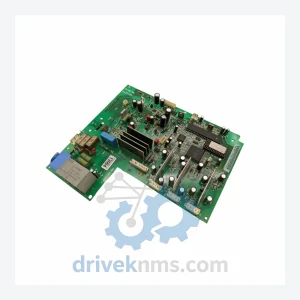
ABB SNAT-7120 Circuit Board – SNAZ7120J Series
ABB SNAT-7120 / SNAZ7120J Circuit Board: Sourcing Strategy & Asset Return Value in a Constrained Global Supply Chain The ABB…
Model: RINT-5513C
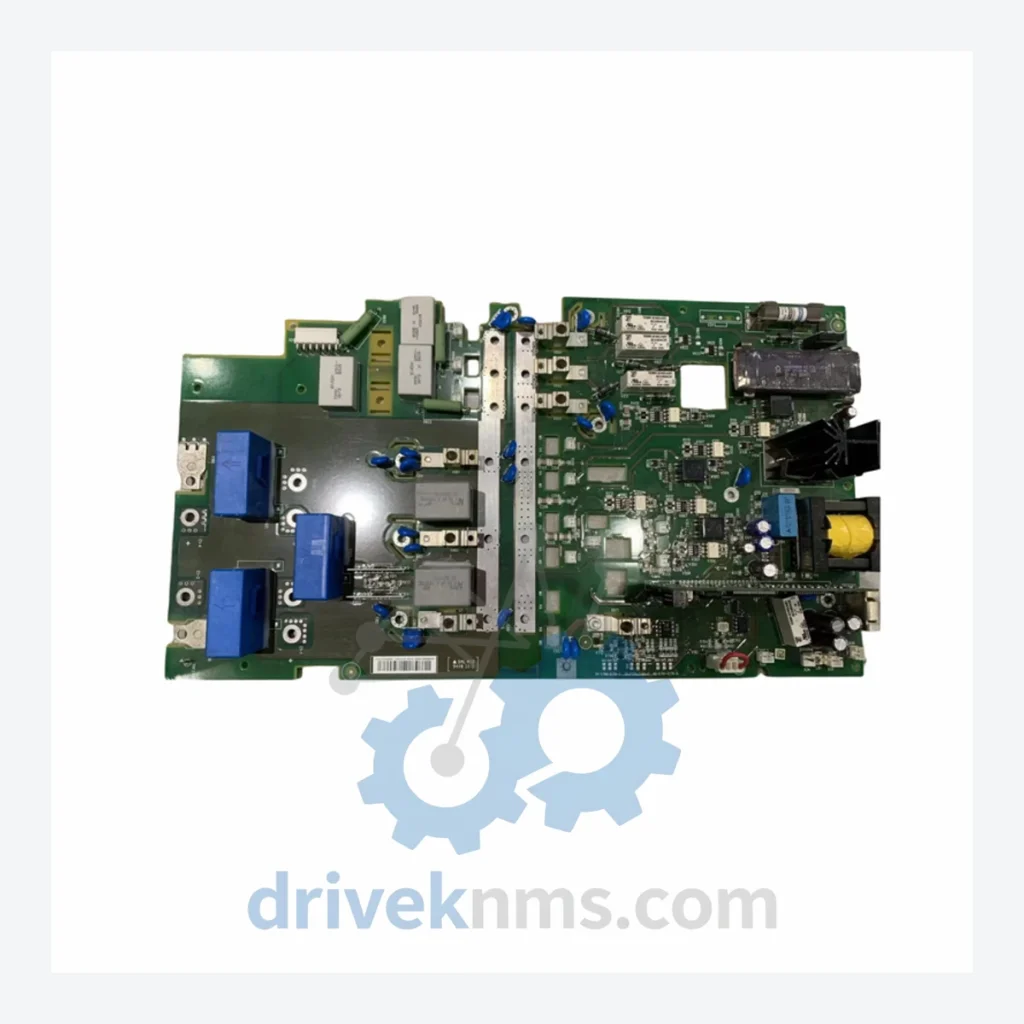
Product Overview
Commercial availability is handled through direct RFQ, model verification and export-oriented follow-up rather than public cart checkout.
Datasheet Preview
Use attached product manuals when available. If the manual is not public yet, request the full file directly through RFQ.
Commercial Path
Product pages on DRIVEKNMS are designed to verify model, brand and series first, then move the buyer into one clean quotation path.
Technical Dossier
The ABB RINT series comprises motor control (MC) interface boards engineered for integration within ABB's ACS600, ACS800, and ACS1000 medium-voltage and low-voltage variable frequency drive (VFD) platforms. These boards serve as the communication bridge between the drive's main control unit (RMIO/RDCO) and the inverter/rectifier power modules, handling gate pulse distribution, fault signal routing, and fiber-optic data transmission. Installed across global heavy industry sectors — including petrochemical refineries, nuclear auxiliary systems, offshore platforms, pulp and paper mills, and steel rolling lines — the RINT series represents one of the most widely deployed interface board families in industrial drive history. Installed base estimates exceed several hundred thousand units globally, with active deployments spanning equipment commissioned from the mid-1990s through the 2010s.
The RINT series was introduced alongside the ACS600 drive platform in the early 1990s. Initial variants such as the RINT-5411C and RINT-5413C used parallel copper-trace signal routing with discrete optocoupler isolation. As drive power ratings increased and EMI immunity requirements tightened, ABB transitioned to fiber-optic pulse transmission in the RINT-551x sub-family, of which the RINT-5513C is the primary representative. The ACS800 platform (launched ~1999) retained backward-compatible RINT form factors while introducing enhanced fault diagnostics via the DDCS (Distributed Drive Control System) protocol. By the ACS880 generation (2012 onward), ABB migrated to the BCON/BINT board architecture, rendering the RINT series legacy hardware. However, the installed base of ACS600 and ACS800 drives remains substantial, and RINT boards continue to be required for maintenance, repair, and overhaul (MRO) operations. Compatibility between sub-variants is hardware-revision dependent; substitution requires verification of the drive's software version and RMIO firmware.
MC Interface Boards — Fiber-Optic Gate Drive (ACS800 / ACS600 Compatible)
MC Interface Boards — Copper/Parallel Signal (ACS600 Legacy)
Rectifier & Supply Interface Boards
Brake Chopper & Auxiliary Interface
ABB officially discontinued active production of the majority of RINT series boards following the ACS880 platform transition. Standard ABB distribution channels no longer stock most RINT variants as new units; availability is limited to certified repair centers and specialist spare parts distributors. DriveKNMS maintains a dedicated inventory of RINT series boards sourced from decommissioned drive systems, OEM overstock, and controlled-environment storage. All units are catalogued by hardware revision code and tested prior to dispatch. For end-users operating ACS600 or ACS800 drives beyond their original design life, DriveKNMS provides lifecycle extension support including board-level repair, functional testing, and cross-reference advisory for compatible substitute variants where direct replacements are unavailable. Lead times for obscure sub-variants (e.g., RINT-5711C, RINT-6413C) are quoted on request based on current stock position.
RINT series boards present specific test challenges due to their fiber-optic transmitter/receiver circuits, high-voltage isolation barriers, and DDCS protocol dependency. DriveKNMS applies the following test protocol to all RINT boards processed through its facility: (1) Visual inspection for PCB delamination, capacitor bulge, and solder joint fatigue — common failure modes in boards exposed to thermal cycling over 10+ years. (2) Fiber-optic transmitter output power measurement using calibrated optical power meter; acceptance threshold per ABB service manual specification. (3) Isolation resistance test at 500 VDC between signal ground and power ground planes. (4) Functional gate pulse verification using a drive emulator bench that replicates RMIO control signals and confirms correct IGBT gate timing on all six channels. (5) DDCS communication loop-back test confirming data integrity at 10 Mbps. Boards that fail any stage are either repaired to component level or quarantined and not returned to inventory. Test records are retained per unit serial number.
Related Paths
ABB SNAT-7120 / SNAZ7120J Circuit Board: Sourcing Strategy & Asset Return Value in a Constrained Global Supply Chain The ABB…
ABB AC500 Series: Comprehensive Module Range and Technical Overview The ABB AC500 is a scalable modular PLC platform deployed across…
ABB SCDCS-CON-4 Control Board – Obsolete DCS Spare Part When a single control board fails in a legacy distributed control…