
Sanken DK14256A Circuit Board: Specifications, Compatible Models & Availability
Sanken DK14256A Series: Comprehensive Module Range and Technical Overview The Sanken DK14256A is a purpose-built circuit board module deployed across…
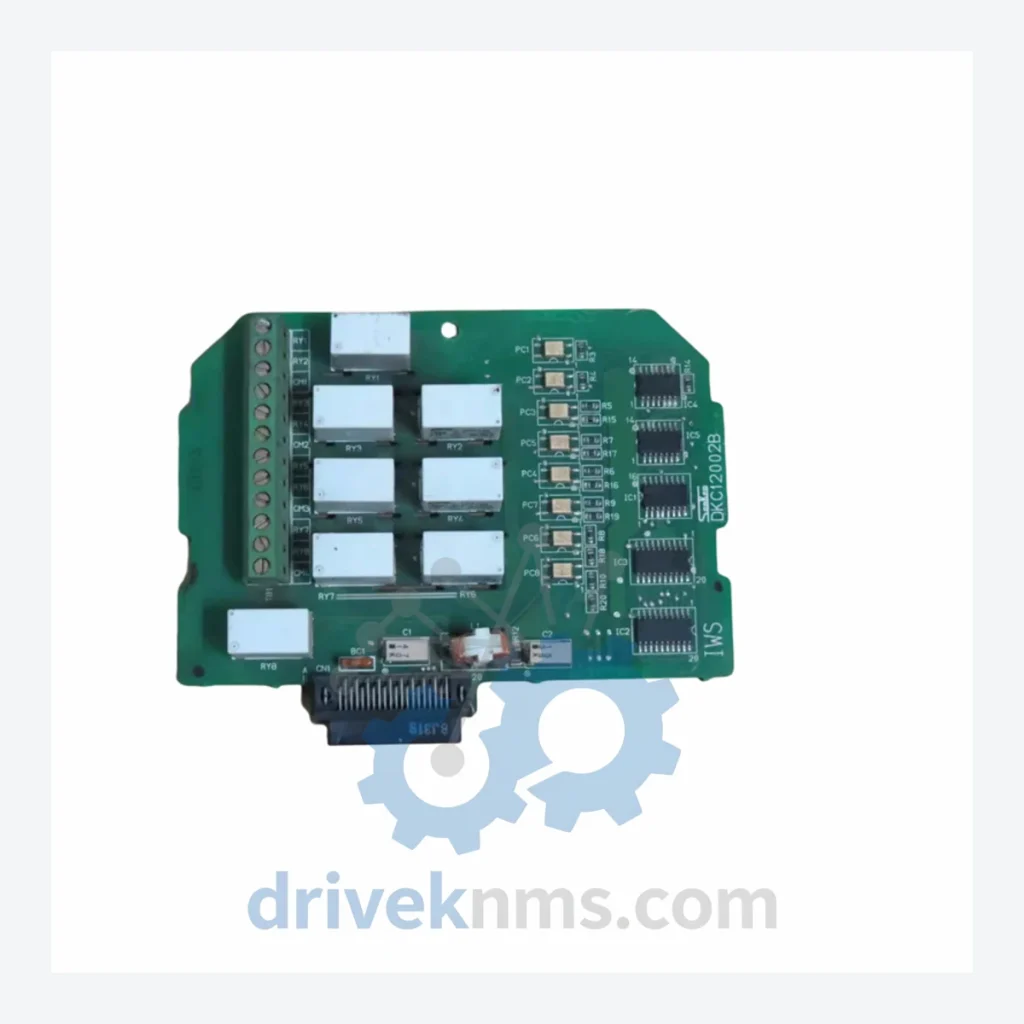
Model: DKC12002B IWS
Product Overview
Commercial availability is handled through direct RFQ, model verification and export-oriented follow-up rather than public cart checkout.
Datasheet Preview
Use attached product manuals when available. If the manual is not public yet, request the full file directly through RFQ.
Commercial Path
Product pages on DRIVEKNMS are designed to verify model, brand and series first, then move the buyer into one clean quotation path.
Technical Dossier
When a Sanken DKC12002B IWS touch screen panel fails on your production floor, the consequences extend far beyond a single component replacement. This HMI unit is deeply embedded in legacy industrial control architectures — systems that were engineered, commissioned, and validated over years of operation. A forced platform migration triggered by one unavailable panel can cost a manufacturing facility anywhere from several hundred thousand to several million dollars, factoring in new hardware procurement, system integration, operator retraining, production downtime, and regulatory re-certification. DriveKNMS holds verified stock of the DKC12002B IWS, providing a direct path to restoring operations without dismantling the infrastructure your team depends on.
| Parameter | Detail |
|---|---|
| Manufacturer | Sanken Electric Co., Ltd. |
| Part Number | DKC12002B IWS |
| Product Category | Industrial HMI / Touch Screen Operator Panel |
| Country of Origin | Japan |
| Discontinuation Status | Obsolete – No longer in active production; replacement sourcing required |
| Compatible Systems | Legacy Sanken industrial drive and control platforms; compatible with older PLC-based automation architectures requiring IWS-series operator interfaces |
| Condition Available | New Old Stock (NOS) / Professionally Refurbished |
Note: Electrical parameters such as supply voltage, display resolution, and communication protocol specifications are confirmed upon order inquiry to ensure accuracy. DriveKNMS does not publish unverified specifications.
The Sanken DKC12002B IWS belongs to a generation of industrial HMI panels that were designed for long-cycle industrial environments — equipment expected to run for 15 to 25 years without platform change. The problem facing plant engineers today is straightforward: Sanken has discontinued this product line, and the OEM supply chain has dried up. Distributors who once stocked these units have exhausted their inventory. The only remaining sources are specialist obsolete parts suppliers with dedicated procurement networks.
In legacy automation environments — particularly those built around older Sanken drive systems or third-party PLCs from the same era — the DKC12002B IWS is not a component that can be swapped out for a modern equivalent without significant engineering effort. The operator interface, communication protocol, and physical form factor are all matched to the surrounding system. Replacing it with a current-generation HMI requires new wiring, protocol conversion, software development, and in many cases, a full system re-validation. That is not a maintenance task — it is a capital project.
Procurement managers and plant engineers who understand this reality treat the DKC12002B IWS as a strategic asset, not a consumable. Securing one or more spare units now, while stock exists, is the lowest-cost insurance policy available against an unplanned production halt.
Industrial automation equipment represents a substantial capital investment. A production line built around a Sanken-controlled drive system may represent millions of dollars in installed value. The depreciation schedule on that equipment assumes a useful life of 20 years or more — but that assumption depends entirely on the availability of critical spare parts.
The practical strategy for extending asset life is not complicated, but it requires deliberate action before a failure occurs:
For facilities operating under lean maintenance budgets, this approach delivers the highest return on maintenance spend. The alternative — a forced system upgrade driven by a single unavailable component — is one of the most expensive and disruptive events a plant can face.
DriveKNMS applies a structured 5-step quality assurance process to all obsolete parts before shipment. For HMI panels such as the DKC12002B IWS, this process addresses the specific failure modes associated with aged industrial electronics:
What warranty is provided on obsolete parts?
DriveKNMS provides a 90-day warranty on all refurbished units and a 180-day warranty on verified New Old Stock (NOS) units. Warranty covers functional failure under normal operating conditions.
How do I confirm the unit is genuine and not counterfeit?
All units sourced by DriveKNMS are inspected for authenticity markers including manufacturer labeling, PCB markings, and component date codes. We do not source from unverified secondary markets. Documentation of unit provenance is available upon request.
Should I purchase more than one unit?
For production-critical applications, holding a minimum of two spare units is recommended — one for immediate replacement and one for long-term reserve. Given the declining availability of DKC12002B IWS units globally, current stock levels cannot be guaranteed beyond the near term.
Can you source other Sanken obsolete parts?
Yes. DriveKNMS specializes in hard-to-find and discontinued industrial components across multiple manufacturers. Contact us with your full parts list for a sourcing assessment.
© 2026 DriveKNMS. Status: DRAFT
Related Paths
Sanken DK14256A Series: Comprehensive Module Range and Technical Overview The Sanken DK14256A is a purpose-built circuit board module deployed across…
Sanken DMC12008 CPU Board – Obsolete Sanken Legacy Spare Part When a CPU board fails in a legacy Sanken-controlled production…
ALSTOM MVAJ105RA0802A Protection Relay: Supply Continuity Strategy for a Discontinued Critical Component The ALSTOM MVAJ105RA0802A is a numerical protection relay…