In the high-stakes world of process automation, the year 2026 has brought a shift that many of us in the control room have been anticipating for a decade. With the European debut of Schneider Electric’s Foxboro Software-Defined Automation (SDA) this April, the industry has officially entered the era of the “Open DCS.” It is a bold vision: decoupling control logic from proprietary hardware, promising a future where your automation strategy isn’t dictated by the physical lifecycle of a CPU card. But for those of us responsible for the 24/7 uptime of a refinery or chemical plant, this “Software-Defined” future raises a very practical, immediate question: What happens to the thousands of Foxboro I/A Series and Triconex systems currently holding the line?
As an engineer who has watched the evolution from the first I/A Series 100 series to the current FCP270 and Tricon CX, I see 2026 as the year of the “Modernization Trap.” The OEM marketing suggests that the move to SDA is inevitable and urgent. However, for the reliability engineer on the ground, the reality is far more nuanced. If your existing Foxboro architecture is stable, secure, and well-maintained, the “Risk of Migration”—which includes the massive costs of software translation and hardware replacement—often outweighs the benefits of a “Software-Defined” agility that your specific process may not even require. Hardware sovereignty in 2026 isn’t about ignoring the future; it’s about owning your present reliability.
The Legacy Resilience of the Foxboro I/A Series
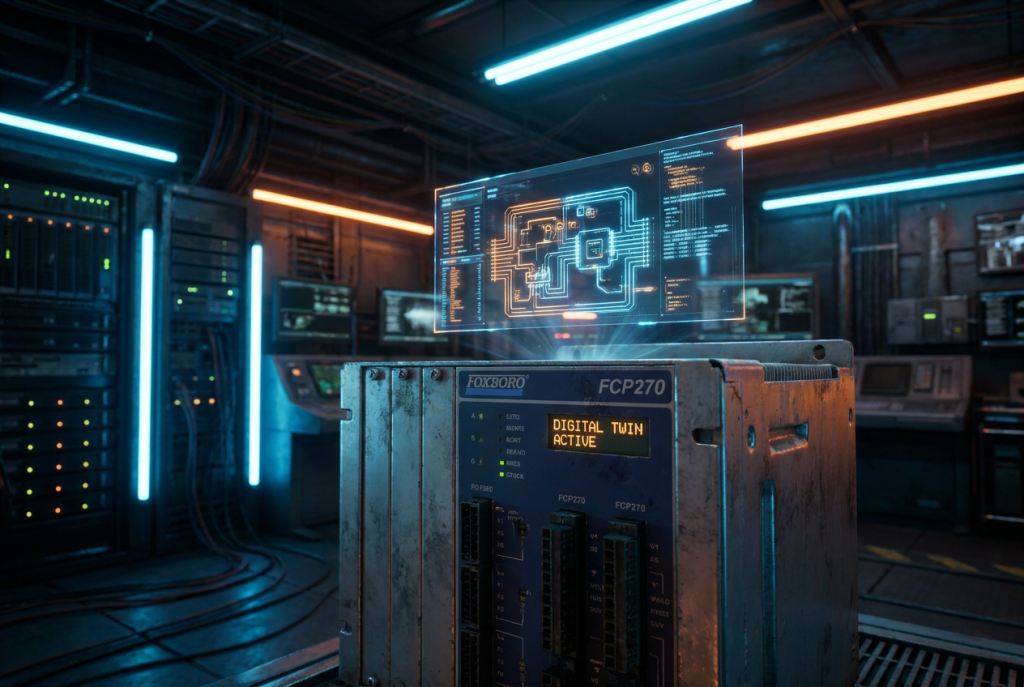
The Foxboro I/A Series remains one of the most robust DCS architectures ever built. In mid-2026, we are seeing a significant number of plants opting for “Life Extension” rather than “Full Modernization.” Why? Because the I/A Series’ mesh network and modular I/O are incredibly resilient. The challenge in 2026 isn’t the system’s performance; it’s the scarcity of audited spares. As Schneider Electric pivots its manufacturing capacity toward the newer SDA-compatible hardware, the production of classic I/A Series modules like the FCP270 or FBM217 has shifted to a “Limited” or “Custom Order” status with astronomical lead times.
This is where the concept of “Hardware Sovereignty” becomes actionable. In 2026, maintaining a high-availability plant means securing a strategic inventory of PLC and DCS control modules that have been technically audited. We aren’t talking about “used parts” from a generic reseller. We are talking about components that have undergone functional stress testing, firmware verification, and capacitor health audits. For a Foxboro user, having a verified FCP270 on the shelf is the difference between a minor 30-minute swap and a forced, multi-million dollar “Emergency Modernization” project.
Triconex and the ‘Safety-First’ Scarcity of 2026
When we talk about hardware longevity, we cannot ignore the safety layer. The Triconex Tricon and Trident systems are the gold standard for Safety Instrumented Systems (SIS). In May 2026, as CISA releases new advisories (like the ICSA-26-146-03 bundle) focused on industrial security, the pressure to upgrade to the latest Tricon CX has intensified. The Tricon CX is a magnificent piece of engineering, but the “Live Migration” from a legacy Trident to a CX is notoriously complex and often impossible without a full plant shutdown.
For many operators, the pragmatic path in 2026 is to harden the existing Triconex footprint. This involves implementing robust network segmentation while ensuring that the physical safety controllers have a “Deep Reserve” of spares. The scarcity of high-demand modules like the 3008 Main Processor or 3604E Digital Output modules has turned these parts into strategic commodities. In the “Expert-to-Expert” world, we know that a 20-year-old Tricon system with fresh spares and an air-gapped security posture is often safer than a brand-new system in the middle of a rocky commissioning phase.
Continuity Over Hype: Navigating the 2026 DCS Market
The move to “Software-Defined Automation” is a net positive for the industry, but it shouldn’t be a source of “Obsolescence Panic.” As we look at the brand and model specific spares market in mid-2026, the data shows that legacy systems are not “failing” due to age—they are being “retired” due to a lack of spares support. By taking ownership of your hardware supply chain, you reclaim the power to decide your own migration timeline.
At DriveKNMS, our role in 2026 is to serve as the technical bridge. We don’t just find parts; we audit them for a world where “Good Enough” is no longer acceptable. Whether you are running a legacy Foxboro I/A Series node or a Triconex safety rack, the goal is the same: to ensure that your plant shuts down on your schedule, not because a discontinued card gave up the ghost. In a year defined by “Software-Defined” promises, the most valuable asset you can have is a physically secured, audited hardware reserve.
The 2026 Foxboro/Triconex Resilience Checklist:
- Firmware Audit: Are your Foxboro FCP units running the correct firmware to maintain security compliance without needing a full software-defined overhaul?
- Capacitor Health: FBM modules over 12 years old are entering the “Capacitor Failure Zone.” Proactive auditing of your spares is essential.
- Strategic Sourcing: Have you identified a partner for emergency monitoring and control hardware that actually understands the I/A Series architecture?
- Migration De-Risking: If you are planning an upgrade to Foxboro SDA, do you have enough legacy spares to support the “Parallel Run” phase?
Conclusion: The Expert’s Edge
Modernization is a tool, not a mandate. The 2026 “Post-Hardware” narrative from OEMs is compelling, but for the boots-on-the-ground engineer, the “Hardware Sovereignty” of your existing Foxboro or Triconex system remains your best defense against unplanned downtime. Secure your spares, audit your hardware, and lead your plant with the confidence of an expert who knows that reliability is earned, not just purchased.
Frequently Asked Questions (FAQ)
1. Can Foxboro I/A Series hardware run in the new Software-Defined Automation (SDA) environment?
While Schneider Electric has designed paths for integration, the SDA environment is primarily built for newer-generation architectures. Most legacy I/A Series hardware requires an “Evolution” or “Bridge” layer, making it critical to maintain your existing hardware inventory during the transition years.
2. Why is there a sudden scarcity of FCP270 modules in 2026?
The scarcity is driven by a “Manufacturing Pivot.” As the OEM focuses on SDA and Tricon CX production, the production lines for classic FCP270 and FBM modules have been scaled back. Simultaneously, plants worldwide are implementing 2026 “Life Extension” projects, creating a spike in global demand for audited spares.
3. Is it safe to buy Triconex spares from the independent market in 2026?
Yes, provided the supplier offers a Technical Audit. In 2026, a “Basic Test” is not enough for a safety system. Look for partners who provide functional verification under load and firmware consistency checks. At DriveKNMS, every Triconex module is audited for safety-critical performance.
4. What is the most critical spare for a Foxboro I/A Series system in 2026?
Without question, the FCP270 Control Processor and the FBM217/FBM218 I/O modules. These are the “nervous system” of the DCS. If these fail and you don’t have an audited spare, you are looking at an immediate, forced modernization that could take months to engineer.
Is your Foxboro or Triconex system ready for the 2026 Modernization Trap?
Don’t let marketing cycles dictate your plant’s reliability. Contact DriveKNMS for a technical consultation and an immediate quote on audited Foxboro I/A Series and Triconex safety hardware.
Email: [email protected] | WhatsApp: +86 18359293191
Direct Inquiry: Request a Quote Directly
© 2026 DriveKNMS. All rights reserved. Official Website: https://driveknms.com Inquiry: [email protected] | WhatsApp/Tel: +86 18359293191