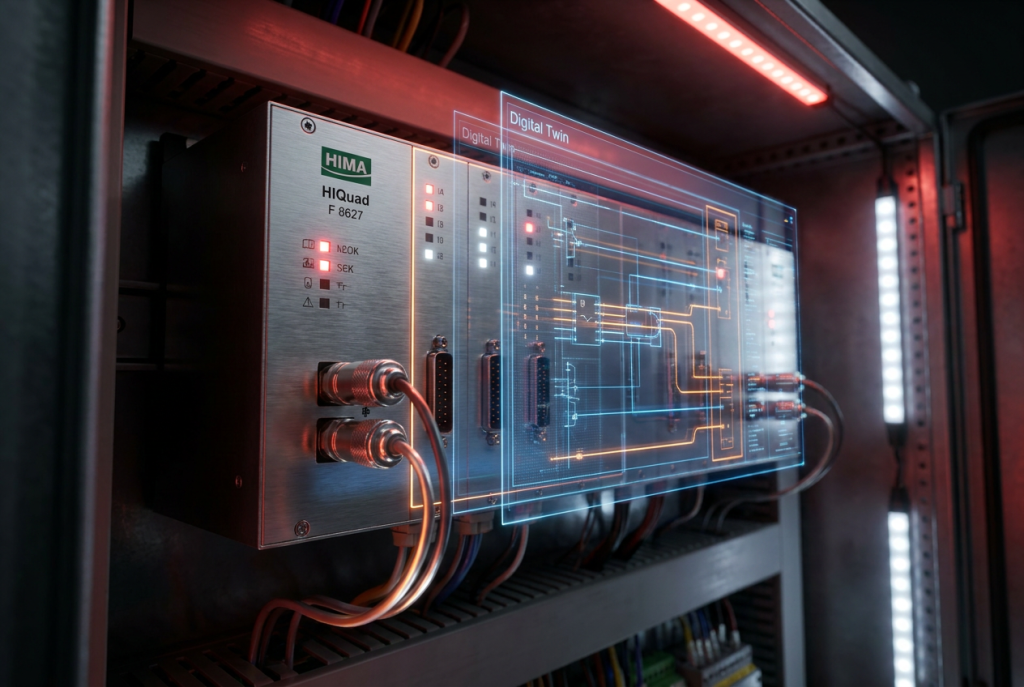
In the world of high-integrity safety systems, the name HIMA represents a standard of “no-compromise” protection. From offshore gas platforms to high-pressure chemical reactors, HIMA controllers like the legendary HIQuad series (H41, H51) and the high-performance HIMax have defined Safety Integrity Level 3 (SIL 3) operations for decades. However, as we enter June 2026, the industrial landscape is witnessing a significant shift. The acceleration of the transition to the newer HIQuad X platform, combined with the extreme scarcity of legacy HIQuad components, has created a “Resilience Gap” for safety engineers worldwide.
As an expert who has spent over 20 years auditing Safety Instrumented Systems (SIS), I’ve observed that the pressure to migrate is no longer just about software features—it’s about hardware survival. In mid-2026, many plants are finding themselves in a difficult position: their legacy HIMA systems are performing flawlessly, but the supply of audited spare parts has reached an all-time low. This “Hardware Famine” is forcing a choice between a multi-million dollar system replacement and a strategic life-extension program. Today, we audit the reality of HIMA hardware in 2026 and how to maintain functional safety without succumbing to “Modernization Panic.”
HIQuad vs. HIQuad X: The Compatibility Trap
HIMA has done an admirable job of maintaining backward compatibility with the introduction of HIQuad X. By allowing users to retain many of their existing HIQuad I/O modules while upgrading the processor units, the OEM has offered a “partial” modernization path. However, in 2026, the “Compatibility Trap” lies in the I/O layer itself. While the newer HIQuad X processors are available, the classic HIMA digital input and output modules—the workhorses of the H41/H51 racks—are becoming increasingly difficult to source in a verified, “ready-for-safety” condition.
For many reliability engineers, the goal is to avoid the “Migration Event” as long as possible to maximize the ROI of the existing system. This requires a shift in procurement strategy. In a year where global semiconductor realignments have deprioritized the legacy chips used in safety controllers, securing brand and model specific spares is no longer a clerical task—it is a strategic safety mandate. Without a verified Z 5014 input card or an F 8627 processor card on the shelf, a single component failure doesn’t just mean downtime; it means a potential violation of your plant’s SIL 3 certification.
The ‘Expert Audit’ of Safety Hardware
When it comes to safety systems, the definition of a “spare part” is different. You cannot simply buy a card from an unverified source and plug it into a SIL 3 rack. In 2026, the market is flooded with “Grey Market” hardware that lacks technical documentation or a verifiable history. At DriveKNMS, we emphasize the “Expert Audit” approach. Every HIMA component—whether it’s a processor, a communication card, or an I/O module—must be audited for capacitor health, firmware integrity, and functional performance under load.
The scarcity of 2026 has made the auditing process even more critical. We are seeing an increase in “Component Fatigue” in legacy HIMax and HIQuad systems that have been running 24/7 for over 15 years. This isn’t just about failure; it’s about the “Silent Obsolescence” of internal components that can lead to intermittent faults or fail-to-safe trips. By maintaining an inventory of PLC and DCS control modules that have been technically verified, you ensure that your “Hardware Sovereignty” remains intact. You decide when to migrate, not the supply chain.
Functional Safety in the Era of Cybersecurity
The May 2026 CISA advisories have underscored the growing intersection between functional safety (IEC 61511) and cybersecurity (IEC 62443). For HIMA users, this means that even legacy hardware must be integrated into a modern, secure architecture. The newer HIQuad X and HIMax systems are built with these standards in mind, but many plants are still running legacy H41/H51 systems that are “air-gapped” by necessity.
In 2026, the best way to secure these legacy safety systems is to ensure they are robustly supported by a deep reserve of spares. A system that cannot be repaired is a system that eventually becomes a security risk, as desperate maintenance teams may attempt “MacGyver” fixes or bypasses to keep the plant running. Professional-grade monitoring and control system cards, audited for safety, are the only legitimate way to manage this risk. Continuity is the ultimate safety feature.
The 2026 HIMA Resilience Checklist:
- SIL 3 Compliance Check: Do your current spares have the necessary certificates and revision levels to maintain your system’s SIL certification?
- Processor Redundancy Audit: For HIQuad H51 systems, do you have at least two verified F 8627 modules in reserve? These are the most critical failure points in 2026.
- Capacitor Health: Have your HIMA modules been audited for electrolytic capacitor aging? Units manufactured before 2012 are now in the high-risk zone.
- Strategic Sourcing: Have you identified a partner for emergency HIMA safety spares that understands the technical nuances of SIL 3 hardware?
Conclusion: Expertise is Your Shield
The 2026 “Hardware Famine” is a challenge, but it is not an insurmountable one. For the engineers who manage HIMA systems, the path forward is clear: prioritize the technical audit of your hardware, secure your critical spares inventory, and refuse to let supply chain volatility compromise your functional safety. At DriveKNMS, we stand with the experts who know that in the world of safety, there are no shortcuts. Your plant’s resilience is our mission.
Frequently Asked Questions (FAQ)
1. Can I use HIQuad X I/O modules in my legacy H41 or H51 racks?
While HIMA has designed the HIQuad X for maximum compatibility, there are specific limitations regarding bus synchronization and power consumption. You must verify the compatibility matrix for every module revision. Never assume a direct swap without a technical audit of your rack configuration.
2. What is the biggest risk of buying HIMA spares from the grey market in 2026?
The biggest risk is “Unverifiable SIL Integrity.” If a card has been improperly repaired or uses non-spec components, it may fail in a “Non-Safe” mode, potentially leaving your process unprotected. Always source from partners like DriveKNMS who provide a full technical audit and performance guarantee.
3. How do I know if my HIMA F 8627 processor is nearing failure?
Common signs include “Intermittent Diagnostic Faults” in the ELOP software, increased CPU temperature, or communication time-outs on the HIBUS. In 2026, we recommend a proactive audit of any processor module that has been in continuous service for more than 10 years.
4. Is HIMA still supporting the legacy HIQuad (H41/H51) series in 2026?
HIMA has moved many legacy modules to “Limited” or “Obsolete” status. While technical support may be available, the actual availability of new hardware is extremely low. This is why the “Audited Spares” market is now the primary source of continuity for most global HIMA users.
Is your HIMA safety system protected against the 2026 Hardware Famine?
Don’t wait for a fail-to-safe trip to expose a gap in your spares inventory. Contact DriveKNMS for a technical consultation and an immediate quote on audited HIMA HIQuad, HIMax, and safety-critical I/O hardware.
Email: [email protected] | WhatsApp: +86 18359293191
Direct Inquiry: Request a Quote Directly
© 2026 DriveKNMS. All rights reserved. Official Website: https://driveknms.com Inquiry: [email protected] | WhatsApp/Tel: +86 18359293191