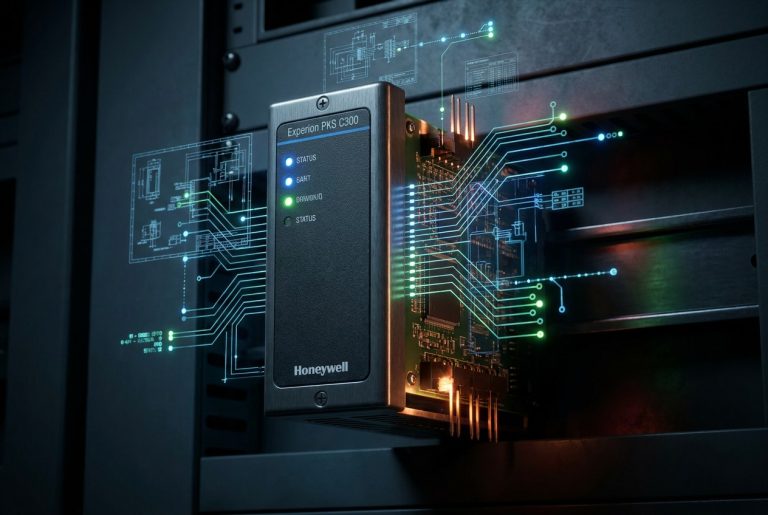
In the second quarter of 2026, a specific and localized ‘Scarcity Spike’ has emerged within the global industrial safety sector, primarily targeting the ICS Triplex T8000 (Trusted) series. For engineers in the offshore oil and gas industry and critical chemical processing, this isn’t just a supply chain annoyance—it is a direct threat to the ‘Safety Sovereignty’ of their assets. As a 20-year veteran of DCS and SIS maintenance, I have seen many product transitions, but the current scarcity of T8000 modules like the T8431 and T8403 feels different. It is the result of a ‘Phantom Scarcity’ where global demand for high-reliability semiconductors is clashing with the aging installed base of 2oo3 (2-out-of-3) voting architectures.
The ICS Triplex Trusted platform remains the gold standard for Triple Modular Redundant (TMR) safety systems. Its ability to mask internal faults and provide uninterrupted protection is unparalleled. However, in June 2026, the challenge has shifted from ‘how do we maintain it’ to ‘where do we find it.’ The OEM’s pivot toward newer safety platforms, combined with the extreme scarcity of the specialized ASICs used in the T8000 line, has created a gap that many procurement managers were unprepared for. If your site is relying on a dwindling inventory of ‘legacy’ safety cards, you are one hardware fault away from a forced, multi-million dollar migration.
The Technical Hook: Why TMR Hardware Cannot Be Substituted
In a standard PLC environment, a temporary substitution or a software patch might buy you time. In a Safety Instrumented System (SIS) like the Trusted TMR, hardware integrity is absolute. The hardware-based voting logic of the ICS Triplex Trusted series is etched into the circuitry. When a T8431 TMR Analog Input module or a T8403 TMR Digital Output module is flagged with an ‘Amber’ status, the system is performing as designed—isolating the fault to maintain safety. But once that faulty slice is removed, your system is running in 2oo2 mode. The ‘Triple’ redundancy is gone, and your safety margin is halved.
We are seeing an influx of ‘refurbished’ or ‘pulled’ modules on secondary markets that have not undergone rigorous OT-level auditing. Using an un-audited module in a safety loop is a violation of the very ‘Hardware Sovereignty’ that high-risk sites require. A module that ‘powers on’ but hasn’t been tested for its voting logic latency or its diagnostic masking ability is a ticking time bomb. In 2026, the resilience audit must start with a verification of your spare parts’ lineage.
Strategic Sourcing: The 2026 Resilience Audit for T8000 Users
For reliability engineers, the goal this month should be to secure a ‘Safety Buffer.’ This isn’t about hoarding; it’s about ensuring that your capital migration plan is driven by your schedule, not by a failed power supply or a bricked processor. The market for audited ICS Triplex Trusted spares is tightening rapidly. Here is the reality: the lead times for certain high-density I/O modules have stretched to 18-24 weeks in some regions, if they are available at all.
My advice to the field is to perform a ‘Physical Stock Audit’ immediately. Don’t trust the ERP system; walk into the warehouse and verify the seals and the manufacture dates of your T8000 spares. If you are running on ‘Zero-Stock’ for critical modules like the T8110 Processor, you are effectively operating without a safety net. The ‘Industrial Great Reset’ of 2026 has taught us that waiting for an emergency to procure a critical safety card is no longer a viable strategy.
Safety Sovereignty: Maintaining Control Over Your Lifecycle
Maintaining ‘Safety Sovereignty’ means that the plant owner—not the OEM—decides when a system is obsolete. By building a strategic reserve of audited, tested T8000 hardware, you extend the operational runway of your existing SIS by 5 to 10 years. This allows your team to focus on the ‘Digital Twin’ and ‘Autonomous Ops’ transitions without the constant fear of a hardware-driven outage.
Security in the SIS world is as much about physical availability as it is about digital firewalls. A system that cannot be repaired because the parts don’t exist is, by definition, insecure. As we navigate the complexities of 2026, remember that the most sophisticated AI diagnostics in the world cannot fix a physical fault in a TMR voting circuit if you don’t have the spare card to replace it.
Frequently Asked Questions
Q1: Can I mix newer AADvance modules with my existing Trusted T8000 rack?
No. While both platforms come from the ICS Triplex / Rockwell heritage, the architecture and the voting logic are distinct. Attempting to ‘hybridize’ the racks is not supported and would compromise the safety certification (SIL 3) of your installation. You must maintain the hardware alignment of your Trusted racks with Trusted-specific spares.
Q2: What is the primary cause of ‘Amber’ status on T8403 Digital Output modules?
Usually, it is a failure in the diagnostic feedback loop of one of the three redundant slices. While the module will continue to operate and vote correctly, it has lost its fault-tolerant capability in that specific channel. In the 2026 environment, an Amber light should be treated with the same urgency as a Red light, because a second fault in that module will lead to a trip.
Q3: Why are lead times for ICS Triplex spares so volatile in 2026?
We are witnessing the ‘Double Squeeze.’ The OEM is focusing production capacity on the newest safety lines, while the global semiconductor market is still recovering from the AI-driven component famine. Legacy-specific chips for the T8000 line are becoming ‘heritage components,’ meaning they are only produced in small, infrequent batches.
Q4: How do I verify the authenticity of an ICS Triplex module from a third-party supplier?
Look for an ‘Audit Certificate’ that includes a functional test report specifically for TMR voting. A reputable supplier should be able to provide diagnostic logs showing that the module has been tested across all three redundant paths and that the internal communication between the slices is within factory specs. Never buy a safety module that is ‘sold as-is’ for a critical process loop.
Is your safety net starting to fray? Don’t wait for a forced migration to compromise your plant’s safety. Whether you need an audited T8431 Analog Input or a redundant T8110 Processor, DriveKNMS provides fully tested, certified legacy ICS Triplex Trusted spares to keep your safety sovereignty intact. Browse our ICS Triplex Trusted inventory now or contact our safety engineers for a functional audit of your spare parts inventory.
© 2026 DriveKNMS. All rights reserved. Official Website: https://driveknms.com Inquiry: [email protected] | WhatsApp/Tel: +86 18359293191