
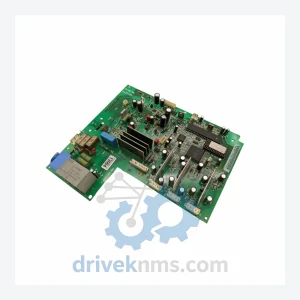
ABB SNAT-7120 Circuit Board – SNAZ7120J Series
ABB SNAT-7120 / SNAZ7120J Circuit Board: Sourcing Strategy & Asset Return Value in a Constrained Global Supply Chain The ABB…
Model: GJR2397800R0100 81AR01A-E
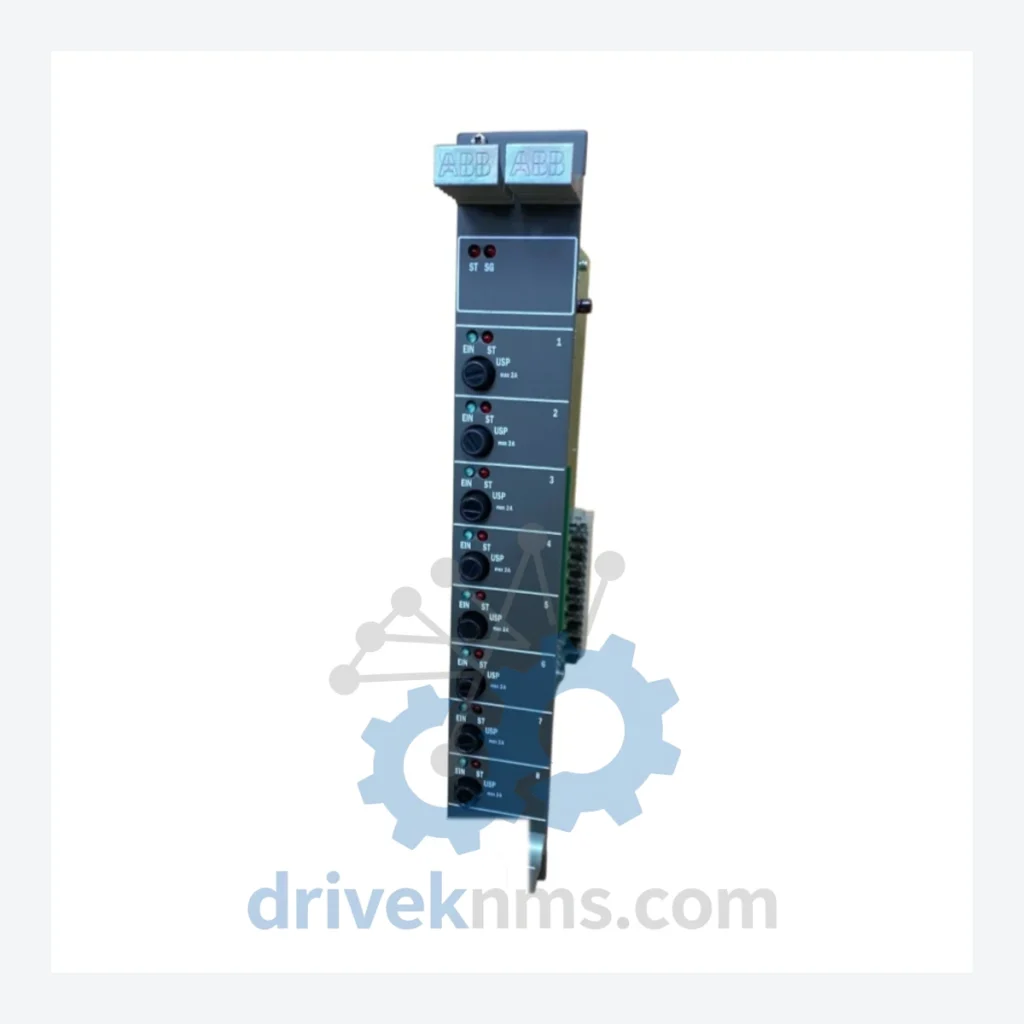
Product Overview
Commercial availability is handled through direct RFQ, model verification and export-oriented follow-up rather than public cart checkout.
Datasheet Preview
Use attached product manuals when available. If the manual is not public yet, request the full file directly through RFQ.
Commercial Path
Product pages on DRIVEKNMS are designed to verify model, brand and series first, then move the buyer into one clean quotation path.
Technical Dossier
The ABB Advant MOD 300 is a distributed control system (DCS) platform developed by ABB (formerly Asea Brown Boveri) and widely deployed across global heavy industry sectors including petrochemical refining, nuclear power generation, pulp and paper manufacturing, and offshore oil and gas processing. First introduced in the late 1980s as part of ABB's Advant Controller family, the MOD 300 system established itself as a backbone control architecture in facilities requiring high-availability, deterministic process control with redundant I/O infrastructure. Installations remain active across hundreds of sites in Europe, Asia-Pacific, and the Middle East, many of which are operating beyond the system's original design lifecycle. The MOD 300 platform is characterized by its modular backplane architecture, RCOM/SATT communication bus, and a structured separation between controller, I/O, and communication layers — a design philosophy that enabled field-level expansion without controller downtime.
The MOD 300 system evolved through three distinct architectural generations. The first generation (circa 1988–1994) introduced the foundational S100 I/O bus and the AC 450 controller node, establishing the modular rack-and-backplane topology that defined the platform. Modules from this era used parallel bus addressing and were designed for 19-inch rack mounting in climate-controlled marshalling cabinets. The second generation (1994–2002) introduced the AC 460 and AC 480 controller variants with expanded memory addressing, improved cycle times, and support for PROFIBUS-DP field device integration alongside the native RCOM bus. I/O module density increased, and redundant power supply configurations became standard for critical loop applications. The third generation (2002–2012) saw ABB transition the MOD 300 toward its System 800xA migration path, introducing OPC-DA gateway modules and Ethernet-based supervisory connectivity while maintaining backward compatibility with legacy S100 I/O racks. Since approximately 2012, ABB has classified the MOD 300 as a mature/end-of-life platform, with official hardware support discontinued for most module families. Compatibility between generations is constrained by backplane bus revision: first-generation S100 racks are not electrically compatible with second-generation high-density I/O modules without bus adapter cards. Engineers managing mixed-generation installations must verify backplane revision codes before substituting modules.
The following SKUs represent verified, commonly sourced modules within the ABB Advant MOD 300 ecosystem. Each entry reflects the module's primary functional classification and application role within a MOD 300 rack assembly.
Relay Output Modules (DO)
Analog Input Modules (AI)
Digital Input Modules (DI)
CPU / Controller Modules
Communication & Adapter Modules
ABB formally discontinued hardware production for the majority of MOD 300 module families between 2010 and 2018. As of 2026, no new-manufacture stock is available through ABB's authorized distribution network for most S100 I/O modules, AC 450/460/480 controller cards, or RCOM communication adapters. DriveKNMS maintains a dedicated inventory of tested surplus and refurbished MOD 300 modules sourced from decommissioned plant assets, controlled-environment warehouses, and verified secondary market channels. Our procurement team actively tracks global availability of low-stock SKUs including the 81AR01A-E relay output module, 81AI02A-E HART input module, and AC 460 controller cards — items that represent the highest failure-rate components in aging MOD 300 installations. For facilities operating MOD 300 systems beyond their planned decommission date, DriveKNMS provides lifecycle extension support including cross-reference analysis (identifying functional equivalents within the MOD 300 family or compatible third-party substitutes), emergency stock reservation for planned maintenance shutdowns, and long-term consignment agreements for sites requiring guaranteed spare availability over multi-year maintenance contracts. All sourced modules are supplied with full traceability documentation including prior installation history where available, and are tested against ABB's published functional specifications prior to shipment.
MOD 300 modules present specific test challenges due to their backplane-dependent communication architecture: most I/O modules cannot be functionally verified in isolation and require a live S100 backplane with an active controller node to complete bus handshake and channel-level diagnostics. DriveKNMS operates a dedicated MOD 300 test bench comprising an AC 450 controller rack, calibrated analog signal sources (4–20 mA, 0–10 V, thermocouple simulation), and a 24 VDC load bank for relay output verification. Each module processed through our facility undergoes the following protocol: (1) visual inspection for PCB damage, capacitor condition, and connector pin integrity; (2) power-on self-test with backplane bus enumeration verification; (3) channel-level functional test — all analog channels verified at 0%, 50%, and 100% of rated input range; all digital channels cycled through open/closed states under rated load; relay output contacts verified for coil pull-in voltage, contact resistance (<100 mΩ), and release time; (4) RCOM bus communication test confirming correct module address response and data frame integrity; (5) 24-hour burn-in at operating temperature for modules designated as critical spares. Modules that fail any stage of this protocol are either repaired to component level by our electronics technicians or quarantined and removed from inventory. Test records are retained and available upon request for quality-audited procurement processes.
Related Paths
ABB SNAT-7120 / SNAZ7120J Circuit Board: Sourcing Strategy & Asset Return Value in a Constrained Global Supply Chain The ABB…
ABB AC500 Series: Comprehensive Module Range and Technical Overview The ABB AC500 is a scalable modular PLC platform deployed across…
ABB SCDCS-CON-4 Control Board – Obsolete DCS Spare Part When a single control board fails in a legacy distributed control…