
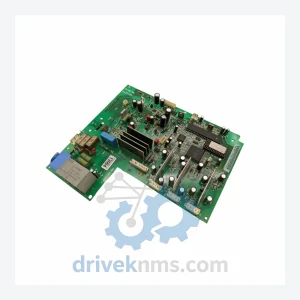
ABB SNAT-7120 Circuit Board – SNAZ7120J Series
ABB SNAT-7120 / SNAZ7120J Circuit Board: Sourcing Strategy & Asset Return Value in a Constrained Global Supply Chain The ABB…
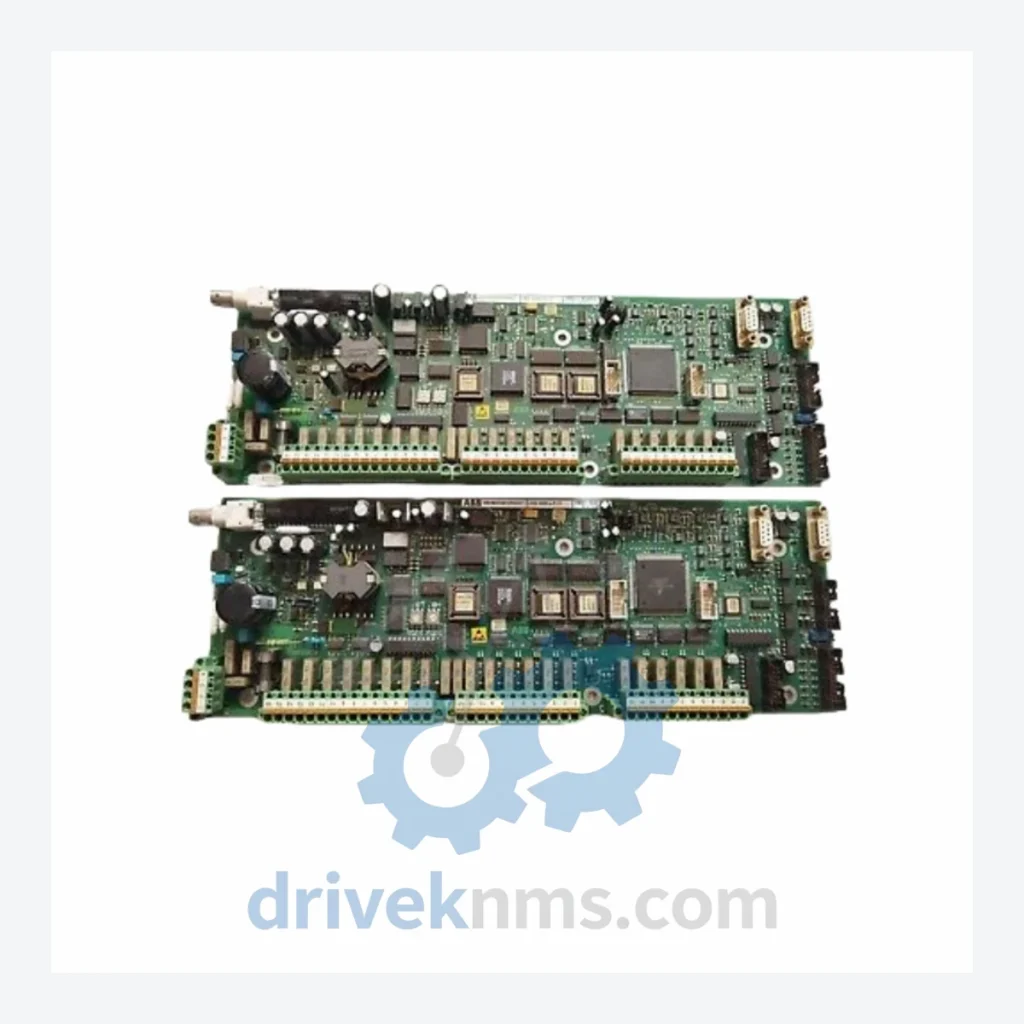
Model: UNS2882A-P,V1 3BHE003855R0001
Product Overview
Commercial availability is handled through direct RFQ, model verification and export-oriented follow-up rather than public cart checkout.
Datasheet Preview
Use attached product manuals when available. If the manual is not public yet, request the full file directly through RFQ.
Commercial Path
Product pages on DRIVEKNMS are designed to verify model, brand and series first, then move the buyer into one clean quotation path.
Technical Dossier
The ABB UNITROL 6000 is a digital automatic voltage regulator (AVR) and excitation control platform deployed across heavy industrial sectors including petrochemical refineries, nuclear power stations, hydroelectric plants, and offshore platforms. Based on the AC800PEC high-performance controller architecture, the UNITROL 6000 platform manages synchronous generator excitation with millisecond-level response times, supporting both static and rotating excitation topologies. Its modular hardware design — separating control, I/O, power, and communication functions into discrete boards — makes individual board-level replacement feasible without full system overhaul, a critical factor for facilities operating under continuous uptime requirements.
ABB's UNITROL excitation control lineage spans several decades. The UNITROL 1000 and UNITROL 5000 platforms established the foundation for digital AVR control in the 1990s and early 2000s, using proprietary DSP-based architectures with limited fieldbus integration. The UNITROL 6000, introduced in the mid-2000s, represented a structural shift: it adopted the AC800PEC real-time controller (derived from the AC 800M DCS family) as its computational core, enabling IEC 61850 GOOSE messaging, PROFIBUS DP, and Modbus TCP integration natively.
The platform's hardware revisions — identifiable by the suffix codes on board part numbers (e.g., R0001, R0002) — reflect incremental improvements in EMC shielding, FPGA firmware versions, and connector robustness. The UNS2882A-P,V1 3BHE003855R0001 is a first-revision control board within this architecture, and remains in active use across installations commissioned between 2006 and 2016. Compatibility between hardware revisions requires verification against the site-specific software build (PPD file) and AC800PEC firmware version.
The following SKUs represent verified components within the ABB UNITROL 6000 and closely related AC800PEC excitation platform. Each entry reflects a discrete hardware function:
Control & Processor Modules
Digital & Analog I/O Modules
Communication & Fieldbus Adapters
Power Supply Modules
ABB formally transitioned new excitation system sales toward the UNITROL 1020 and UNITROL 6800 platforms from approximately 2018 onward. As a result, UNITROL 6000 hardware — including the UNS2882A-P,V1 3BHE003855R0001 — is no longer manufactured on a standard production basis. Lead times through OEM channels for legacy boards can exceed 26 weeks, or parts may be declared NLA (No Longer Available).
DriveKNMS maintains a dedicated inventory of UNITROL 6000 spare boards sourced from decommissioned systems, controlled factory overstock, and verified third-party channels. All units are catalogued by part number, hardware revision, and firmware compatibility level. For installations where a direct board swap is required without system reconfiguration, hardware revision matching (R0001 vs. R0002) is verified prior to dispatch. DriveKNMS also supports cross-reference identification: if your site documentation references an older ABB internal part number, our technical team can confirm the current equivalent SKU.
UNITROL 6000 control boards operate within a tightly coupled hardware-software environment. A board that passes basic power-on tests may still fail under closed-loop excitation conditions if its onboard FPGA configuration or EEPROM calibration data is corrupted. DriveKNMS applies a multi-stage test protocol specific to this platform:
Related Paths
ABB SNAT-7120 / SNAZ7120J Circuit Board: Sourcing Strategy & Asset Return Value in a Constrained Global Supply Chain The ABB…
ABB AC500 Series: Comprehensive Module Range and Technical Overview The ABB AC500 is a scalable modular PLC platform deployed across…
ABB SCDCS-CON-4 Control Board – Obsolete DCS Spare Part When a single control board fails in a legacy distributed control…