
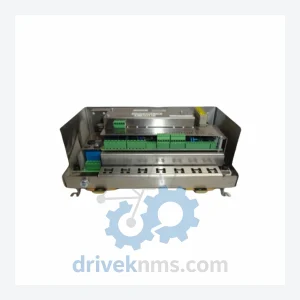
Schenck VMD20150.xx V003853.B11 VMD20150 Disocont Controller – Weighing & Dosing
Schenck VMD20150.xx V003853.B11 VMD20150 Disocont Controller: Sourcing Strategy & Asset Return Value in a Constrained Supply Chain The Schenck VMD20150.xx…
Model: VSE20100 VLW20150 VSB20100
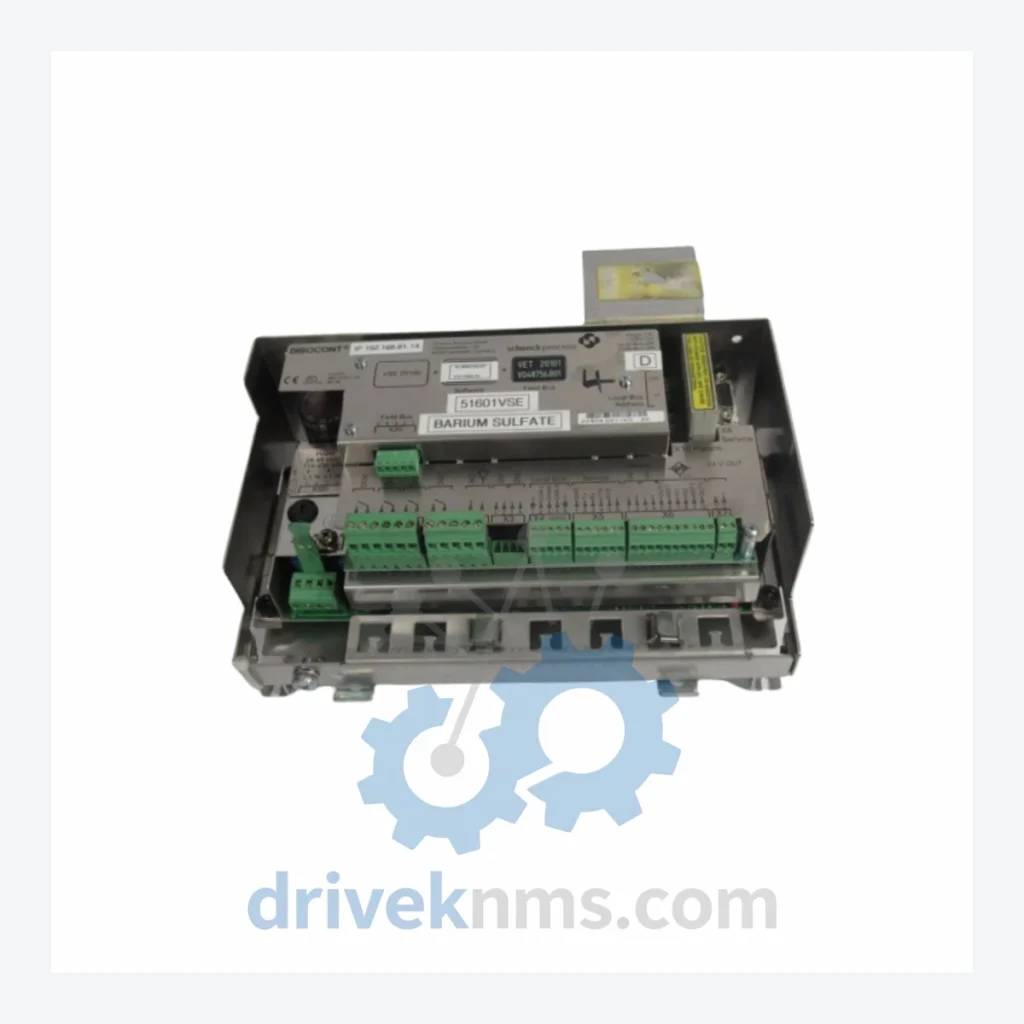
Product Overview
Commercial availability is handled through direct RFQ, model verification and export-oriented follow-up rather than public cart checkout.
Datasheet Preview
Use attached product manuals when available. If the manual is not public yet, request the full file directly through RFQ.
Commercial Path
Product pages on DRIVEKNMS are designed to verify model, brand and series first, then move the buyer into one clean quotation path.
Technical Dossier
The SCHENCK Disocont series is a purpose-built weighing and feeding control platform developed by Schenck Process GmbH (Germany). It is deployed across continuous bulk material handling operations in cement plants, chemical processing facilities, coal-fired power stations, steel mills, and petrochemical refineries. The platform provides closed-loop gravimetric control for belt weighfeeders, loss-in-weight feeders, and screw feeders. Its installed base spans several decades of heavy industrial infrastructure across Europe, Asia-Pacific, the Middle East, and the Americas, making it one of the most widely maintained legacy DCS subsystems in the bulk solids industry.
The Disocont platform has progressed through three distinct hardware generations. The first generation (Disocont I / Disocont D) used proprietary backplane communication with parallel I/O wiring and was common in installations from the late 1980s through the mid-1990s. These units relied on EPROM-based firmware and are now fully obsolete with no OEM support.
The second generation (Disocont Tersus / Disocont V) introduced a modular rack architecture with a dedicated CPU module, separate analog and digital I/O cards, and serial fieldbus interfaces (Profibus-DP, Modbus RTU). This generation — which includes the VSE, VLW, and VSB module families — became the dominant platform in greenfield projects from approximately 1998 to 2015. Firmware is stored on flash memory and can be updated via the Disocont Service Tool (DST).
The third generation (Disocont Tersus 4 / Disocont Edge) introduced Ethernet-based communication, IEC 61131-3 programming compatibility, and integration with SCHENCK's ViscoTec and DisoView SCADA layers. Backward compatibility with second-generation I/O modules is partial and requires adapter backplanes. Many plants operating second-generation Disocont hardware have deferred migration due to the cost of re-engineering application programs and recalibrating load cell networks.
Cross-generation compatibility constraints are a primary driver of demand for second-generation spare modules. Replacement of a single failed card with a third-generation equivalent typically requires firmware re-flashing, parameter re-entry, and fieldbus address reconfiguration — work that is not always feasible during unplanned downtime.
The following SKUs represent the core module range of the SCHENCK Disocont second-generation (Tersus / V) platform. Each entry reflects a distinct hardware function within the rack system.
VSE20100: Central CPU / controller module; executes weighing and feeding algorithms, stores application parameters, manages rack communication bus.
VLW20150: Load cell signal conditioning module; provides excitation voltage, amplification, and A/D conversion for up to four load cell inputs.
VSB20100: System backplane / bus interface module; routes power and data between CPU and I/O modules within the Disocont rack.
VDI21200: Digital input module, 24 VDC, 16-channel; used for limit switches, proximity sensors, and interlock signals.
VDO21200: Digital output module, 24 VDC relay, 16-channel; drives contactors, solenoids, and alarm outputs.
VAI21100: Analog input module, 4–20 mA / 0–10 V, 8-channel; reads flow transmitters, pressure sensors, and speed references.
VAO21100: Analog output module, 4–20 mA, 4-channel; transmits setpoint signals to variable speed drives and control valves.
VPB21100: Profibus-DP communication adapter; connects the Disocont rack to a host DCS or PLC via Profibus-DP V1 protocol.
VMB21100: Modbus RTU / RS-485 communication module; provides serial fieldbus connectivity for SCADA integration.
VPS20100: Rack power supply module, 24 VDC regulated output; provides isolated power to all modules in the Disocont rack.
VPS20200: Redundant power supply module; hot-standby configuration for continuous-process applications requiring high availability.
VSE20200: Enhanced CPU module with expanded memory; supports larger application programs and higher-speed control loops.
VLW20100: Load cell input module, earlier revision; compatible with Disocont V racks, lower channel density than VLW20150.
VDI21100: Digital input module, 24 VDC, 8-channel; compact variant for installations with limited I/O point count.
VDO21100: Digital output module, 24 VDC relay, 8-channel; compact output variant for smaller feeder control panels.
VAI21200: High-resolution analog input module, 16-bit A/D; used in precision dosing applications requiring tighter measurement accuracy.
VCO21100: Pulse counter / encoder input module; reads speed signals from tachometers and rotary encoders for belt speed measurement.
The SCHENCK Disocont second-generation platform entered end-of-life status for OEM spare parts supply between 2018 and 2022, depending on module type. SCHENCK Process no longer manufactures VSE20100, VLW20150, VSB20100, or the majority of associated I/O cards as new production units. Authorized service channels offer refurbished stock on a limited and unpredictable basis.
DriveKNMS maintains a dedicated inventory of Disocont second-generation modules sourced through controlled decommissioning projects, surplus equipment auctions, and long-term stocking agreements with industrial maintenance contractors. All units are catalogued by part number, firmware revision, and physical condition grade prior to listing.
For plants operating Disocont hardware beyond its OEM support window, DriveKNMS provides: verified replacement modules with documented firmware versions; cross-reference support for identifying functional equivalents across Disocont hardware revisions; and technical documentation packages to assist maintenance engineers with module swap procedures. Emergency dispatch is available for critical process shutdowns.
Disocont modules present specific test challenges due to their integrated backplane bus architecture and the interdependency between the CPU module (VSE) and signal conditioning cards (VLW). DriveKNMS applies the following verification procedures to all Disocont inventory:
Each CPU module (VSE series) is powered in a test rack and subjected to a full boot cycle verification, confirming firmware version readout, parameter memory integrity, and bus communication handshake with at least one I/O module. Load cell modules (VLW series) are tested under simulated load cell input using a precision resistance decade box to verify A/D conversion linearity and excitation voltage stability across the full input range. Digital I/O modules are cycled through all channels under rated voltage and load conditions. Analog modules are calibrated against a traceable reference standard and output accuracy is verified at 0%, 25%, 50%, 75%, and 100% of span. Communication modules (VPB, VMB) are tested for protocol handshake and data integrity using a Profibus/Modbus analyzer. All modules passing functional test are cleaned, inspected for capacitor condition and connector integrity, and assigned a condition grade before dispatch.
Related Paths
Schenck VMD20150.xx V003853.B11 VMD20150 Disocont Controller: Sourcing Strategy & Asset Return Value in a Constrained Supply Chain The Schenck VMD20150.xx…
Schenck V064089.B01 Touch Screen Operator Interface – Obsolete Schenck Spare Part When a Schenck balancing machine operator interface fails, the…
Schenck VLB20105 V003048.B02 Module – Obsolete Balancing System Spare Part When a critical module in a Schenck balancing system fails,…