
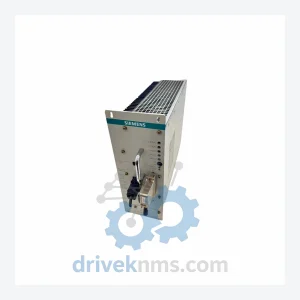
Siemens S31043 Rectifier Modules — S31043-K1166-X
Siemens S31043 Series: Comprehensive Module Range and Technical Overview The Siemens S31043 series comprises rectifier and power supply modules deployed…
Model: SMI2.11.3
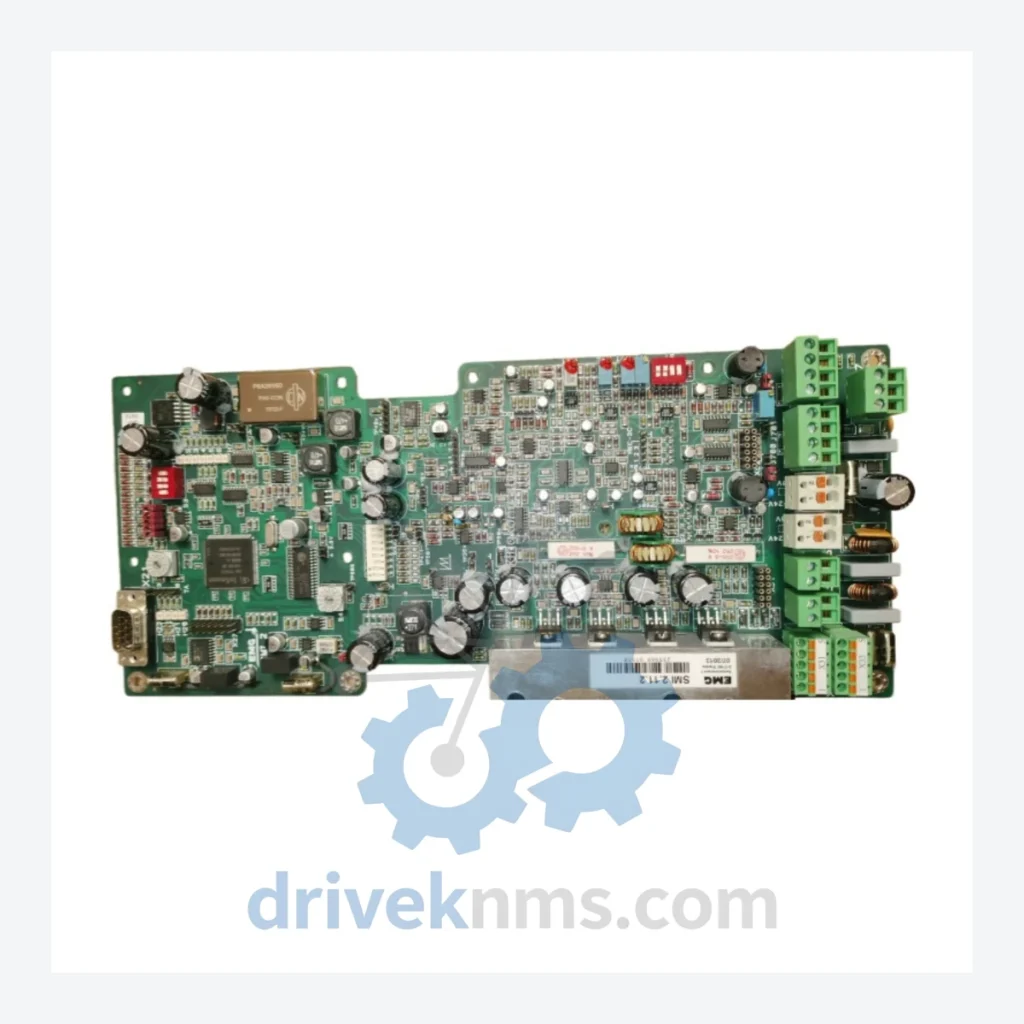
Product Overview
Commercial availability is handled through direct RFQ, model verification and export-oriented follow-up rather than public cart checkout.
Datasheet Preview
Use attached product manuals when available. If the manual is not public yet, request the full file directly through RFQ.
Commercial Path
Product pages on DRIVEKNMS are designed to verify model, brand and series first, then move the buyer into one clean quotation path.
Technical Dossier
The EMG SMI2 series represents a purpose-engineered family of control and signal processing modules developed by EMG Automation GmbH for inductive strip measurement systems deployed in heavy industrial environments. These systems are integral to flatness measurement, strip position control, and tension regulation in continuous processing lines across cold rolling mills, galvanizing lines, pickling lines, and strip coating facilities. The SMI2 platform has established a significant installed base in steel plants, aluminum rolling mills, and non-ferrous metal processing facilities across Europe, Asia, and North America. Its modular backplane architecture allows for distributed I/O expansion and centralized control within a single rack, making it a preferred solution for OEM integrators and plant automation engineers operating under stringent uptime requirements. In nuclear-adjacent industrial environments and petrochemical strip processing lines, the SMI2's deterministic signal processing and robust EMC shielding have made it a reference standard for inductive measurement applications.
The SMI2 series was introduced as a successor to EMG's earlier SMI1 platform, which relied on discrete analog signal conditioning with limited digital communication capability. The SMI2 generation introduced a structured backplane bus architecture, enabling modular slot-based expansion and standardized inter-module communication. Early SMI2 variants (circa late 1990s to early 2000s) used proprietary parallel bus protocols for real-time data exchange between the CPU module and peripheral I/O boards. Mid-generation revisions introduced serial fieldbus compatibility, including PROFIBUS-DP interfaces, allowing the SMI2 rack to integrate with Siemens S7 and ABB AC800M supervisory controllers without gateway hardware.
Later SMI2 variants incorporated enhanced DSP-based signal processing boards capable of higher sampling rates for dynamic flatness measurement in high-speed rolling applications. The SMI2.11.x sub-series, which includes the SMI2.11.3 control board, represents the mature control layer of this architecture — responsible for coordinating measurement cycles, managing sensor excitation, and transmitting processed flatness deviation data to the host PLC or DCS. As of 2026, the SMI2 series is in the late maturity to early obsolescence phase of its product lifecycle. EMG has transitioned newer installations to the SMI3 and SMI4 platforms. However, the SMI2 remains operational in a large number of existing plants where capital replacement is deferred, making long-term spare parts availability a critical operational concern.
The following SKUs represent the core module types within the EMG SMI2 series, organized by functional category. All models listed are verified components of the SMI2 platform architecture.
Control & CPU Modules
Signal Conditioning & Analog I/O Modules
Digital I/O Modules
Communication & Interface Modules
Power Supply Modules
As the SMI2 series transitions into the obsolescence phase, OEM factory support for individual module replacement has become increasingly limited. EMG's standard service channels no longer stock all SMI2 sub-variants, and lead times for factory-sourced replacements — where available — can extend to 16–26 weeks. For plant operators running continuous processing lines, this represents an unacceptable maintenance risk.
DriveKNMS maintains a dedicated inventory program for SMI2 series modules, sourced through certified industrial surplus channels, decommissioned plant equipment, and direct OEM overstock acquisition. Our SMI2 inventory covers control boards, analog I/O modules, communication adapters, and power supply units across all major sub-series variants. For modules confirmed as discontinued (including SMI2.11.1, SMI2.21.1 early revisions, and SMI2.51.1 first-generation units), DriveKNMS provides lifecycle extension support including cross-reference analysis to identify compatible replacement modules within the SMI2 family or validated third-party equivalents. All sourced units are subject to pre-shipment functional verification. Emergency dispatch is available for critical production line failures with same-day processing for in-stock items.
The SMI2 series presents specific quality verification challenges due to its backplane bus architecture and the precision requirements of inductive measurement signal chains. Standard power-on testing is insufficient to validate the functional integrity of SMI2 control and signal conditioning boards. DriveKNMS applies a structured multi-stage test protocol for all SMI2 modules processed through our facility.
For control boards (SMI2.11.x series), verification includes firmware version identification, backplane bus communication handshake testing, and diagnostic register read/write cycle validation. For analog signal conditioning modules (SMI2.21.x and SMI2.23.x), testing covers input channel linearity across the full measurement range, excitation frequency accuracy, and demodulation output stability under simulated inductive load conditions. Communication modules (SMI2.41.x, SMI2.42.x) are tested for protocol compliance using dedicated PROFIBUS and RS-485 test equipment, including frame integrity checks and baud rate stability verification. Power supply modules (SMI2.51.x) undergo load regulation testing at 25%, 50%, 75%, and 100% of rated output, with ripple and noise measurements recorded against OEM specifications. All test results are documented and available upon request with each shipment.
Related Paths
Siemens S31043 Series: Comprehensive Module Range and Technical Overview The Siemens S31043 series comprises rectifier and power supply modules deployed…
Siemens ULC Series: Comprehensive Module Range and Technical Overview The Siemens ULC (Unitary Logic Controller) series is a purpose-built line…
Siemens RW3045-1AB14 Soft Starter: Supply Chain Acquisition Strategy & Asset Return Value The Siemens RW3045-1AB14 is a SIRIUS-series soft starter…