
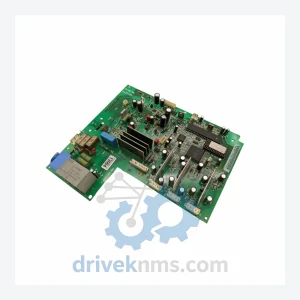
ABB SNAT-7120 Circuit Board – SNAZ7120J Series
ABB SNAT-7120 / SNAZ7120J Circuit Board: Sourcing Strategy & Asset Return Value in a Constrained Global Supply Chain The ABB…
Model: UNS 0863A-T V1 HIEE305082R0001
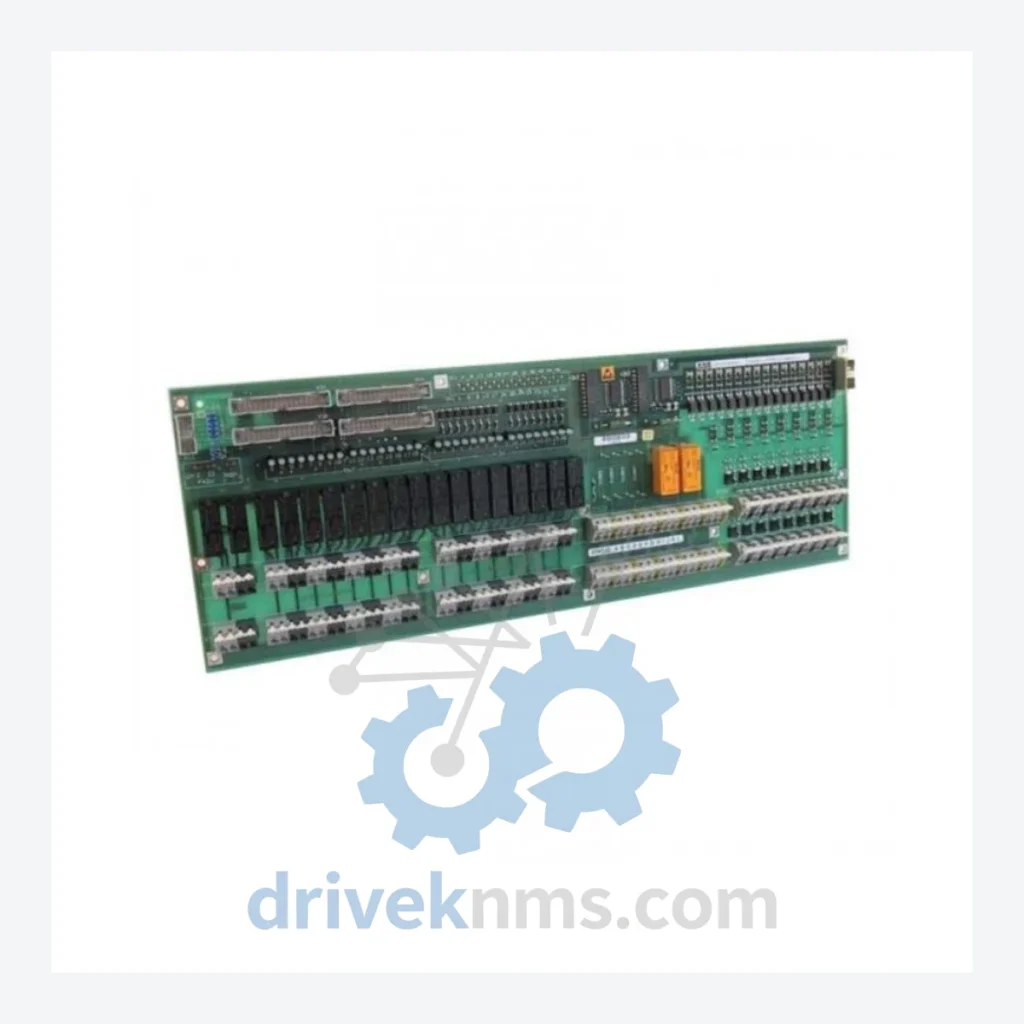
Product Overview
Commercial availability is handled through direct RFQ, model verification and export-oriented follow-up rather than public cart checkout.
Datasheet Preview
Use attached product manuals when available. If the manual is not public yet, request the full file directly through RFQ.
Commercial Path
Product pages on DRIVEKNMS are designed to verify model, brand and series first, then move the buyer into one clean quotation path.
Technical Dossier
When a digital I/O card fails inside an ABB Advant OCS or AC400 control system, the clock starts immediately. Every hour of unplanned downtime on a process line — whether in power generation, pulp and paper, or heavy manufacturing — carries a cost that dwarfs the price of any spare part. The deeper risk is not the downtime itself: it is the capital expenditure trigger. A single failed I/O card, if left without a qualified replacement, can force plant management into a full DCS migration project costing anywhere from USD 500,000 to several million dollars, depending on system complexity and integration depth.
DriveKNMS holds verified stock of the ABB UNS 0863A-T V1 / HIEE305082R0001 digital I/O card — a component that ABB discontinued years ago and that is no longer available through standard distribution channels. For facilities still operating Advant-based control architectures, this is not a commodity purchase. It is an asset protection decision.
| Part Number | HIEE305082R0001 |
| Module Designation | UNS 0863A-T V1 |
| Type | Digital I/O Card |
| Compatible Platform | ABB Advant OCS, AC400 Series Controllers |
| Manufacturer | ABB (Asea Brown Boveri) |
| Country of Origin | Germany |
| Discontinuation Status | Confirmed Obsolete – No longer manufactured or distributed by ABB |
| Condition Available | New Old Stock (NOS) / Professionally Refurbished |
Note: Electrical parameters such as channel count, voltage ratings, and I/O configuration are not published here to prevent specification errors. Confirmed technical data is provided upon request with supporting documentation.
The ABB Advant OCS platform — including the AC400 controller family — was a dominant force in process automation throughout the 1990s and 2000s. Thousands of installations across power utilities, chemical plants, and pulp mills were built on this architecture. ABB's transition to the System 800xA platform left a large installed base without a direct hardware upgrade path that preserves existing I/O wiring, field device configurations, and application logic.
The UNS 0863A-T V1 digital I/O card sits at the interface between the controller backplane and field instrumentation. Its failure does not merely interrupt one signal loop — it can take down an entire I/O group, triggering process shutdowns and safety system responses. Because the card communicates over ABB's proprietary internal bus architecture, there is no generic substitute. A replacement must be the same hardware revision to maintain firmware compatibility and avoid reconfiguration of the associated process objects.
For plant managers facing pressure to retire aging Advant systems, the financial calculus is straightforward: a verified spare card at a fraction of a percent of the migration cost buys 5 to 10 additional years of reliable operation. That window is sufficient to plan a controlled, budgeted migration rather than an emergency one driven by hardware failure.
Facilities operating legacy DCS platforms like ABB Advant face a structural maintenance challenge: the original equipment manufacturer has exited the hardware market, but the installed base continues to run production-critical processes. The following strategy has been applied successfully across multiple industrial sites to defer migration costs while maintaining system reliability.
1. Conduct a failure-mode inventory audit. Identify every card type in the system that has no available replacement through standard channels. Prioritize by criticality — I/O cards connected to safety interlocks or primary control loops carry the highest risk. The UNS 0863A-T V1 typically falls into this high-priority category.
2. Establish a minimum spare holding. For a card of this type, a minimum of two units per system is a defensible position. One unit covers an immediate failure; the second covers the time required to source a third unit from the secondary market, which can take weeks to months for confirmed obsolete hardware.
3. Implement a scheduled inspection cycle. Obsolete I/O cards are susceptible to electrolytic capacitor degradation, connector oxidation, and firmware corruption from battery-backed memory loss. A biannual inspection and bench test of spare units — not just installed units — prevents the scenario where a spare is pulled from storage and found to be non-functional at the moment of need.
4. Document firmware versions before any swap. ABB Advant systems are sensitive to firmware revision mismatches between I/O cards and the controller. Before installing any replacement card, confirm the firmware version of the failed unit and verify that the replacement carries the same or a compatible revision. DriveKNMS provides firmware version documentation with each unit where records are available.
5. Negotiate a long-term supply agreement. For facilities with multiple Advant installations or a large number of identical card types, a reserved inventory arrangement with a specialist supplier eliminates the risk of market depletion. Contact DriveKNMS to discuss reserved stock options.
Sourcing obsolete industrial hardware from the secondary market carries inherent risk. DriveKNMS applies a structured 5-step quality process to every unit before it is offered for sale.
Step 1 – Visual and mechanical inspection. Each board is examined under magnification for physical damage, solder joint integrity, and connector pin condition. Units with bent pins, cracked PCB traces, or evidence of thermal stress are rejected at this stage.
Step 2 – Electrolytic capacitor assessment. Capacitor aging is the primary failure mode in boards of this era. Capacitors are tested for capacitance value, equivalent series resistance (ESR), and leakage. Units showing degraded capacitors are either recapped with equivalent-specification components or rejected.
Step 3 – Firmware and memory verification. Where applicable, onboard firmware is read and compared against known-good reference versions. Battery-backed SRAM is tested for data retention. Units with corrupted or unverifiable firmware are not sold as functional replacements.
Step 4 – Connector and pin corrosion treatment. Backplane connectors are cleaned and treated. Contact resistance is measured. Units that do not meet contact resistance thresholds are rejected.
Step 5 – Functional bench test. Where test fixtures are available for the specific card type, units are powered and exercised through their I/O channels. Test results are documented and provided with the unit on request.
The UNS 0863A-T V1 is a direct hardware replacement for the original installed card. It requires no modification to the controller configuration, no changes to field wiring terminations, and no re-engineering of the associated process application. This drop-in replacement characteristic is the primary reason facilities maintain spare holdings rather than accepting the cost and schedule risk of an engineered workaround.
Installing a verified replacement card eliminates the need to engage a DCS migration contractor, avoids the associated project management overhead, and preserves the existing operator interface and alarm management configuration. For a plant running a 24/7 continuous process, the value of avoiding a forced outage for system reconfiguration is measured in production throughput, not just engineering hours.
What warranty applies to obsolete parts?
DriveKNMS provides a 90-day warranty against defects in materials and workmanship on all units that have passed our QA process. Warranty terms for new old stock and refurbished units are confirmed in writing at the time of purchase.
How do I know the unit is genuine ABB hardware?
All units are inspected for ABB part markings, PCB revision codes, and manufacturing date codes consistent with the original production run. We do not sell remarked or counterfeit components. Documentation of part markings is available upon request before purchase.
Should I buy more than one unit?
For any confirmed obsolete card installed in a production-critical system, holding a minimum of two spare units is the standard recommendation. The secondary market for hardware of this age is finite. Once current stock is depleted, sourcing timelines become unpredictable. Purchasing additional units now is a lower-cost risk mitigation measure than emergency sourcing under production pressure.
Can you reserve stock for future delivery?
Yes. Contact us to discuss reserved inventory arrangements for facilities with ongoing maintenance requirements.
Related Paths
ABB SNAT-7120 / SNAZ7120J Circuit Board: Sourcing Strategy & Asset Return Value in a Constrained Global Supply Chain The ABB…
ABB AC500 Series: Comprehensive Module Range and Technical Overview The ABB AC500 is a scalable modular PLC platform deployed across…
ABB SCDCS-CON-4 Control Board – Obsolete DCS Spare Part When a single control board fails in a legacy distributed control…