
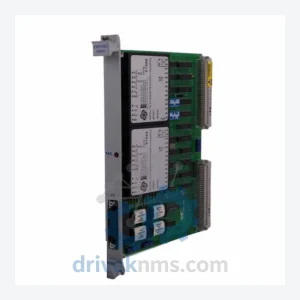
VMIC VMIVME Series Modules | VMIVME-4900
VMIC VMIVME Series: Comprehensive Module Range and Technical Overview The VMIC VMIVME series represents one of the most widely deployed…
Model: VME7671 605-064676-005 VME7671-42000A
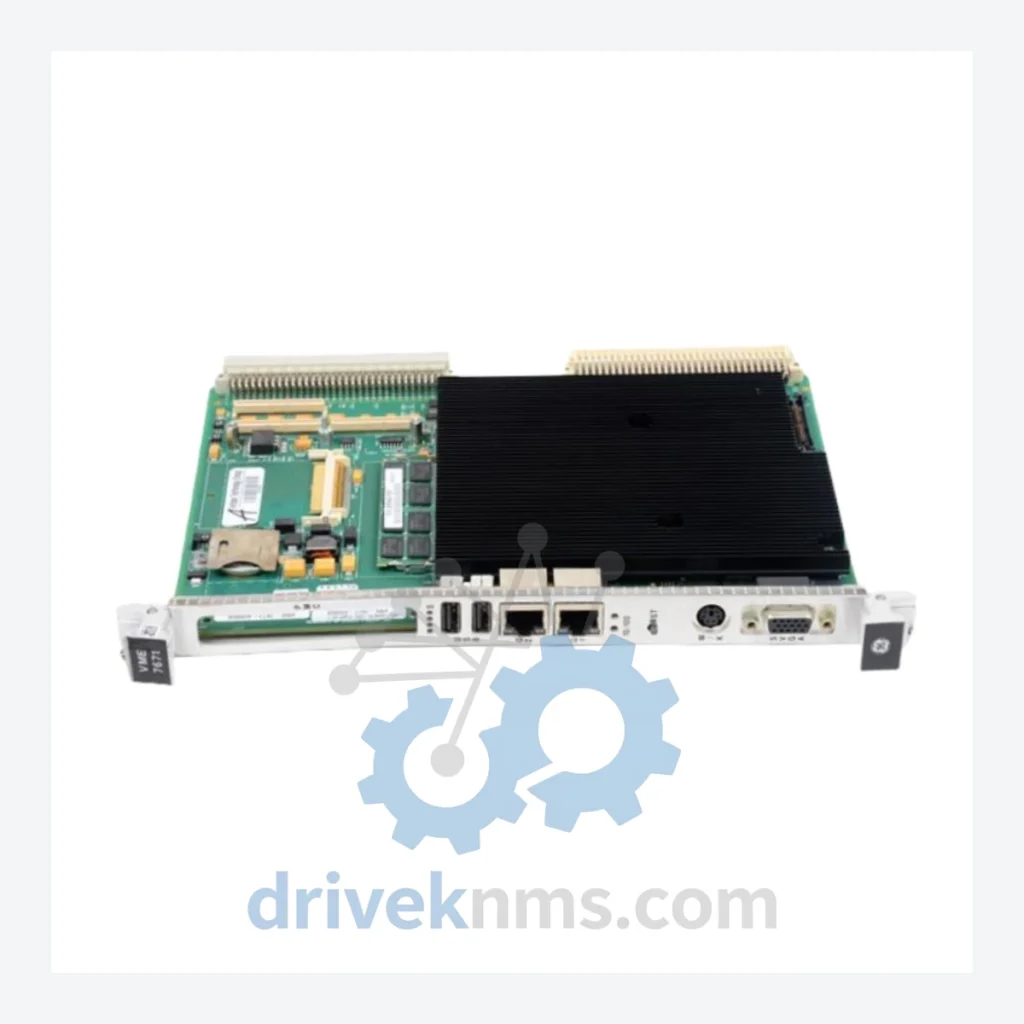
Product Overview
Commercial availability is handled through direct RFQ, model verification and export-oriented follow-up rather than public cart checkout.
Datasheet Preview
Use attached product manuals when available. If the manual is not public yet, request the full file directly through RFQ.
Commercial Path
Product pages on DRIVEKNMS are designed to verify model, brand and series first, then move the buyer into one clean quotation path.
Technical Dossier
When a VMEbus single board computer fails in a legacy control system, the consequences extend far beyond the cost of the board itself. A forced platform migration — encompassing new hardware, software re-engineering, system integration, validation, and production downtime — routinely runs into the hundreds of thousands, and in complex process industries, into the millions of dollars. The VMIC VME7671-42000A (P/N 605-064676-005) has been discontinued by the manufacturer. DriveKNMS maintains limited verified stock of this module, providing plant engineers and asset managers a direct path to system continuity without triggering a capital project.
| Attribute | Detail |
|---|---|
| Manufacturer | VMIC (now GE Intelligent Platforms / Abaco Systems) |
| Part Number | 605-064676-005 |
| Model Number | VME7671-42000A |
| Product Category | VMEbus Single Board Computer (SBC) |
| Bus Standard | VMEbus (IEEE 1014) |
| Form Factor | 6U VME |
| Country of Origin | United States |
| Discontinuation Status | Discontinued / Obsolete – No longer manufactured |
| Replacement Availability | No direct OEM replacement; third-party sourcing required |
Note: Electrical parameters such as processor speed, RAM, and I/O specifications are not published here to avoid inaccurate data. Please contact us for verified technical documentation.
The VMEbus architecture was the backbone of industrial control, defense, and scientific computing systems deployed throughout the 1990s and 2000s. Systems built on platforms such as the GE FANUC Series 90, Emerson Ovation DCS, and various SCADA and real-time control environments integrated VMIC VMEbus SBCs as core processing nodes. The VME7671-42000A served as a high-reliability computing element in these environments, and its abrupt discontinuation leaves operators with a stark choice: source the original hardware or fund a full system replacement.
For plant managers facing this decision, the arithmetic is straightforward. A single VMEbus SBC sourced from verified secondary market inventory costs a fraction of one percent of a full control system migration. The engineering hours alone to re-qualify a replacement platform — writing new application code, conducting factory acceptance testing, and managing the cutover — represent a cost that no maintenance budget absorbs without executive approval. Sourcing a verified spare eliminates that conversation entirely.
Industries where this module remains in active service include oil and gas processing, power generation, water treatment, pharmaceutical manufacturing, and defense electronics. In each of these sectors, the installed base of VMEbus-based systems is measured in decades of operational life, and the business case for maintaining that infrastructure — rather than replacing it — is well established.
The decision to extend the life of a VMEbus-based control system is not a compromise — it is a capital allocation strategy. The following approach has been applied successfully in facilities managing aging automation infrastructure:
1. Critical Spare Identification: Conduct a bill-of-materials audit of your VMEbus chassis. Identify every module that is discontinued or approaching end-of-life. Prioritize by failure impact: processing boards, communication interfaces, and power supplies carry the highest replacement risk.
2. Strategic Stock Positioning: For high-criticality modules like the VME7671-42000A, holding a minimum of one verified spare per system — and two for systems with no redundancy — is standard practice in facilities targeting a 5–10 year extension horizon. The carrying cost of a spare board is negligible against the cost of an unplanned outage.
3. Scheduled Preventive Inspection: VMEbus hardware from this era is susceptible to electrolytic capacitor degradation, battery-backed SRAM failure, and connector oxidation. A structured annual inspection program — without waiting for failure — extends mean time between failures significantly.
4. Firmware and Configuration Archiving: Ensure that all firmware images, configuration files, and application code are archived off-system and version-controlled. When a board is replaced, the ability to restore configuration without re-engineering is the difference between a two-hour recovery and a two-week project.
5. Vendor Relationship Management: Establish a relationship with a specialist secondary-market supplier before a failure event occurs. Emergency sourcing under production pressure results in higher costs and greater risk of receiving unverified parts. DriveKNMS maintains pre-qualified inventory specifically to support planned maintenance programs.
Sourcing discontinued hardware from the secondary market carries inherent risk. DriveKNMS applies a structured 5-step qualification process to every VMEbus module before it is offered for sale:
Step 1 – Visual and Physical Inspection: Each board is examined under magnification for mechanical damage, pin corrosion, solder joint integrity, and evidence of prior repair or modification. Boards with undisclosed rework are rejected.
Step 2 – Electrolytic Capacitor Assessment: Capacitor aging is the primary failure mode in hardware of this vintage. We assess capacitor condition and flag boards where replacement is indicated prior to deployment.
Step 3 – Firmware Version Verification: Where applicable, firmware revision is confirmed and documented. Boards are not offered as compatible with specific system versions unless firmware has been verified.
Step 4 – Functional Bench Test: Modules are powered and tested for basic operational response. Results are documented and available upon request.
Step 5 – Packaging and ESD Protection: Verified boards are packaged in anti-static materials with desiccant and shipped in rigid protective packaging to prevent transit damage.
Q: What warranty applies to discontinued parts?
A: DriveKNMS provides a 90-day warranty against defects in materials and workmanship on all tested and verified modules. Warranty terms for specific units are confirmed at the time of quotation.
Q: How do I know the unit is genuine and not counterfeit?
A: All modules sourced by DriveKNMS are inspected for authenticity as part of our qualification process. We do not offer parts that fail authenticity screening. Documentation of inspection results is available upon request.
Q: Can you supply multiple units for a long-term sparing program?
A: Inventory levels vary. Contact us with your quantity requirement and timeline. For customers establishing a multi-year sparing program, we recommend early engagement to reserve available stock before it is depleted.
Q: What is the lead time?
A: In-stock units ship within 3–5 business days following order confirmation and payment. Lead times for units requiring additional testing are confirmed at the time of quotation.
Q: Do you accept returns?
A: Returns are accepted within the warranty period for units that fail to perform as described. Units must be returned in original packaging with all documentation.
Related Paths
VMIC VMIVME Series: Comprehensive Module Range and Technical Overview The VMIC VMIVME series represents one of the most widely deployed…
VMIC VMIVME-7658 Series: Comprehensive Module Range and Technical Overview The VMIC (now GE Intelligent Platforms / Abaco Systems) VMIVME-7658 series…
VMIC VMIVME Series: Comprehensive Module Range and Technical Overview The VMIC VMIVME series represents a family of VMEbus-based industrial I/O…