
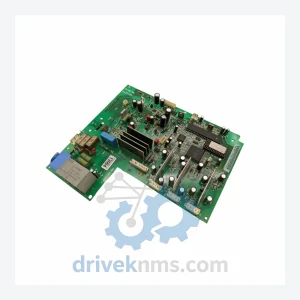
ABB SNAT-7120 Circuit Board – SNAZ7120J Series
ABB SNAT-7120 / SNAZ7120J Circuit Board: Sourcing Strategy & Asset Return Value in a Constrained Global Supply Chain The ABB…
Model: TINT-6511
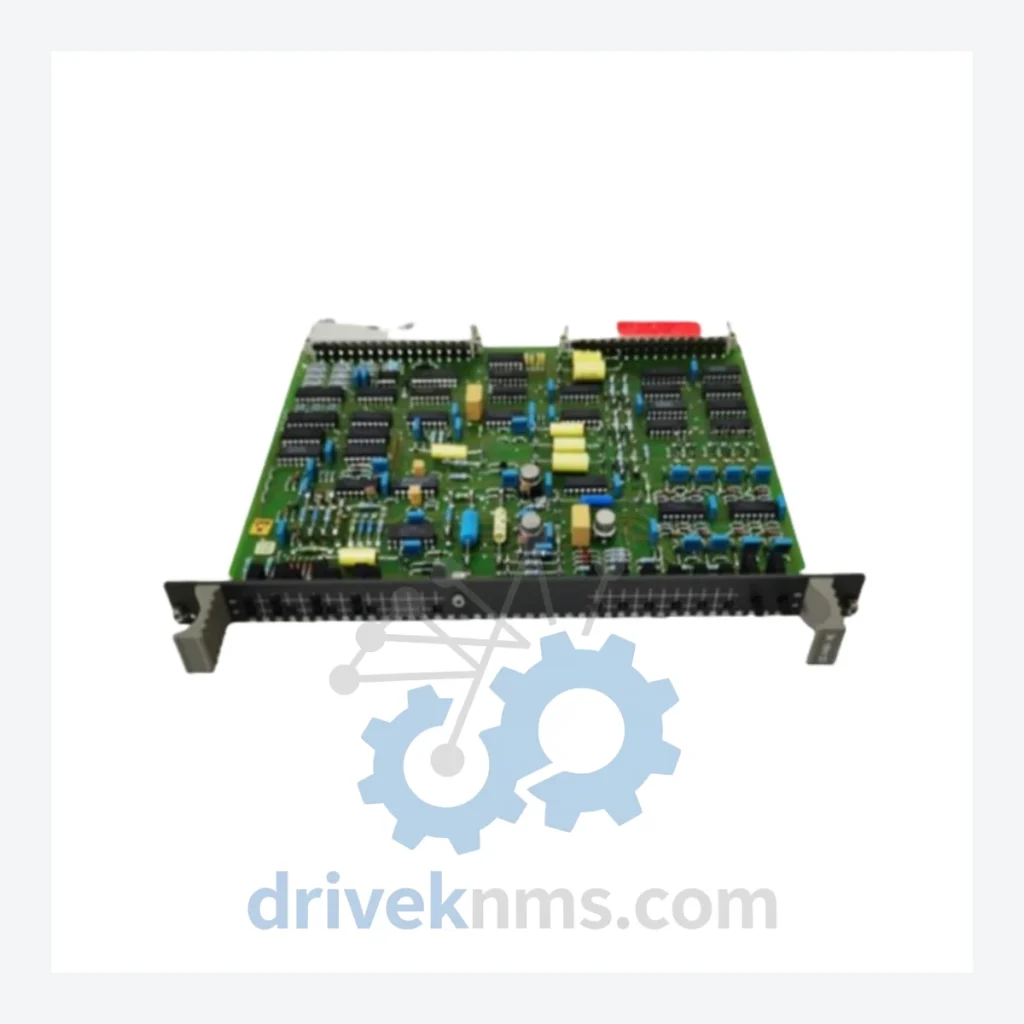
Product Overview
Commercial availability is handled through direct RFQ, model verification and export-oriented follow-up rather than public cart checkout.
Datasheet Preview
Use attached product manuals when available. If the manual is not public yet, request the full file directly through RFQ.
Commercial Path
Product pages on DRIVEKNMS are designed to verify model, brand and series first, then move the buyer into one clean quotation path.
Technical Dossier
When a drive module fails on a production line built around ABB's TINT series, the consequences are not limited to a repair ticket. For facilities that have not pre-positioned spare inventory, a single failed unit can force a choice between an unplanned line shutdown measured in weeks and a full automation upgrade measured in millions of dollars. The TINT-6511 is no longer manufactured. ABB has discontinued this product line, and authorized distribution channels have long since exhausted their stock. DriveKNMS maintains a limited quantity of verified units sourced through controlled industrial asset recovery channels. This is not a commodity listing — it is a last-resort supply option for facilities that cannot afford the alternative.
| Parameter | Detail |
|---|---|
| Manufacturer | ABB |
| Part Number / SKU | TINT-6511 |
| Series | TINT (ACS600 / ACS800 Platform Family) |
| Product Category | LV AC Wall-Mounted Variable Frequency Drive |
| Discontinuation Status | Confirmed Obsolete – No longer in production or active distribution |
| Country of Origin | Finland |
| Typical Application | Motor speed control in industrial automation systems; commonly integrated with ABB ACS600/ACS800 series drive platforms and associated DCS/PLC architectures |
| Condition Available | New Old Stock (NOS) / Professionally Refurbished |
Note: Specific electrical parameters (voltage rating, current rating, power output) for this unit are not published here to prevent misapplication. Contact our technical team with your system nameplate data for confirmation before ordering.
The TINT-6511 was designed as a core motion control component within ABB's LV drive ecosystem, frequently deployed alongside ACS600 and ACS800 series platforms in process industries including pulp and paper, water treatment, mining, and heavy manufacturing. These installations were engineered for 20–30 year operational lifespans. The drives themselves were not the weak point — the supply chain was.
When ABB discontinued the TINT series, facilities that had not built strategic spare inventories were left with three options: source from the secondary market, retrofit with a newer generation drive (which requires engineering hours, firmware reconfiguration, and potential mechanical modifications), or shut down the affected process. The retrofit path is rarely as straightforward as vendors suggest. Replacing a TINT-6511 with a current-generation ABB drive in an existing cabinet typically involves parameter migration, I/O mapping verification, and in many cases, fieldbus adapter changes — a project that can run $50,000–$200,000 in engineering and downtime costs depending on system complexity.
A verified TINT-6511 spare, by contrast, is a drop-in replacement. No re-engineering. No reconfiguration. No production interruption beyond the physical swap. For a facility running 24/7 operations, the cost differential is not marginal — it is the difference between a planned maintenance window and an unplanned capital project.
Facilities managing aging automation infrastructure face a structural problem: OEM support windows close, but the installed base does not disappear on the same schedule. The following approach has been used by maintenance engineering teams to defer costly system replacements without compromising operational reliability:
1. Criticality-Based Spare Positioning: Identify every drive, module, and control card in your facility that is either discontinued or within 3 years of end-of-support. Rank by consequence of failure — not by probability. A single TINT-6511 controlling a primary pump or compressor drive warrants a dedicated on-site spare regardless of its historical failure rate.
2. Dual-Source Verification: For obsolete components, never rely on a single supplier. Establish relationships with at least two verified secondary-market sources and document their quality protocols. This is not procurement redundancy — it is risk management.
3. Condition-Based Maintenance on Legacy Drives: Obsolete drives can be kept in service reliably if maintenance intervals are tightened. Electrolytic capacitor degradation is the primary failure mode in drives that have been in service for 10+ years. Scheduled capacitor reformation or replacement, combined with thermal imaging of power modules during operation, can extend service life by 5–10 years beyond the OEM's stated design life.
4. Firmware Version Control: Before installing any secondary-market spare, verify that the firmware version matches your existing installation. Mismatched firmware in a multi-drive system can cause parameter incompatibilities that are difficult to diagnose under production pressure.
5. Documented Inventory Lifecycle Planning: Build a 5-year spare parts budget that accounts for the declining availability and rising cost of obsolete components. Units that cost $800 today on the secondary market may cost $4,000 in three years — if they can be found at all. Procurement decisions made under emergency conditions are always more expensive than planned purchases.
DriveKNMS applies a structured 5-step quality process to all obsolete drive units before they are offered for sale. This process is designed specifically for the failure modes common in long-stored or previously-installed industrial electronics:
Step 1 – Visual and Mechanical Inspection: Full external inspection for physical damage, connector pin corrosion, PCB contamination, and enclosure integrity. Units with compromised connectors or corroded terminals are rejected at this stage.
Step 2 – Electrolytic Capacitor Assessment: Capacitor aging is the leading cause of latent failure in stored drive modules. Each unit undergoes ESR (Equivalent Series Resistance) measurement on primary DC bus capacitors. Units showing degradation beyond acceptable thresholds are either recapped with equivalent-spec components or removed from inventory.
Step 3 – Firmware Version Verification: The firmware version is read and documented. This information is provided to the buyer prior to shipment to allow compatibility verification against the target system.
Step 4 – Functional Power-On Test: Where test infrastructure permits, units are powered up under controlled conditions and basic operational parameters are verified. Results are logged and accompany the unit.
Step 5 – Anti-Static Packaging and Documentation: Units are packaged in ESD-safe materials with full documentation of inspection results, firmware version, and condition grade. Condition grades: New Old Stock (NOS) — unused, original packaging or equivalent; Grade A Refurbished — fully tested, cosmetically acceptable, functionally equivalent to new.
Q: What warranty applies to an obsolete spare part like the TINT-6511?
A: DriveKNMS provides a 90-day functional warranty on all Grade A Refurbished units and a 30-day warranty on New Old Stock units. Warranty covers functional failure under normal operating conditions and excludes damage caused by installation error or electrical overstress.
Q: How do I confirm the unit is genuine ABB and not a counterfeit?
A: All units in our inventory are sourced from decommissioned industrial facilities, authorized asset liquidators, or verified industrial distributors. We do not source from anonymous online marketplaces. Upon request, we can provide sourcing documentation and serial number traceability to the extent available for secondary-market components.
Q: Should I buy more than one unit?
A: For any obsolete component controlling a critical process, the answer is yes. Secondary-market availability for discontinued ABB TINT series components is finite and declining. If your facility has multiple TINT-6511 installations, purchasing two or three units now is a lower-cost decision than sourcing under emergency conditions 18 months from now. We can discuss volume pricing for multi-unit orders.
Q: Can you confirm compatibility with my specific system before I order?
A: Yes. Provide your system nameplate data, existing drive firmware version, and application description. Our technical team will confirm compatibility before you commit to a purchase.
Related Paths
ABB SNAT-7120 / SNAZ7120J Circuit Board: Sourcing Strategy & Asset Return Value in a Constrained Global Supply Chain The ABB…
ABB AC500 Series: Comprehensive Module Range and Technical Overview The ABB AC500 is a scalable modular PLC platform deployed across…
ABB SCDCS-CON-4 Control Board – Obsolete DCS Spare Part When a single control board fails in a legacy distributed control…