
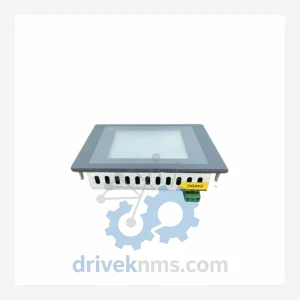
BEIJER E410-04822 HMI Touch Screen – Obsolete E-Series Spare Part
BEIJER E410-04822 HMI Touch Screen – Obsolete E-Series Spare Part When a BEIJER E410-04822 touch screen fails on an active…
Model: 02440G
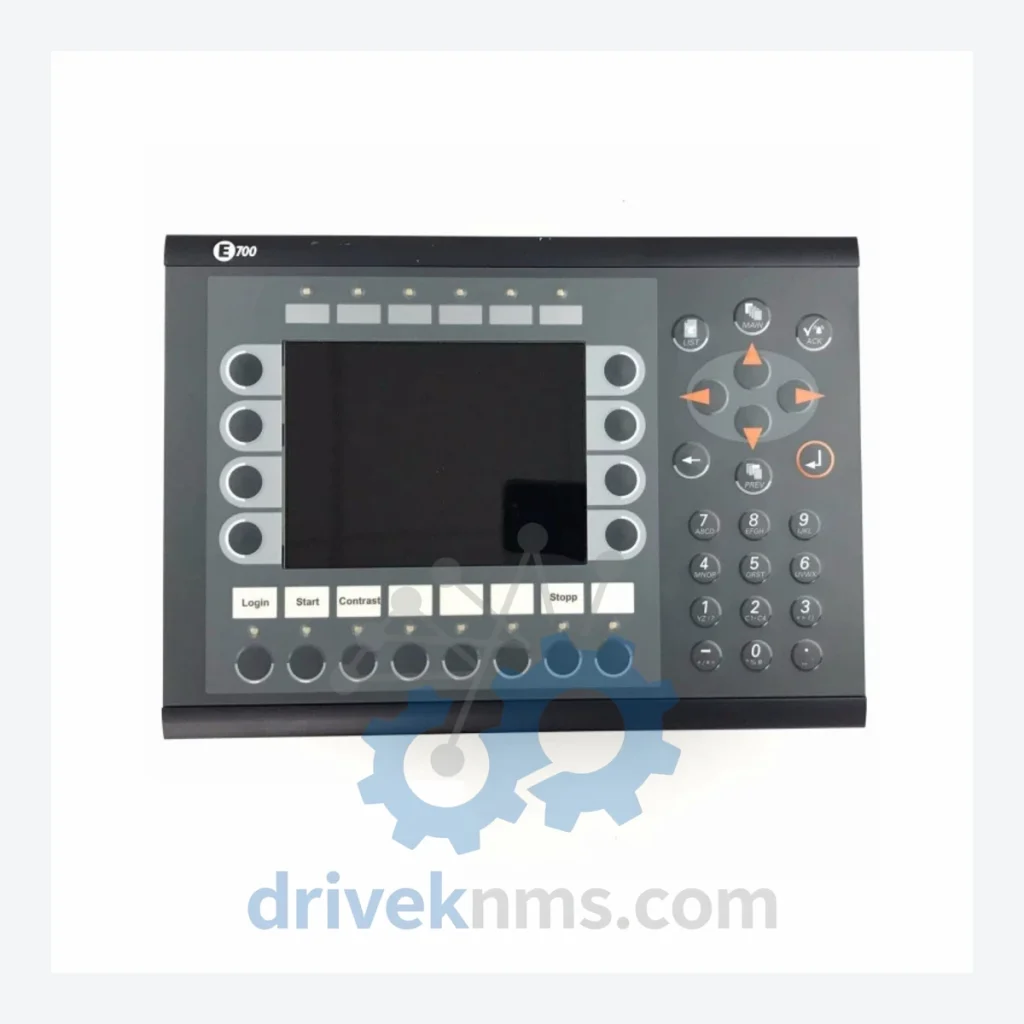
Product Overview
Commercial availability is handled through direct RFQ, model verification and export-oriented follow-up rather than public cart checkout.
Datasheet Preview
Use attached product manuals when available. If the manual is not public yet, request the full file directly through RFQ.
Commercial Path
Product pages on DRIVEKNMS are designed to verify model, brand and series first, then move the buyer into one clean quotation path.
Technical Dossier
The Beijer Electronics E-Series represents one of the most widely deployed Human-Machine Interface (HMI) platform families in global heavy industry. Installed across petrochemical complexes, nuclear power auxiliary systems, offshore oil & gas platforms, and continuous-process refineries, the E-Series established Beijer Electronics as a tier-one supplier of operator interface terminals in demanding 24/7 environments. The platform's ruggedized enclosure ratings, wide operating temperature tolerance (typically -20°C to +60°C), and compatibility with major PLC backplanes from Siemens, Allen-Bradley, Mitsubishi, and Omron made it a default specification in plant engineering standards throughout the 1990s and 2000s. Units such as the 02440G remain active in legacy installations where panel replacement would require full SCADA re-engineering — a cost-prohibitive undertaking for most plant operators.
The Beijer Electronics E-Series evolved through three distinct hardware generations. The first generation (E100/E200 family, early 1990s) used monochrome STN LCD displays with membrane keypads and RS-232/RS-422 serial communication exclusively. Programming was performed via proprietary MAC Programmer+ software on DOS-based workstations. The second generation (E300/E600/E700/E900 family, mid-1990s to early 2000s) introduced color TFT displays, expanded driver libraries, and early Ethernet options on select models. The third generation (E1000/E1050/E1060/E1070 family, 2000s onward) added USB host ports, CF card media, and the transition to the EXTER and iX Developer software environment. The 02440G panel belongs to the mature second/third-generation transition period, featuring a compact form factor suited for retrofit installations in existing panel cutouts. Compatibility across generations is limited: E100/E200 projects require migration to newer driver sets when moving to E1000-class hardware, and recipe/data block structures are not directly portable without conversion utilities in iX Developer.
The following SKUs represent confirmed models within the Beijer Electronics E-Series and associated control panel product range. Units are classified by primary function:
Operator Terminals / HMI Panels:
Communication & Connectivity Modules:
Power Supply & Accessories:
Beijer Electronics has formally discontinued several E-Series product lines, including the E100, E200, E300, and E600 families. OEM new-stock availability from authorized distributors is exhausted for these models. DriveKNMS maintains a dedicated inventory of tested surplus and refurbished E-Series units sourced from decommissioned plant equipment, controlled factory shutdowns, and OEM overstock liquidations. For the 02440G and comparable compact panel variants, DriveKNMS provides: (1) unit-level functional testing against original Beijer Electronics communication protocol specifications; (2) display backlight replacement service for units exhibiting luminance degradation; (3) firmware version verification and, where applicable, re-flashing to the last stable release; (4) 12-month operational warranty on all refurbished units. Customers operating legacy E-Series installations in regulated industries (nuclear auxiliary, pharmaceutical batch control, water treatment SCADA) are advised to establish a minimum buffer stock of two spare units per installed panel type to mitigate unplanned downtime risk during the extended lead times typical of obsolete HMI sourcing.
E-Series panels present specific test challenges due to their integrated backplane communication architecture and proprietary serial driver stacks. DriveKNMS applies the following test protocol to all E-Series units prior to dispatch: (1) Power-on self-test (POST) verification — unit must complete internal diagnostics without error codes on display; (2) Display uniformity check — full-screen white, black, red, green, and blue test patterns to identify dead pixels, backlight non-uniformity, or touch calibration drift; (3) Serial port loopback test — RS-232 and RS-422/RS-485 ports tested at 9600, 19200, and 38400 baud with hardware handshaking verification; (4) Driver communication simulation — where test equipment permits, units are connected to a live PLC or protocol simulator to verify tag read/write integrity across the driver library; (5) Memory integrity scan — internal flash and any installed CF card are verified for read/write consistency and absence of bad sectors; (6) Enclosure inspection — front bezel, membrane keypad actuation force, and rear connector integrity are physically inspected and documented. All test results are logged and available to customers upon request.
Related Paths
BEIJER E410-04822 HMI Touch Screen – Obsolete E-Series Spare Part When a BEIJER E410-04822 touch screen fails on an active…
Beijer T-Series HMI Panels: Comprehensive Module Range and Technical Overview The Beijer Electronics T-Series represents one of the most widely…
Beijer Electronics 02640E LASS HMI Touch Panel: Procurement Strategy & Asset Return Value in a Constrained Supply Chain The Beijer…