
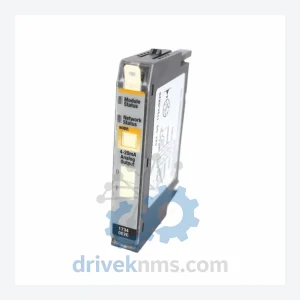
Allen-Bradley 1734-OE2CK Analog Output Module – Hard-to-Find POINT I/O Spare Part
Allen-Bradley 1734-OE2CK is listed for DCS Cards RFQ review. Confirm quantity, condition and destination before quotation.
RFQ-ready industrial model
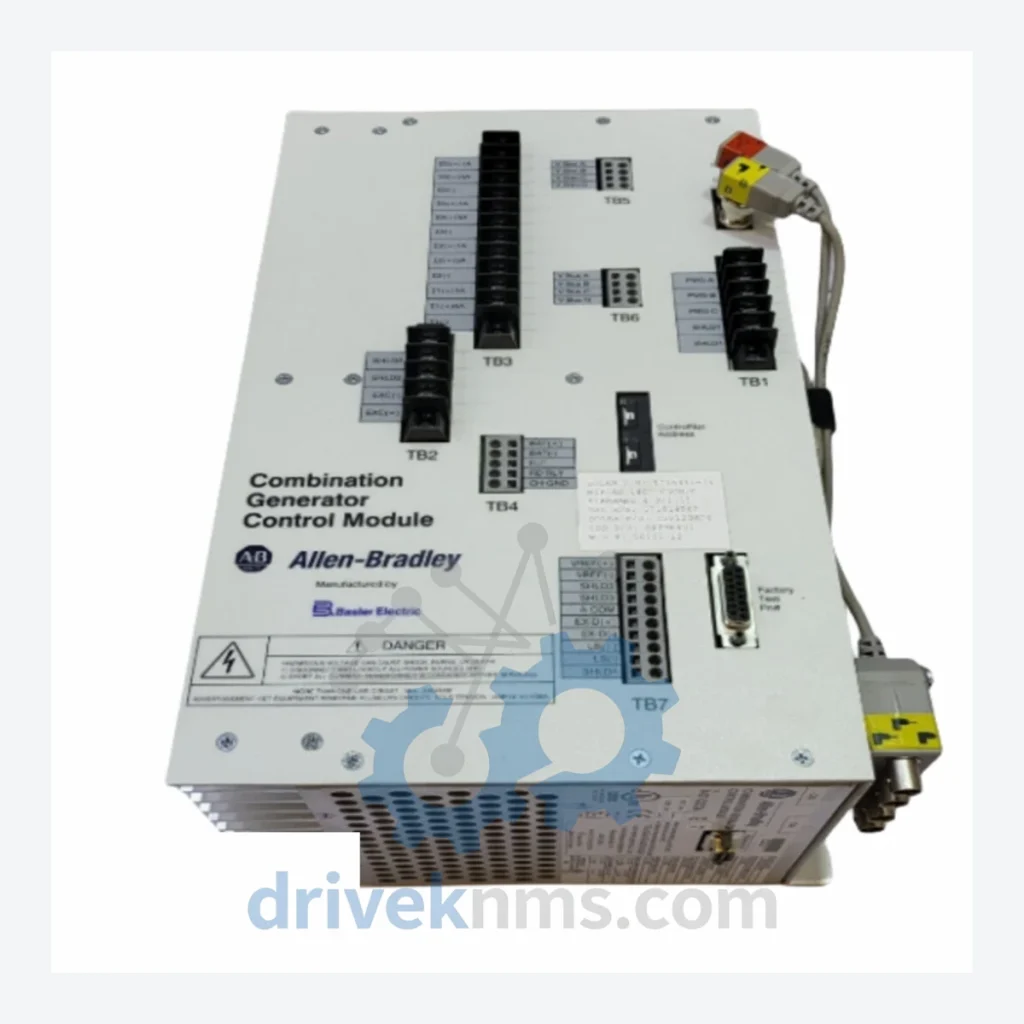
Model: 1407-CGCM
Product Overview
Commercial availability is handled through direct RFQ, model verification and export-oriented follow-up rather than public cart checkout.
Datasheet Preview
Use attached product manuals when available. If the manual is not public yet, request the full file directly through RFQ.
Commercial Path
Product pages on DRIVEKNMS are designed to verify model, brand and series first, then move the buyer into one clean quotation path.
Technical Dossier
The Allen-Bradley (Rockwell Automation) 1407 Series is a line of medium-voltage monitoring and control modules engineered for integration into heavy industrial environments including petrochemical refineries, nuclear power generation facilities, offshore platforms, and large-scale chemical processing plants. Deployed globally across critical infrastructure, the 1407 Series provides metering, protection relay functions, and supervisory control capabilities within Allen-Bradley's broader PowerMonitor and MV (Medium Voltage) control architecture. Its ruggedized design and deterministic communication behavior make it a long-term fixture in facilities where replacement cycles span decades rather than years.
The 1407 Series was introduced as part of Rockwell Automation's medium-voltage monitoring platform, designed to interface with switchgear, motor control centers (MCCs), and distribution panels operating at voltages from 2.4 kV to 15 kV. Early revisions of the 1407 architecture relied on discrete analog signal conditioning and hardwired relay outputs, with limited digital communication capability. Subsequent hardware revisions introduced DeviceNet and DH-485 communication adapters, enabling integration with Allen-Bradley PLC-5, SLC 500, and ControlLogix backplane environments.
As industrial networks migrated toward EtherNet/IP and IEC 61850 substations, the 1407 platform faced compatibility constraints. Facilities running legacy 1407 hardware alongside modern ControlLogix L8x controllers typically require protocol conversion gateways. The series is now classified as a mature/end-of-life product line by Rockwell Automation, meaning new production has ceased for most catalog numbers. Long-term maintenance support — including tested surplus and refurbished units — is the primary sourcing strategy for installed-base operators.
The following catalog numbers represent verified Allen-Bradley 1407 Series components. SKUs are organized by functional category:
Control & Metering Modules
1407-CGCM: Medium-voltage control and generator control module, primary supervisory unit for MV switchgear integration.
1407-CGCM-A: Revision A variant of the CGCM; updated firmware addressing relay timing tolerances.
1407-CGCM-B: Revision B; enhanced analog input filtering for noisy industrial environments.
1407-MMSP: Motor management and protection module; integrates overload, phase-loss, and ground-fault detection.
1407-MMSP-A: Revision A of MMSP; expanded current transformer (CT) input range.
1407-MMSP-B: Revision B; added support for RTD temperature monitoring inputs.
Power Monitoring Modules
1407-MT: Metering module; measures kW, kVAR, kVA, power factor, and harmonic distortion up to 31st harmonic.
1407-MT-A: Revision A; improved accuracy class to IEC 62053-22 Class 0.5S.
1407-MTSE: Metering module with enhanced data logging and event recording capability.
1407-MTSE-A: Revision A of MTSE; extended onboard memory for waveform capture.
Communication & Interface Modules
1407-DNET: DeviceNet communication adapter for 1407 platform; enables integration with Allen-Bradley DeviceNet scanner modules.
1407-DH485: DH-485 network interface module; supports legacy SLC 500 and PLC-5 supervisory systems.
1407-ENET: EtherNet/IP adapter module; provides TCP/IP connectivity for ControlLogix and Studio 5000 environments.
1407-ENET-A: Revision A; dual-port EtherNet/IP with Device Level Ring (DLR) topology support.
Power Supply & Auxiliary Modules
1407-PS: Dedicated power supply module for 1407 chassis; 120/240 VAC input, regulated 24 VDC output.
1407-PS-A: Revision A; wide-range input 85–264 VAC with improved hold-up time.
1407-AUX: Auxiliary I/O expansion module; adds 8 discrete inputs and 4 relay outputs to the 1407 base unit.
Rockwell Automation has discontinued active manufacturing for the majority of 1407 Series catalog numbers. For operators of installed-base systems — particularly in nuclear, petrochemical, and utility sectors where equipment replacement requires extensive re-engineering and regulatory re-certification — sourcing tested surplus and refurbished 1407 modules is the only viable path to maintaining uptime without full system replacement.
The 1407 Series presents specific testing challenges due to its medium-voltage signal conditioning circuitry, multi-protocol communication stack, and relay output hardware. DriveKNMS applies the following verification procedures to all 1407 units prior to shipment:
Backplane Communication Verification: Each module is seated in a compatible 1407 chassis and subjected to full DH-485 or DeviceNet polling cycles to confirm error-free data exchange. EtherNet/IP-capable units are tested under live EtherNet/IP scanner traffic using a ControlLogix test rack.
Analog Input Calibration: Voltage and current transformer inputs are verified against NIST-traceable reference standards. Metering accuracy is confirmed to the module's published accuracy class (typically Class 1.0 or Class 0.5S).
Relay Output Functional Test: All discrete relay outputs are cycled under rated load conditions. Contact resistance is measured and compared against factory specifications. Relay coil drive circuitry is verified for correct pull-in and drop-out voltage thresholds.
Firmware Revision Identification: Onboard firmware version is read and documented. Units with known firmware defects (per Rockwell Automation Product Notices) are flagged and either updated where possible or disclosed to the customer prior to sale.
Thermal Burn-In: Modules are operated at elevated ambient temperature (50°C) for a minimum of 4 hours to screen for latent component failures consistent with end-of-life hardware.
Continue The Model Path
Move from this exact model into the matching system hub, brand archive, model-family archive or lifecycle sourcing route before sending a final RFQ list.
Related Paths
Allen-Bradley 1734-OE2CK is listed for DCS Cards RFQ review. Confirm quantity, condition and destination before quotation.
Allen-Bradley 1786-TPS is listed for DCS Cards RFQ review. Confirm quantity, condition and destination before quotation.
Allen-Bradley 80190-560-02-R is listed for DCS Cards RFQ review. Confirm quantity, condition and destination before quotation.