
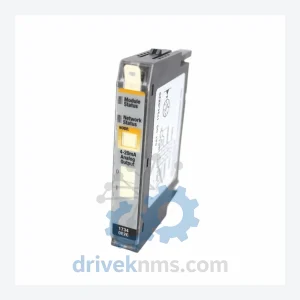
Allen-Bradley 1734-OE2CK Analog Output Module – Hard-to-Find POINT I/O Spare Part
Allen-Bradley 1734-OE2CK is listed for DCS Cards RFQ review. Confirm quantity, condition and destination before quotation.
RFQ-ready industrial model
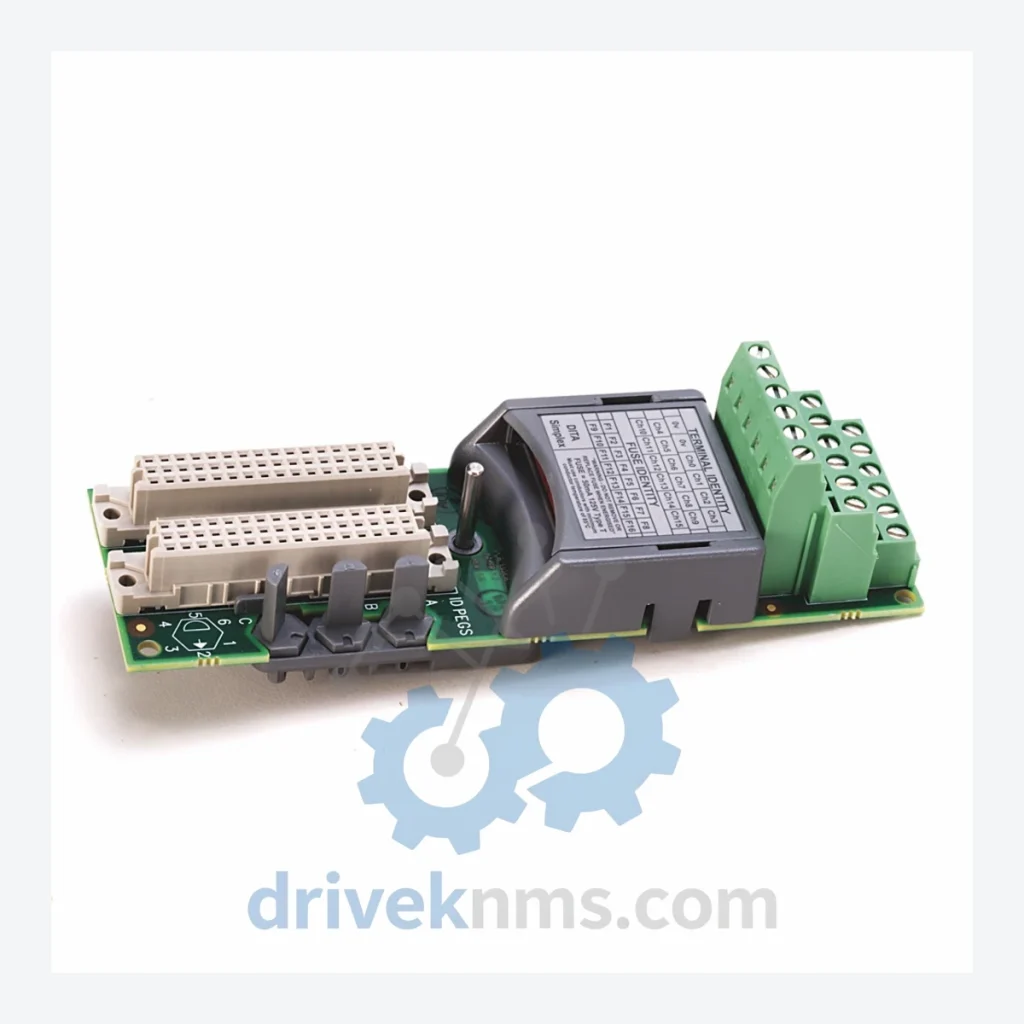
Model: 1715-TASIB16D
Product Overview
Commercial availability is handled through direct RFQ, model verification and export-oriented follow-up rather than public cart checkout.
Datasheet Preview
Use attached product manuals when available. If the manual is not public yet, request the full file directly through RFQ.
Commercial Path
Product pages on DRIVEKNMS are designed to verify model, brand and series first, then move the buyer into one clean quotation path.
Technical Dossier
RFQ support for obsolete parts: Send the model number, required quantity and destination so DriveKNMS can confirm sourcing options before quotation.
| Part Number | 1715-TASIB16D |
| Manufacturer | Allen-Bradley / Rockwell Automation |
| Series | 1715 Redundant I/O |
| Module Type | Termination Assembly – Single Input Base, 16-Channel, Dual |
| Compatible I/O Base | 1715 Redundant I/O Adapter and Input Modules |
| Country of Origin | United States |
| Lifecycle Status | Discontinued / End of Life (EOL) – No longer manufactured by Rockwell Automation |
| Typical Application | High-availability process control in SIL-rated and redundant architectures |
Note: Electrical parameters not independently verified for this listing. Buyers should cross-reference with original Rockwell Automation documentation (Publication 1715-UM001) prior to installation.
The 1715 Redundant I/O platform was engineered for environments where control system failure is not an option — nuclear auxiliary systems, refinery distillation columns, and continuous chemical reactors. The 1715-TASIB16D termination assembly serves as the physical and electrical interface between field wiring and the redundant I/O module stack. Its dual-channel termination architecture supports the system's fault-tolerant design, meaning a like-for-like replacement is the only option that preserves the redundancy certification of the installed system.
Substituting this assembly with a non-original component, or attempting to adapt a different termination base, invalidates the redundancy architecture and may void safety certifications (IEC 61511 / SIL compliance). For facilities operating under regulatory oversight — refineries, chemical plants, power utilities — this is not a theoretical risk. It is a compliance and liability issue.
Rockwell Automation's official position on EOL products is to migrate to newer platforms such as the 1715 successor architectures or ControlLogix-based safety systems. However, for facilities with 10–20 year operational horizons on existing infrastructure, a platform migration represents a capital project, not a maintenance action. Sourcing verified surplus 1715-TASIB16D units extends the operational life of the installed system by 5 to 10 years at a fraction of the migration cost.
DriveKNMS applies a structured 5-step QA protocol to all discontinued termination assemblies before dispatch:
Step 1 – Visual and Mechanical Inspection: Full examination of the terminal block housing, wiring connectors, and mounting hardware. Any unit with cracked housings, deformed terminals, or missing hardware is rejected.
Step 2 – Electrolytic Capacitor Assessment: Where applicable, internal capacitors are assessed for signs of aging, bulging, or electrolyte leakage — a primary failure mode in assemblies stored beyond 10 years.
Step 3 – Pin and Connector Corrosion Check: All backplane connectors and field wiring terminals are inspected under magnification for oxidation, corrosion, or mechanical deformation. Affected contacts are treated or the unit is rejected.
Step 4 – Firmware and Label Verification: Catalog number, revision markings, and date codes are verified against known authentic Rockwell Automation production records to confirm genuine origin.
Step 5 – Functional Continuity Test: Electrical continuity across all terminal paths is verified prior to packaging.
The 1715-TASIB16D is a drop-in replacement for any installed unit of the same catalog number within a 1715 Redundant I/O system. No firmware changes, no re-engineering of the I/O configuration, and no PLC program modifications are required. Field wiring reconnects to the same terminal positions. The replacement procedure is a maintenance action, not an engineering project.
Recommended practice: facilities with more than three 1715 Redundant I/O racks in service should maintain a minimum of two 1715-TASIB16D assemblies in their critical spares inventory.
Q: How do I confirm the unit is genuine and not a counterfeit?
A: All units sourced by DriveKNMS are inspected for authentic Rockwell Automation markings, catalog number labels, and date codes. We do not source from unverified secondary markets. A certificate of inspection is provided with each shipment.
Q: Can this part be repaired if it fails?
A: Termination assemblies are passive wiring interface components. Repair is generally not applicable. Replacement with a verified surplus unit is the standard maintenance approach.
Q: How long can I realistically extend my 1715 system's operational life?
A: With a proactive critical spares strategy covering termination assemblies, I/O modules, and adapter modules, facilities have successfully maintained 1715 Redundant I/O systems 8–12 years beyond Rockwell Automation's EOL announcement. DriveKNMS can assist with a full spare parts audit for your installed 1715 system.
Continue The Model Path
Move from this exact model into the matching system hub, brand archive, model-family archive or lifecycle sourcing route before sending a final RFQ list.
Related Paths
Allen-Bradley 1734-OE2CK is listed for DCS Cards RFQ review. Confirm quantity, condition and destination before quotation.
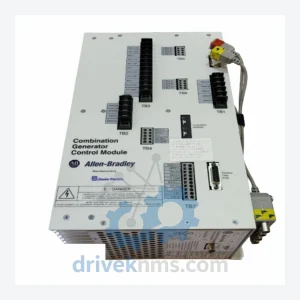
Allen-Bradley 1407-CGCM is listed for DCS Cards RFQ review. Confirm quantity, condition and destination before quotation.
Allen-Bradley 1786-TPS is listed for DCS Cards RFQ review. Confirm quantity, condition and destination before quotation.