
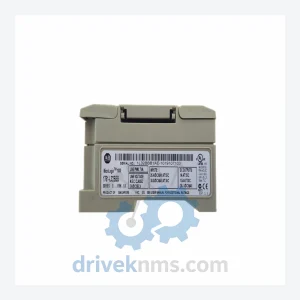
Allen-Bradley 1761-L32BBB MicroLogix 1000 Programmable Logic Controller – Discontinued
Allen-Bradley 1761-L32BBB is listed for MicroLogix RFQ review. Confirm quantity, condition and destination before quotation.
RFQ-ready industrial model
Model: 1766-L32BXBA
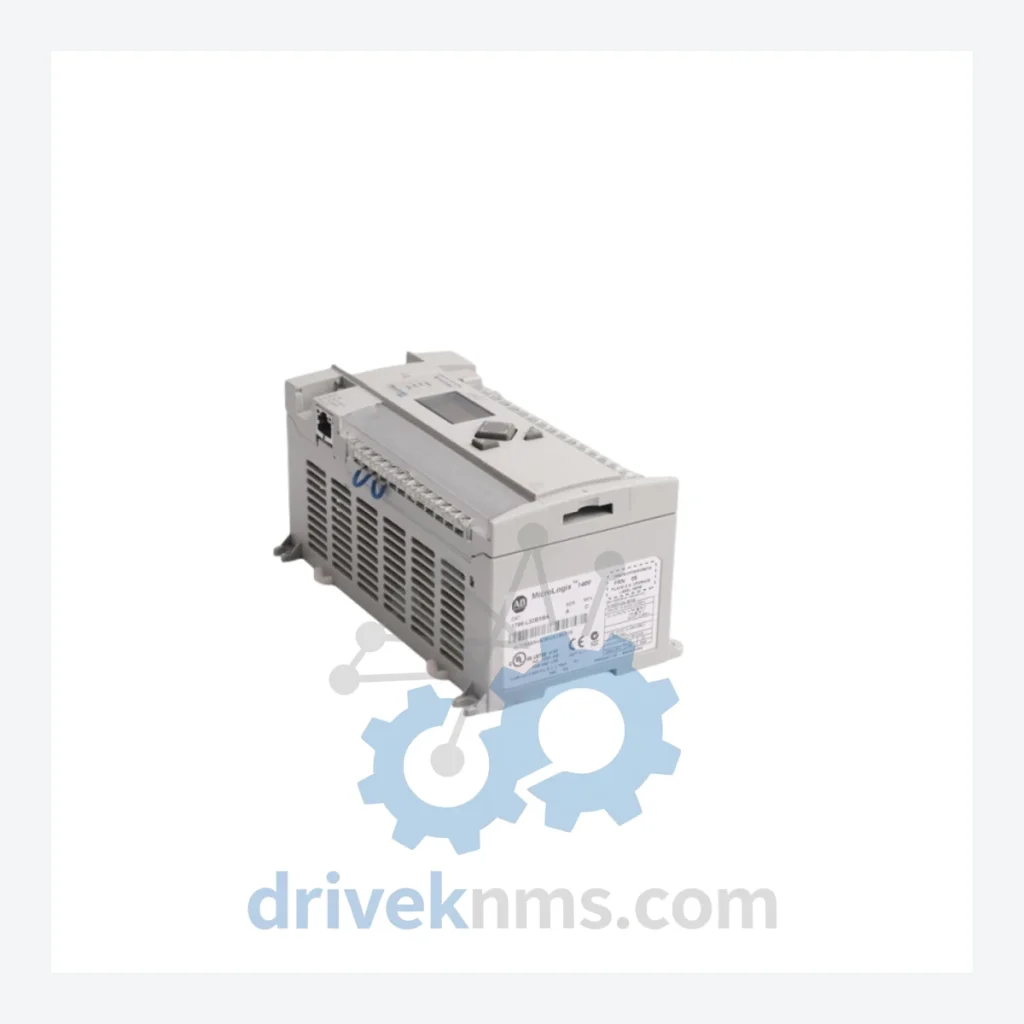
Product Overview
Commercial availability is handled through direct RFQ, model verification and export-oriented follow-up rather than public cart checkout.
Datasheet Preview
Use attached product manuals when available. If the manual is not public yet, request the full file directly through RFQ.
Commercial Path
Product pages on DRIVEKNMS are designed to verify model, brand and series first, then move the buyer into one clean quotation path.
Technical Dossier
The Allen-Bradley MicroLogix 1400 series (catalog prefix: 1766) is a compact, fixed-I/O programmable logic controller platform developed by Rockwell Automation. It occupies a defined position in the Rockwell small controller hierarchy, sitting above the MicroLogix 1100 and below the MicroLogix 1500. The platform is deployed across global heavy industry sectors including petrochemical processing, refinery automation, water treatment infrastructure, pharmaceutical batch control, and discrete manufacturing. Its embedded EtherNet/IP port (on select models), onboard LCD operator interface, and support for up to 256 I/O points via expansion have made it a standard-specification controller in facilities requiring compact footprint with mid-range I/O density. Installed base concentration is highest in North American and Asia-Pacific process industries, with significant legacy deployments in European chemical and automotive plants.
The MicroLogix 1400 was introduced as a successor to the MicroLogix 1200, addressing demand for integrated Ethernet connectivity and expanded analog I/O without migrating to the larger SLC 500 or CompactLogix platforms. Early production units (pre-2010) shipped without the embedded EtherNet/IP port; this was added in subsequent hardware revisions, creating two distinct hardware generations that share the same catalog number structure but differ in firmware capability ceilings.
The controller uses a fixed backplane architecture — there is no modular rack. Expansion is achieved via the 1762 MicroLogix Expansion I/O modules, which connect via a dedicated expansion bus on the right side of the base unit. Up to 7 expansion modules are supported, enabling configurations from 32 to 256 discrete I/O points. Communication options include RS-232 (Channel 0), RS-232/RS-485 (Channel 1), and EtherNet/IP (on -E suffix models). Programming is performed exclusively via RSLogix 500 / Studio 5000 Logix Designer (legacy compatibility mode) using ladder diagram logic.
As of 2024, the MicroLogix 1400 series has entered the End of Life / Mature phase of the Rockwell Automation product lifecycle. Rockwell's recommended migration path is to the Micro820 or Micro850 (Connected Components Workbench platform) for new designs. However, the installed base remains extensive, and replacement units, spare I/O modules, and communication adapters continue to be required for maintenance and lifecycle extension programs at operating facilities.
The following SKUs represent the verified production catalog for the MicroLogix 1400 (1766) base units and associated 1762 expansion I/O. All models listed are confirmed Allen-Bradley catalog numbers.
Base Controller Units (1766 Series)
1762 Expansion I/O Modules (Digital)
1762 Expansion I/O Modules (Analog)
Communication & Specialty Modules
All units are inspected against original Rockwell Automation hardware revision documentation. Firmware version compatibility is verified prior to dispatch. DriveKNMS supports customers requiring exact hardware revision matches for validated production environments where firmware upgrades are not permissible under site change-control procedures.
MicroLogix 1400 base units undergo a structured functional test protocol prior to shipment from DriveKNMS. The test sequence covers: power-on self-test (POST) verification, RS-232/RS-485 channel loopback communication test, EtherNet/IP ping and CIP connection establishment (for -W suffix models), discrete I/O point-by-point actuation and readback, analog I/O calibration verification against factory tolerance bands (±0.1% full scale), and LCD display and keypad functional check.
Continue The Model Path
Move from this exact model into the matching system hub, brand archive, model-family archive or lifecycle sourcing route before sending a final RFQ list.
Related Paths
Allen-Bradley 1761-L32BBB is listed for MicroLogix RFQ review. Confirm quantity, condition and destination before quotation.
Allen-Bradley 1762-OA8 is listed for MicroLogix RFQ review. Confirm quantity, condition and destination before quotation.
Allen-Bradley 1766-L32AWA is listed for MicroLogix RFQ review. Confirm quantity, condition and destination before quotation.