
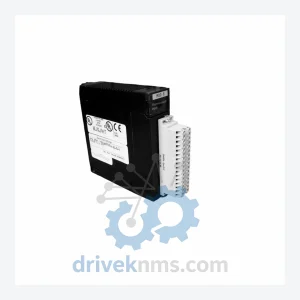
GE HE693THM166E Memory Ethernet Module – Series 90-30
GE Fanuc HE693THM166E is listed for Series 90-30 RFQ review. Confirm quantity, condition and destination before quotation.
RFQ-ready industrial model
Model: 07KR240 GJV3072402R1
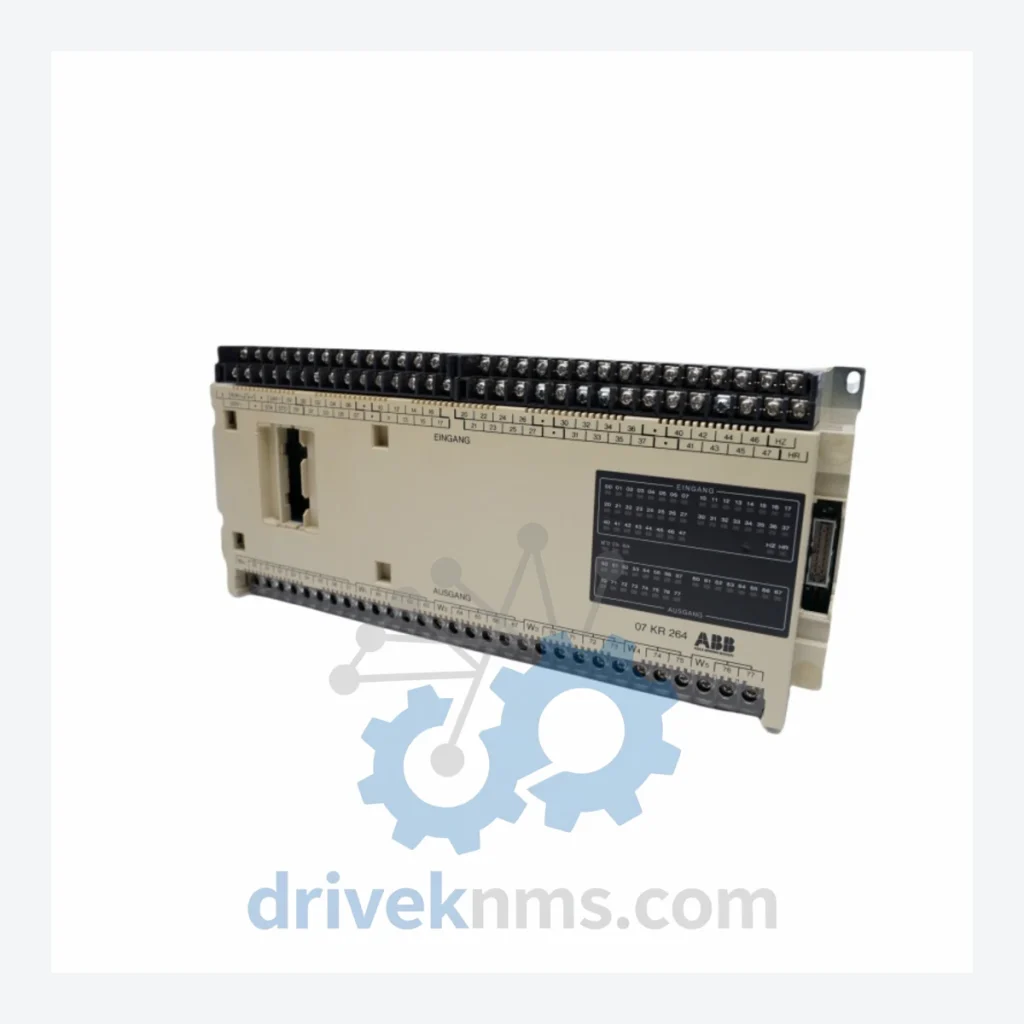
Product Overview
Commercial availability is handled through direct RFQ, model verification and export-oriented follow-up rather than public cart checkout.
Datasheet Preview
Use attached product manuals when available. If the manual is not public yet, request the full file directly through RFQ.
Commercial Path
Product pages on DRIVEKNMS are designed to verify model, brand and series first, then move the buyer into one clean quotation path.
Technical Dossier
The GE Fanuc Series 90-30 (also referenced as the 90-30 PLC or IC693 series) is one of the most widely deployed programmable logic controller platforms in global heavy industry. Installed across petrochemical refineries, nuclear power auxiliary systems, chemical processing plants, pulp and paper mills, and water treatment facilities, the Series 90-30 established a benchmark for modular, rack-based PLC architecture throughout the 1990s and 2000s. Its distributed I/O capability, deterministic scan cycle, and broad third-party integration support made it the default control platform for mid-scale automation projects requiring high channel density and multi-rack expansion.
The IC693CPU351 is a central processing unit module within this family, operating at 32-bit architecture with support for up to 12 racks, 2048 discrete I/O points, and 512 analog I/O channels. It executes ladder logic, function block, and structured text programs stored in battery-backed SRAM, with optional flash memory backup. The CPU351 communicates via the Series 90-30 backplane bus and supports Ethernet, SNP, and serial protocols through dedicated communications coprocessors.
The Series 90-30 platform was introduced by GE Fanuc Automation in the early 1990s as a successor to the Series Six and Series Five PLC families. The initial release centered on the IC693CPU311 and IC693CPU321, offering 6K and 12K word program memory respectively, with a 5-slot or 10-slot rack configuration. These early CPUs used a proprietary backplane bus operating at 8 MHz and supported only serial SNP communications.
The mid-generation refresh introduced the IC693CPU340 and IC693CPU350, expanding program memory to 240K words and adding support for the Ethernet Interface Module (IC693CMM321). This era also introduced the Genius Bus Controller (IC693BEM331), enabling distributed I/O over the Genius fieldbus at up to 153.6 Kbps — a critical capability for large-scale plant floor integration.
The IC693CPU351 represents the mature generation of the platform, with 512K word program memory, hardware floating-point support, and compatibility with the full IC693 I/O module library. Later variants including the IC693CPU360 and IC693CPU374 added embedded Ethernet ports and expanded data table sizes, bridging the Series 90-30 toward the PACSystems RX3i transition. GE Fanuc formally announced the migration path to the IC695 (PACSystems RX3i) platform in the mid-2000s, though Series 90-30 hardware remained in active production and support through 2015, with extended lifecycle support continuing beyond that date.
Compatibility note: Series 90-30 I/O modules are not electrically or mechanically interchangeable with PACSystems RX3i modules. Migration requires rack replacement, re-wiring, and program conversion using Proficy Machine Edition software.
CPU Modules
Discrete Input Modules
Discrete Output Modules
Analog I/O Modules
Communications & Network Modules
Power Supply Modules
DriveKNMS maintains a dedicated inventory of Series 90-30 modules sourced through verified industrial surplus channels, decommissioned plant equipment, and long-term stocking agreements. All units are cataloged by part number, firmware revision, and hardware revision level. For CPU modules such as the IC693CPU351, firmware version compatibility with existing application programs is verified prior to shipment. Customers requiring specific firmware revisions for validated control systems (pharmaceutical, nuclear auxiliary, SIL-rated applications) should specify the required revision at time of inquiry.
DriveKNMS provides cross-reference support for customers migrating from discontinued variants to functional equivalents within the Series 90-30 family, and documents known incompatibilities between hardware revisions to prevent field installation errors.
Series 90-30 modules present specific test challenges due to their backplane bus architecture, battery-backed SRAM, and multi-layer PCB construction. DriveKNMS applies the following test protocol to all Series 90-30 units prior to dispatch:
Continue The Model Path
Move from this exact model into the matching system hub, brand archive, model-family archive or lifecycle sourcing route before sending a final RFQ list.
Related Paths
GE Fanuc HE693THM166E is listed for Series 90-30 RFQ review. Confirm quantity, condition and destination before quotation.
GE Fanuc IC609SJR100C is listed for Series 90-30 RFQ review. Confirm quantity, condition and destination before quotation.
GE Fanuc IC693PCM301 is listed for Series 90-30 RFQ review. Confirm quantity, condition and destination before quotation.