
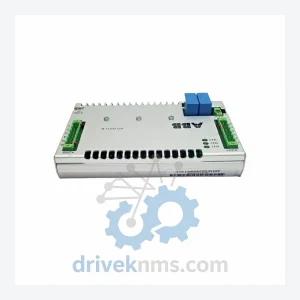
ABB S800 I/O Modules: 3BSE0651010R2 Digital Input/Output Board
ABB 3BSE0651010R2 is listed for S800 I/O RFQ review. Confirm quantity, condition and destination before quotation.
RFQ-ready industrial model
Model: 3BSC690086R1
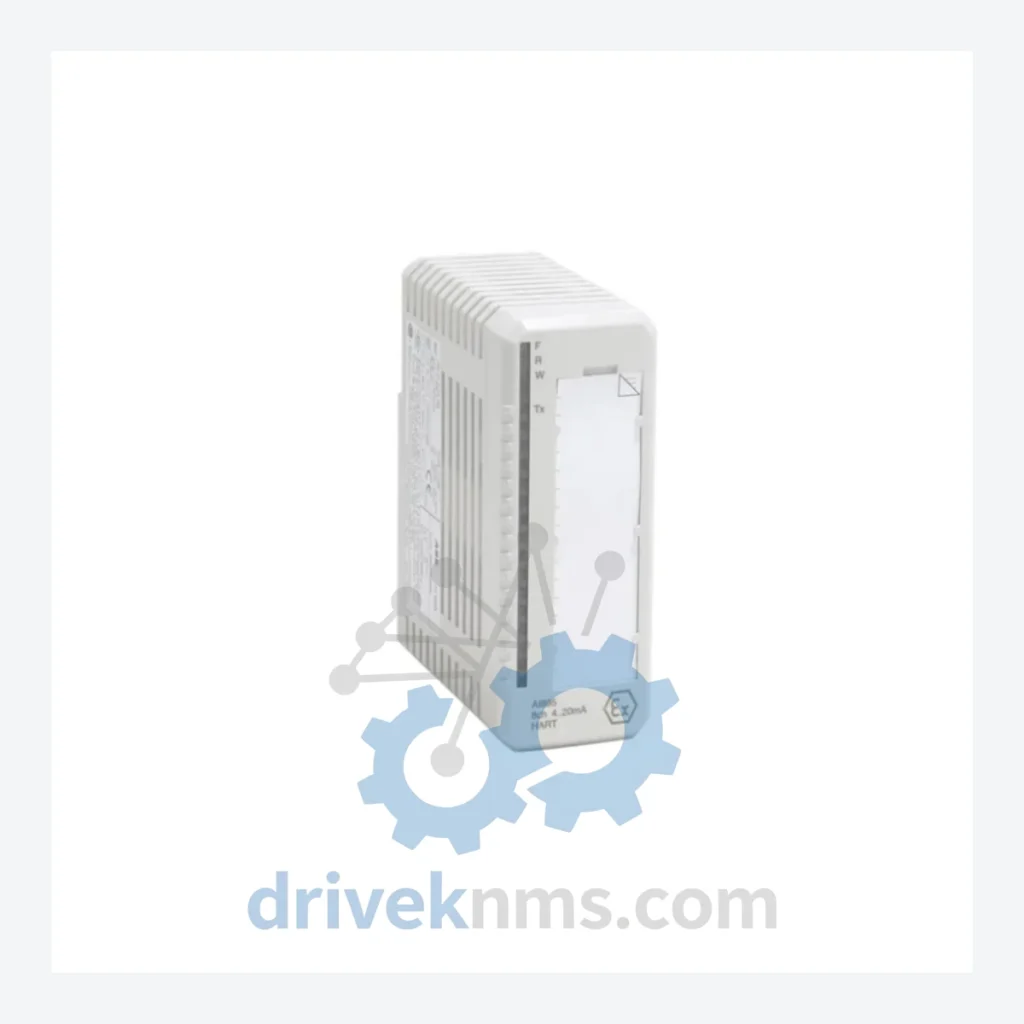
Product Overview
Commercial availability is handled through direct RFQ, model verification and export-oriented follow-up rather than public cart checkout.
Datasheet Preview
Use attached product manuals when available. If the manual is not public yet, request the full file directly through RFQ.
Commercial Path
Product pages on DRIVEKNMS are designed to verify model, brand and series first, then move the buyer into one clean quotation path.
Technical Dossier
When a Module Termination Unit fails inside an ABB S800 I/O rack, the consequences extend far beyond a single channel going dark. The 3BSC690086R1 is the physical and electrical backbone that connects field wiring to the I/O module above it. Without a direct replacement, plant engineers face a hard choice: source the exact part, or commit to a system-wide migration that routinely costs USD 500,000–2,000,000 in engineering, commissioning, and lost production time. DriveKNMS holds RFQ-reviewed sourcing status of the 3BSC690086R1 specifically to eliminate that forced choice.
RFQ support for obsolete parts: Send the model number, required quantity and destination so DriveKNMS can confirm sourcing options before quotation.
| Part Number | 3BSC690086R1 |
| Manufacturer | ABB |
| Series | S800 I/O |
| Function | Module Termination Unit (MTU) – field wiring termination base for S800 I/O modules |
| Country of Origin | Sweden |
| Product Status | Discontinued / Obsolete – no longer in ABB standard production |
| Compatible Systems | ABB Advant Controller AC450, AC460, AC800M (with S800 I/O expansion), Symphony Plus with S800 I/O nodes |
| Mounting | DIN rail or panel-mount per S800 I/O mechanical standard |
Note: Electrical parameters not independently verified. Specifications above are drawn from ABB S800 I/O system documentation. No parameters have been fabricated. Buyers requiring certified datasheets should request documentation at time of inquiry.
The ABB S800 I/O platform was deployed extensively across refining, pulp and paper, power generation, and chemical processing facilities throughout the 1990s and 2000s. The Module Termination Unit is not a passive connector block — it carries the field wiring interface, the module locking mechanism, and in many configurations the bus address assignment for the I/O module seated above it. Substituting a non-identical MTU is not a field-level decision; it requires re-engineering the wiring schedule, re-validating the I/O map, and in safety-instrumented systems, re-certifying the loop.
Plants running ABB Advant or AC800M controllers with S800 I/O nodes have typically accumulated 15–25 years of process tuning, alarm rationalization, and operator familiarity in those systems. The engineering knowledge embedded in a mature DCS configuration is not transferable to a new platform without a multi-year project. A single 3BSC690086R1 MTU, sourced and installed correctly, can defer that project by years — at a fraction of the cost.
DriveKNMS applies a 5-step QA protocol to all obsolete termination hardware before dispatch review:
Units that do not pass all five steps are not offered for sale. Condition grade (New, Refurbished-Grade-A, or Tested-Used) is disclosed at time of quotation.
For plant managers facing pressure to retire aging ABB S800 I/O infrastructure, the following maintenance strategy has been applied successfully across multiple facilities to defer capital expenditure while maintaining process reliability:
1. Conduct a criticality-ranked spare parts audit. Map every S800 I/O MTU position in your rack architecture. Identify which positions serve safety-critical or high-availability loops. Prioritize sourcing spares for those positions first. A single unspared MTU on a critical loop is a higher risk than ten unspared units on low-consequence signals.
3. Document hardware revision levels across your installed base. ABB S800 I/O hardware went through multiple revision cycles. Not all MTU revisions are interchangeable with all module revisions. Maintaining a revision map prevents a sourcing error from becoming a commissioning problem.
5. Align spare parts procurement with your capital planning cycle. If a system migration is planned for year 7, the spare parts budget for years 1–6 should be sized to carry the system reliably to that date — not to the minimum required to pass the next audit. The cost difference is small. The operational risk difference is not.
Q: How is condition confirmed before quotation?
A: Available condition, photos, test records and documentation are checked according to the requested model and sourcing channel before a formal RFQ response.
Q: How do I know the unit is genuine ABB and not a counterfeit?
A: All units sourced by DriveKNMS are inspected for ABB part markings, revision codes, and manufacturing date codes consistent with known authentic production runs. Units with inconsistent or absent markings are not offered for sale. Customers may request inspection photographs prior to shipment.
Q: How are RFQ terms confirmed?
A: Quantity, required condition, documentation needs, destination and sourcing route are confirmed during RFQ review before quotation.
Continue The Model Path
Move from this exact model into the matching system hub, brand archive, model-family archive or lifecycle sourcing route before sending a final RFQ list.
Related Paths
ABB 3BSE0651010R2 is listed for S800 I/O RFQ review. Confirm quantity, condition and destination before quotation.
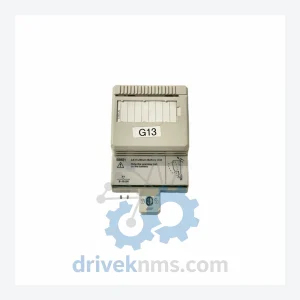
ABB DO801 DO801-eA 3BSE020510R2 is listed for S800 I/O RFQ review. Confirm quantity, condition and destination before quotation.
ABB DLM01 is listed for S800 I/O RFQ review. Confirm quantity, condition and destination before quotation.