
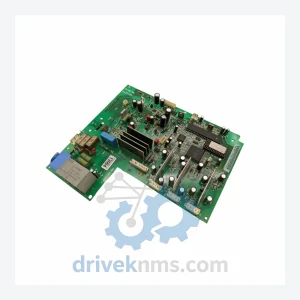
ABB SNAT-7120 Circuit Board – SNAZ7120J Series
ABB SNAT-7120 SNAZ 7120 J SNAZ7120J is listed for SNAZ7120J Series RFQ review. Confirm quantity, condition and destination before quotation.
RFQ-ready industrial model
Model: GJR2397000R1210 88TK50A-E
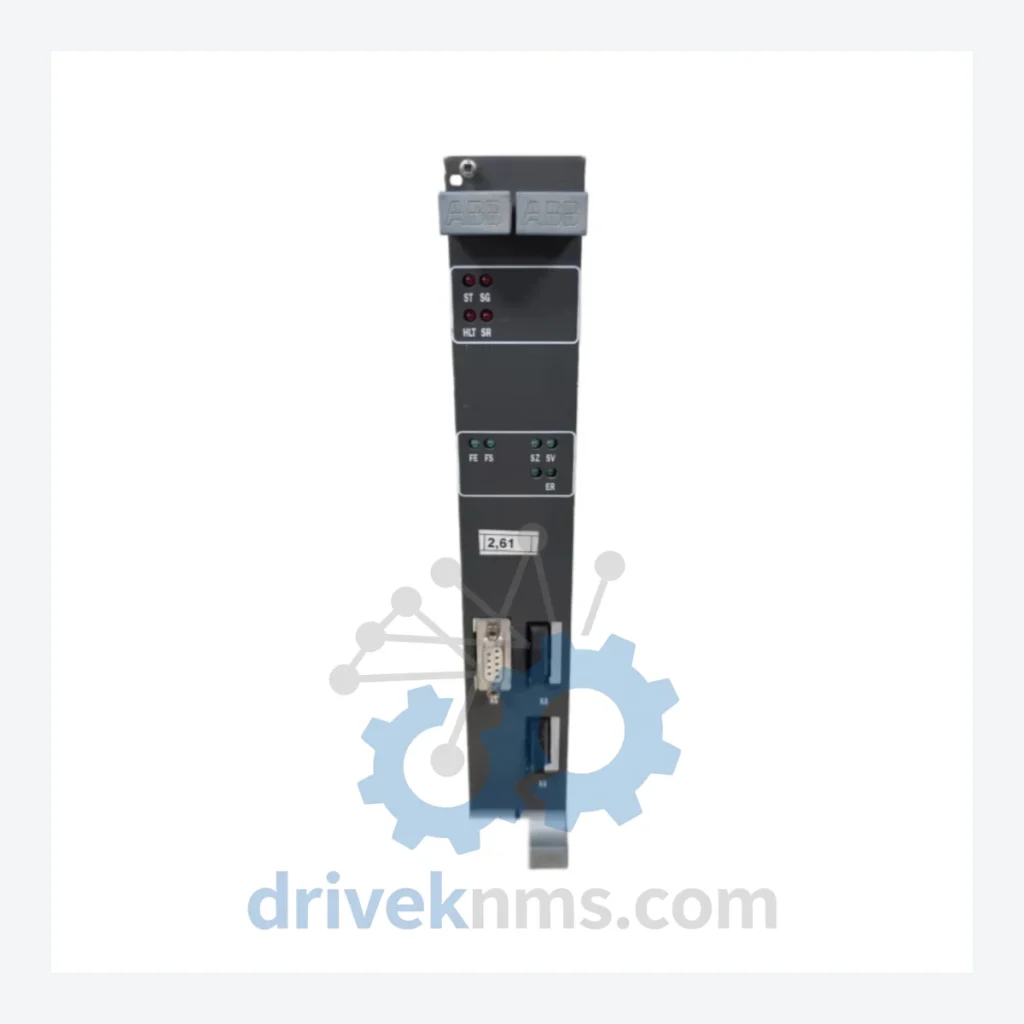
Product Overview
Commercial availability is handled through direct RFQ, model verification and export-oriented follow-up rather than public cart checkout.
Datasheet Preview
Use attached product manuals when available. If the manual is not public yet, request the full file directly through RFQ.
Commercial Path
Product pages on DRIVEKNMS are designed to verify model, brand and series first, then move the buyer into one clean quotation path.
Technical Dossier
The ABB Advant Controller 450 (AC 450) is a mid-to-high-tier Distributed Control System (DCS) platform developed by ABB under its Advant OCS (Open Control System) architecture. Deployed extensively across global heavy industry — including petrochemical refineries, nuclear power auxiliary systems, pulp and paper mills, offshore platforms, and large-scale chemical processing plants — the AC 450 occupies a critical position in process automation infrastructure built between the late 1980s and early 2000s.
The AC 450 operates within the ABB Advant fieldbus hierarchy, interfacing with the MasterBus 300 (MB 300) plant network and the RCOM/SATT station bus at the controller level. Its modular backplane architecture supports hot-standby CPU redundancy, distributed I/O expansion, and multi-protocol communication adapters, making it one of the most scalable DCS platforms of its generation. Installed base estimates place the AC 450 among the top five most widely deployed legacy DCS platforms still in active industrial service globally.
As of 2026, the AC 450 series has entered its end-of-life phase under ABB's product lifecycle policy. ABB has formally migrated support toward the System 800xA platform. However, the installed base remains substantial, and full migration projects are capital-intensive and operationally disruptive. Consequently, demand for original spare parts, tested replacement modules, and lifecycle extension support remains high across all major industrial regions.
The AC 450 traces its lineage to the ABB Master series controllers of the early 1980s, specifically the MASTER 200 and MASTER 300 platforms. The Advant OCS framework, introduced circa 1988, unified these earlier platforms under a common engineering environment (Advant Engineer) and standardized the backplane bus interface across controller families.
Generation 1 (1988–1994): Initial AC 450 deployments used the S100 I/O bus for local I/O expansion. CPU modules in this era (e.g., PM511) operated at lower clock speeds with limited memory. Communication was primarily via MasterBus 300 at the plant network layer.
Generation 2 (1994–2000): Introduction of the S800 I/O system as a distributed I/O alternative, connected via the AF 100 (FOUNDATION Fieldbus H1 precursor) or PROFIBUS DP. CPU modules were upgraded (PM511V16, PM531) with expanded RAM and faster scan cycles. Redundant CPU configurations became standard for critical process loops.
Generation 3 (2000–2008): Final hardware revisions introduced enhanced communication modules supporting Ethernet-based supervisory links. The AC 450 was positioned as a migration bridge toward System 800xA, with compatibility layers allowing coexistence in hybrid architectures.
End-of-Life / Legacy Phase (2008–present): ABB ceased new AC 450 hardware production. Spare parts availability shifted to third-party MRO suppliers and certified refurbishers. Compatibility with System 800xA via OPC DA/UA gateways allows partial integration without full hardware replacement.
Key compatibility considerations: S100 I/O modules are not electrically compatible with S800 I/O without an interface adapter. MB 300 network cards require specific firmware revisions to communicate with modern supervisory systems. Backplane bus termination resistors are version-specific and must match the installed CPU generation.
Controllers / CPU Modules
Station Bus / Communication Modules
Analog I/O Modules (S100 Bus)
Digital I/O Modules (S100 Bus)
Power Supply Modules
For obsolete modules with no direct ABB replacement (e.g., early-generation DSAI130 variants, first-revision PM511V08 units), DriveKNMS provides functional equivalency assessments — documenting firmware version compatibility, backplane connector pin mapping, and configuration parameter migration requirements — to support engineering teams evaluating substitution options.
Lifecycle extension services available for AC 450 include: long-term spare parts reservation contracts (12–60 month forward stocking agreements), module exchange programs (advance replacement with core return), and failure analysis reporting for root-cause documentation required by plant safety management systems.
AC 450 modules present specific quality verification challenges due to their backplane bus architecture and age-related component degradation patterns. DriveKNMS applies a structured test protocol to all AC 450 inventory prior to shipment.
Visual and Physical Inspection: All modules undergo inspection for PCB trace corrosion, electrolytic capacitor bulge (a known failure mode in DSDP140/150 power supplies after 15+ years), connector pin oxidation, and conformal coating integrity. Modules with evidence of thermal stress or arc damage are rejected at this stage.
Backplane Bus Communication Test: CPU modules (PM511, PM531, PM532) are bench-tested in a live AC 450 rack environment. The test verifies S100 bus arbitration, memory read/write integrity across the full address space, and watchdog timer function. Station bus coupling modules (including GJR2397000R1210 88TK50A-E) are tested for RCOM frame transmission and reception at rated baud rates.
I/O Channel Verification: Each channel of analog and digital I/O modules is individually tested. Analog modules are calibrated against a traceable reference standard (±0.1% accuracy). Digital output modules are load-tested at rated current for thermal stability verification.
Communication Module Protocol Testing: PROFIBUS DP modules (CI522A) are tested with a live DP master/slave configuration. MasterBus 300 modules (DSCS140/142) are verified for correct frame formatting and bus timing compliance.
Burn-In Procedure: All CPU and power supply modules undergo a minimum 48-hour powered burn-in at ambient temperature to screen for infant mortality failures in aged components.
Continue The Model Path
Move from this exact model into the matching system hub, brand archive, model-family archive or lifecycle sourcing route before sending a final RFQ list.
Related Paths
ABB SNAT-7120 SNAZ 7120 J SNAZ7120J is listed for SNAZ7120J Series RFQ review. Confirm quantity, condition and destination before quotation.
ABB PM564-TP-ETH 1SAP121100R0071 is listed for Servo Drives RFQ review. Confirm quantity, condition and destination before quotation.
ABB SCDCS-CON-4 is listed for CON-4 Control Board RFQ review. Confirm quantity, condition and destination before quotation.