
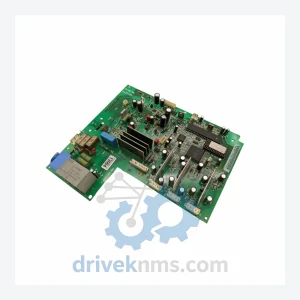
ABB SNAT-7120 Circuit Board – SNAZ7120J Series
ABB SNAT-7120 / SNAZ7120J Circuit Board: Sourcing Strategy & Asset Return Value in a Constrained Global Supply Chain The ABB…
Model: IRB46003HAC043569-004 Type C 3HAC022644-001 lRB760.IRB660.¢ñRB6660. 3HAC055450-003 lRB6700
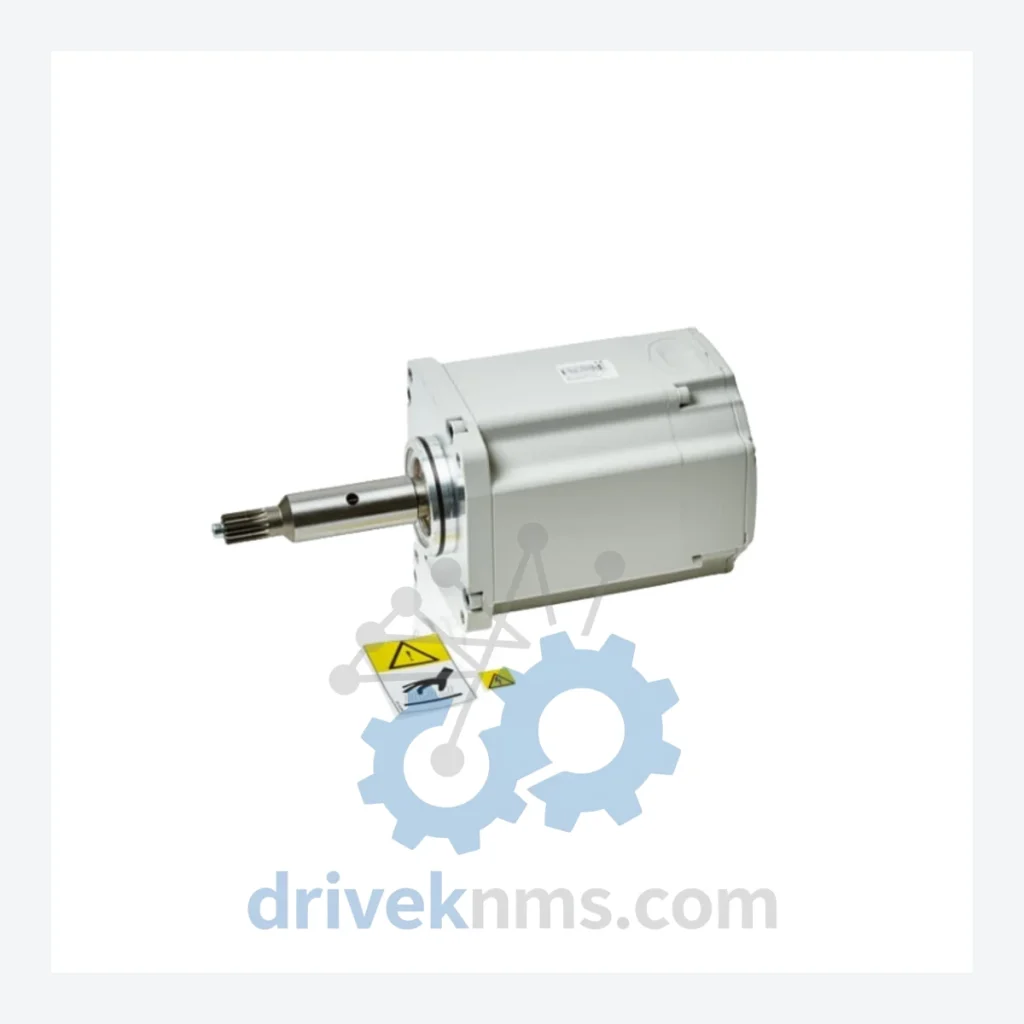
Product Overview
Commercial availability is handled through direct RFQ, model verification and export-oriented follow-up rather than public cart checkout.
Datasheet Preview
Use attached product manuals when available. If the manual is not public yet, request the full file directly through RFQ.
Commercial Path
Product pages on DRIVEKNMS are designed to verify model, brand and series first, then move the buyer into one clean quotation path.
Technical Dossier
When a servo motor fails on an ABB IRB 460, IRB 660, IRB 6660, or IRB 6700 robot cell, the clock starts immediately. A single axis down means the entire production line stops. For facilities running these robot platforms — many of which have been in continuous operation for 10 to 20 years — sourcing a replacement 3HAC043569-004 is not a procurement exercise. It is a crisis management event.
ABB has discontinued active production support for several components within the IRB 460/660/6660/6700 servo drive chain. The 3HAC043569-004 Type C motor is among those parts where authorized channel availability has become unreliable. A full robot cell replacement, including mechanical integration, programming, and production requalification, routinely exceeds USD 500,000. Against that figure, securing a verified spare motor represents a fraction of the cost — and eliminates the downtime entirely.
DriveKNMS maintains physical stock of this unit. Inventory is limited and not replenishable on demand.
| Parameter | Detail |
|---|---|
| Part Number | 3HAC043569-004 |
| Type | Type C |
| Component | Servo Motor |
| Compatible Robots | ABB IRB 460, IRB 660, IRB 6660, IRB 6700 |
| Cross-Reference | 3HAC022644-001 (related axis module) |
| Discontinuation Status | End-of-active-production; available through secondary market only |
| Country of Origin | Sweden |
| Condition Available | New Old Stock (NOS) / Professionally Refurbished |
Note: Electrical parameters such as rated torque, encoder resolution, and supply voltage are axis-position dependent within the IRB platform. Confirm axis assignment before ordering. DriveKNMS technical staff can assist with cross-verification.
The ABB IRB 460, IRB 660, IRB 6660, and IRB 6700 represent a generation of high-payload industrial robots deployed extensively in automotive body shops, palletizing lines, and heavy-part handling cells from the mid-2000s through the 2010s. These platforms were engineered for 20-year service lives, and many facilities have built their production architecture around them.
The servo motor at each axis is the mechanical heart of the robot. The 3HAC043569-004 Type C unit drives a specific axis within this family, and its failure profile — typically presenting as encoder fault alarms, axis overload errors, or erratic motion — leaves no functional workaround. The robot cannot operate on a degraded axis.
ABB's current IRC5 and OmniCore controller ecosystem is not backward-compatible with the mechanical and electrical interface of the IRB 460/660/6660/6700 servo chain without significant re-engineering. This means that for facilities not yet ready to commit to a full platform migration, the only viable path is component-level repair using original or equivalent spare parts.
Facilities that have established a strategic spare parts buffer for this motor have documented production continuity through multiple failure events without unplanned downtime. Those that have not faced lead times of 16 to 26 weeks through standard channels — when the part could be sourced at all.
The decision to retire a robot platform is rarely driven by the robot's mechanical condition. It is driven by the inability to source replacement components. This is a procurement failure, not an engineering one — and it is preventable.
1. Conduct a criticality audit of your servo motor inventory. Identify every axis motor model across your IRB fleet. Rank them by failure frequency and lead time risk. The 3HAC043569-004 consistently appears on high-criticality lists for IRB 6660 and IRB 6700 installations.
2. Establish a minimum stock position. For a fleet of four or more robots sharing this motor type, a minimum of two spare units on-site eliminates single-point-of-failure exposure. The carrying cost of two motors is recoverable in less than one hour of avoided downtime at typical automotive production rates.
3. Negotiate long-term supply agreements with secondary market specialists. Authorized distributors have largely exited the obsolete parts segment. Specialist suppliers like DriveKNMS maintain dedicated sourcing networks for exactly this category. Locking in supply now, before the next failure event, is the operationally sound approach.
4. Implement a predictive maintenance schedule. Servo motors in this series show measurable degradation in encoder signal quality and bearing noise before catastrophic failure. Quarterly vibration analysis and encoder diagnostic checks can extend service intervals and provide advance warning of impending failure.
5. Document your installed firmware and drive parameter sets. When a motor is replaced, the IRC5 drive parameters must match the original configuration. Maintaining a documented backup of axis parameters eliminates re-commissioning time and reduces the risk of incorrect configuration after a swap.
Facilities that execute this five-point strategy consistently report 5 to 10 additional years of productive service from robot platforms that would otherwise have been retired due to parts unavailability — not mechanical failure.
Sourcing a servo motor from the secondary market carries legitimate risk if the supplier's quality process is not rigorous. DriveKNMS applies a five-step inspection protocol to every unit in this category before it is offered for sale.
Step 1 – Electrolytic Capacitor Assessment: Capacitors in servo drive electronics age independently of operating hours. Each unit is inspected for capacitor bulging, electrolyte leakage, and ESR deviation. Units with degraded capacitors are either recapped or rejected.
Step 2 – Firmware and Encoder Version Verification: The 3HAC043569-004 Type C designation indicates a specific hardware revision. We verify that the encoder type and any embedded firmware identifiers match the Type C specification to ensure compatibility with the target IRC5 drive configuration.
Step 3 – Pin and Connector Corrosion Inspection: Connector pins on motors stored in non-climate-controlled environments are subject to oxidation. All connectors are inspected under magnification and treated or replaced as required before shipment.
Step 4 – Mechanical Integrity Check: Shaft runout, bearing play, and housing integrity are verified. Motors with measurable shaft deviation or bearing roughness are not offered as functional spares.
Step 5 – Functional Burn-In (where test equipment permits): Where our test bench supports the motor's interface, units are run under load to confirm encoder signal integrity and thermal stability before dispatch.
Q: What warranty applies to this obsolete spare part?
A: DriveKNMS provides a 90-day functional warranty on all refurbished units and a 30-day warranty on New Old Stock units. Warranty covers failure under normal operating conditions and excludes damage from incorrect installation or parameter mismatch.
Q: How do I confirm this is a genuine ABB unit and not a counterfeit?
A: All units are inspected for ABB part markings, serial number format, and hardware revision identifiers consistent with the 3HAC043569-004 Type C specification. We provide photographic documentation of the unit's label and connector configuration upon request before purchase.
Q: Should I buy one unit or establish a buffer stock?
A: For any facility operating more than two robots in this series, a minimum of two spare motors is the operationally defensible position. The cost of a second unit is recovered in minutes of avoided downtime. We can discuss volume pricing for buffer stock orders.
Q: What is the lead time?
A: Units in current stock ship within 3–5 business days after order confirmation and payment. Stock levels are not guaranteed beyond the current confirmed inventory. Contact us to verify availability before committing to a maintenance schedule.
Q: Can you source this part if it is currently out of stock?
A: Yes. DriveKNMS operates an active sourcing network for obsolete ABB components. If current stock is depleted, we can initiate a sourcing request with an estimated lead time provided within 5 business days.
Related Paths
ABB SNAT-7120 / SNAZ7120J Circuit Board: Sourcing Strategy & Asset Return Value in a Constrained Global Supply Chain The ABB…
ABB AC500 Series: Comprehensive Module Range and Technical Overview The ABB AC500 is a scalable modular PLC platform deployed across…
ABB SCDCS-CON-4 Control Board – Obsolete DCS Spare Part When a single control board fails in a legacy distributed control…