
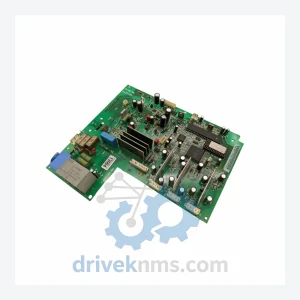
ABB SNAT-7120 Circuit Board – SNAZ7120J Series
ABB SNAT-7120 / SNAZ7120J Circuit Board: Sourcing Strategy & Asset Return Value in a Constrained Global Supply Chain The ABB…
Model: IRB6603HAC057551-004 IRB6650S3HAC057551-003 IRB660 3HAC020208-001
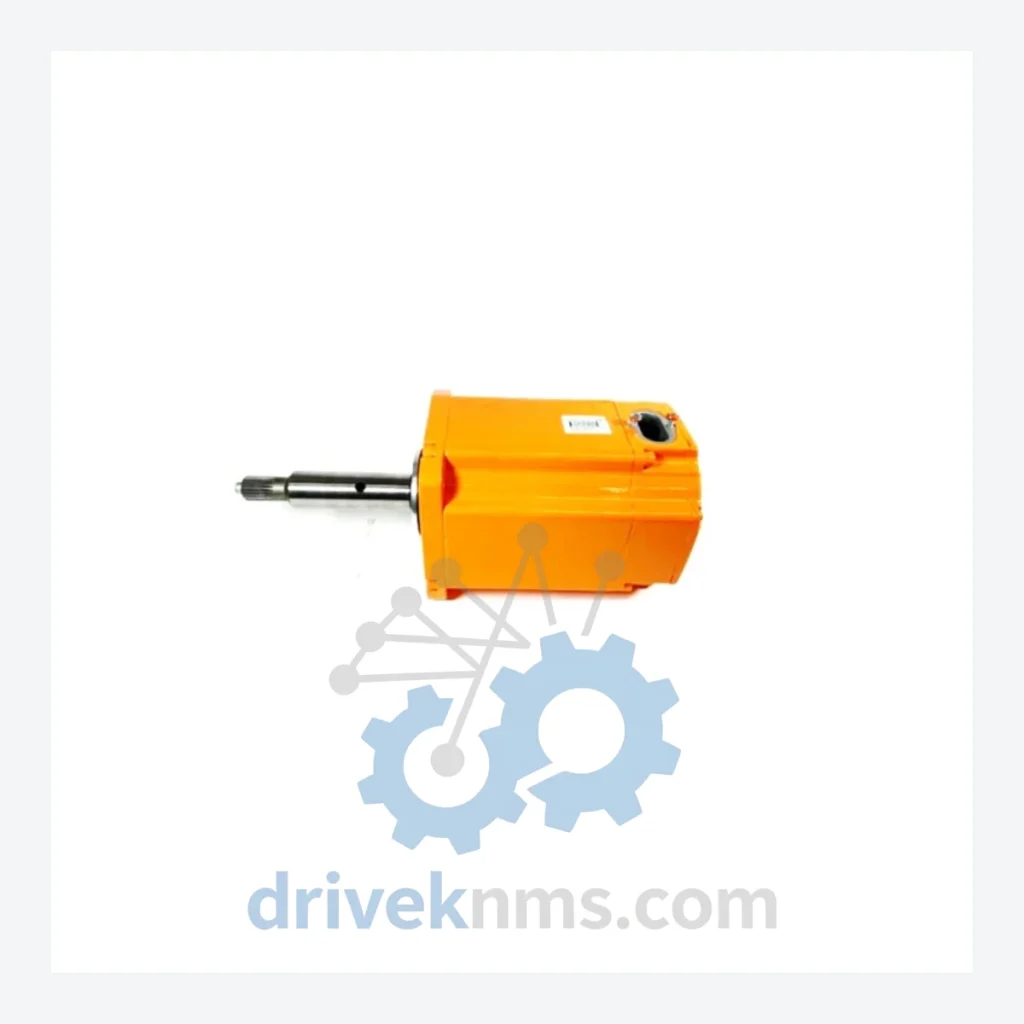
Product Overview
Commercial availability is handled through direct RFQ, model verification and export-oriented follow-up rather than public cart checkout.
Datasheet Preview
Use attached product manuals when available. If the manual is not public yet, request the full file directly through RFQ.
Commercial Path
Product pages on DRIVEKNMS are designed to verify model, brand and series first, then move the buyer into one clean quotation path.
Technical Dossier
When the motor assembly on an ABB IRB 660, IRB 6600, or IRB 6650S robot fails, the production line does not simply pause — it stops. For facilities still operating these robot platforms, the cost of a forced system upgrade is not measured in parts; it is measured in engineering hours, re-integration projects, requalification cycles, and production downtime that routinely reaches seven figures. ABB discontinued the 3HAC020208-001 motor incl pinion assembly years ago. Authorized channels no longer stock it. DriveKNMS holds verified physical inventory of this unit — one of the few suppliers globally that can ship without a lead time measured in months.
| Field | Detail |
|---|---|
| Part Number | 3HAC020208-001 |
| Cross-Reference SKUs | IRB6603HAC057551-004 / IRB6650S3HAC057551-003 |
| Description | Motor Incl Pinion (Axis Drive Motor Assembly) |
| Compatible Robot Models | ABB IRB 660, ABB IRB 6600, ABB IRB 6650S |
| Manufacturer | ABB Robotics |
| Country of Origin | Sweden |
| Product Status | Discontinued / Obsolete |
| Condition Available | New Old Stock (NOS) / Professionally Refurbished |
Note: Electrical parameters (voltage rating, encoder resolution, torque specifications) vary by robot configuration and axis assignment. Confirmed parameters are provided upon request with unit serial number verification. No parameters are published here that cannot be independently verified.
The ABB IRB 660, IRB 6600, and IRB 6650S series represent a generation of industrial robots that remain deeply embedded in automotive body shops, palletizing lines, and heavy-payload assembly cells worldwide. These platforms were engineered for 20-year service lives, and many facilities are well into that window — with no budget or operational window to execute a full robot replacement program.
The motor incl pinion assembly (3HAC020208-001) is a mechanical-electrical interface component. It is not a commodity item that can be substituted with an off-the-shelf motor. The pinion gear geometry, encoder protocol, and mechanical mounting are specific to the ABB joint design. Replacing this unit with a non-OEM equivalent requires mechanical re-engineering of the joint, recalibration of the robot's motion controller, and requalification of the robot's working envelope — a process that can take weeks and cost more than the robot's residual book value.
For plant engineers and maintenance managers operating these platforms, the only cost-rational path is sourcing an original 3HAC020208-001 replacement. That is precisely what DriveKNMS provides.
Facilities that manage obsolete robot fleets strategically — rather than reactively — consistently achieve 5 to 10 additional years of productive service from platforms like the IRB 660 and IRB 6600 series. The following practices are drawn from industrial maintenance operations that have successfully deferred multi-million dollar robot replacement programs:
1. Maintain a dedicated critical-spare inventory. Identify the three to five components on each robot that are both failure-prone and no longer available through standard channels. The motor assembly is one of them. Holding one spare unit per robot cell eliminates the single largest risk: an unplanned failure with no replacement available.
2. Implement condition-based motor monitoring. Vibration signature analysis and thermal imaging on joint motors can detect bearing degradation 200–400 operating hours before failure. This converts an unplanned emergency into a scheduled maintenance window.
3. Establish a refurbishment cycle. Removed motor assemblies that are not catastrophically failed can often be professionally refurbished — bearings replaced, encoder cleaned, pinion gear inspected — and returned to service as verified spares. This extends the effective supply of an obsolete part beyond what the secondary market alone can provide.
4. Document firmware and calibration baselines. Before any motor replacement, record the robot controller's current calibration data. This eliminates the risk of losing axis calibration during a swap and reduces recommissioning time from days to hours.
5. Engage a specialist supplier before the failure occurs. Secondary market inventory for discontinued ABB robot components is finite and diminishes over time. Procurement decisions made under emergency conditions — with a production line down — result in premium pricing and extended lead times. Facilities that establish supplier relationships in advance secure better pricing, verified unit condition, and priority allocation.
Every 3HAC020208-001 unit that leaves DriveKNMS undergoes a structured 5-step inspection protocol developed specifically for obsolete electromechanical assemblies:
Step 1 – Electrolytic Capacitor Assessment. Capacitor aging is the primary failure mode in stored motor drive electronics. Each unit is inspected for capacitor bulge, leakage, and ESR deviation from specification.
Step 2 – Firmware Version Verification. Where applicable, embedded firmware versions are confirmed against the compatibility matrix for the target robot controller version (IRC5 / S4C+). Incompatible firmware versions are flagged before shipment.
Step 3 – Pin and Connector Corrosion Inspection. All electrical connectors are inspected under magnification for oxidation, pin deformation, and contact resistance. Corroded contacts are cleaned or the connector assembly is replaced.
Step 4 – Pinion Gear Dimensional Check. The pinion gear is inspected for tooth wear, chipping, and dimensional conformance. Units with gear wear beyond serviceable limits are not offered for sale.
Step 5 – Functional Verification (where test equipment permits). Units are bench-tested for encoder signal integrity and motor winding continuity prior to packaging.
Q: What warranty applies to a discontinued part like this?
A: DriveKNMS provides a 90-day functional warranty on all units. New Old Stock (NOS) units carry the full 90-day coverage. Professionally refurbished units carry a 90-day post-installation warranty covering the refurbishment work performed. Warranty terms are confirmed in writing at the time of order.
Q: How do I know the unit is genuine ABB and not a counterfeit?
A: All units are sourced through documented industrial surplus channels. Physical inspection includes ABB part number verification on the motor housing and encoder assembly. We do not source from unverified brokers. Documentation of unit provenance is available upon request for critical procurement decisions.
Q: Should I buy more than one unit?
A: For facilities operating multiple IRB 660, IRB 6600, or IRB 6650S robots, holding two to three spare motor assemblies is a defensible asset protection decision. Secondary market availability of 3HAC020208-001 is declining. Units purchased today represent insurance against a future procurement failure that could idle an entire robot cell.
Q: What is the lead time?
A: Units in current inventory ship within 3–5 business days after order confirmation and payment. Contact us to confirm current stock status before placing an order.
© 2026 DriveKNMS. All trademarks belong to their respective owners. Specifications are for reference only and subject to change without notice. Verify all parameters against official documentation before installation.
Related Paths
ABB SNAT-7120 / SNAZ7120J Circuit Board: Sourcing Strategy & Asset Return Value in a Constrained Global Supply Chain The ABB…
ABB AC500 Series: Comprehensive Module Range and Technical Overview The ABB AC500 is a scalable modular PLC platform deployed across…
ABB SCDCS-CON-4 Control Board – Obsolete DCS Spare Part When a single control board fails in a legacy distributed control…