
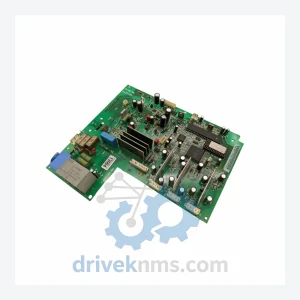
ABB SNAT-7120 Circuit Board – SNAZ7120J Series
ABB SNAT-7120 / SNAZ7120J Circuit Board: Sourcing Strategy & Asset Return Value in a Constrained Global Supply Chain The ABB…
Model: IRB6650S3HAC021541-002 3HAC025562-001 DSQC 655 IRB12003HAC059674-001
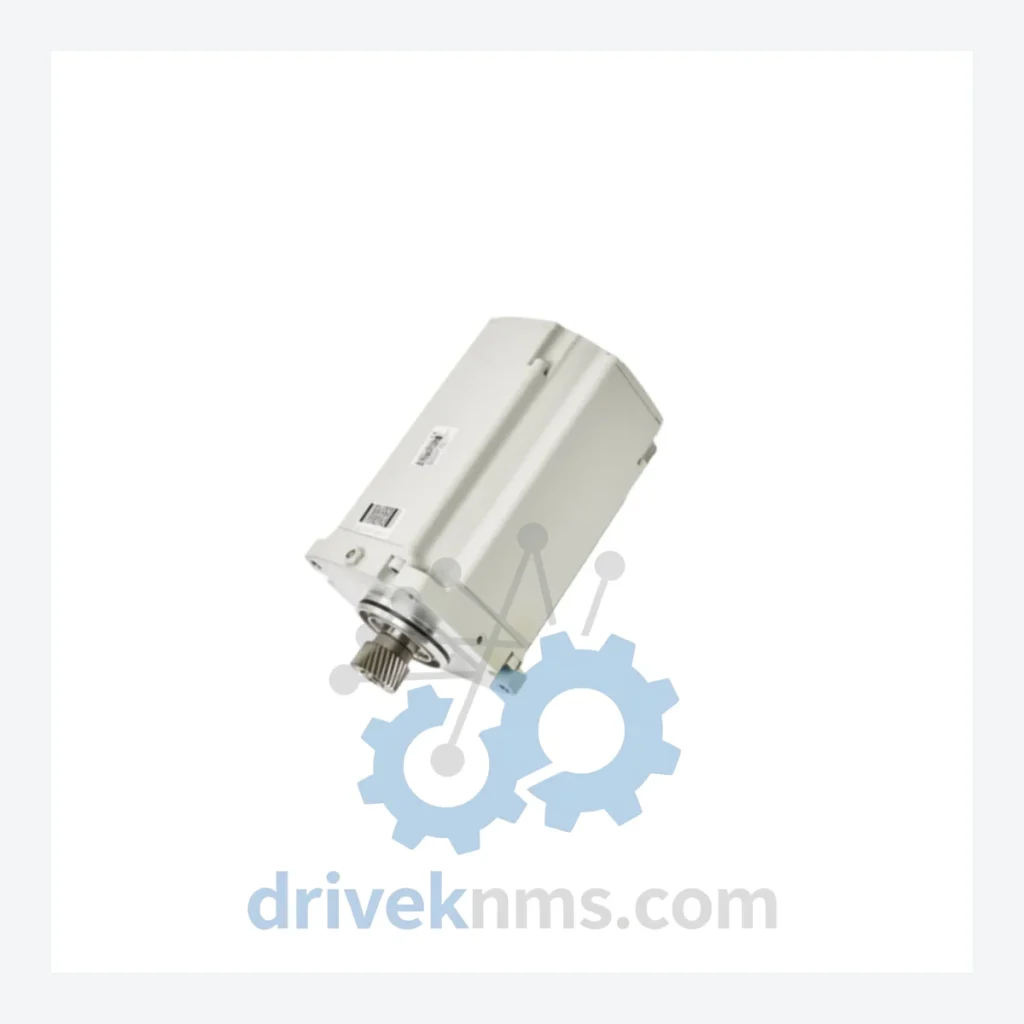
Product Overview
Commercial availability is handled through direct RFQ, model verification and export-oriented follow-up rather than public cart checkout.
Datasheet Preview
Use attached product manuals when available. If the manual is not public yet, request the full file directly through RFQ.
Commercial Path
Product pages on DRIVEKNMS are designed to verify model, brand and series first, then move the buyer into one clean quotation path.
Technical Dossier
When an ABB IRC5 controller loses its axis computer board, the robot stops. Not for maintenance — permanently, unless the right board is sourced. The DSQC655 (3HAC025562-001) is a discontinued component, no longer manufactured by ABB. For plants running IRB6650S or IRB1200 articulated robots, a single failed unit can trigger a production halt that forces a choice between a multi-million dollar robot cell upgrade or a months-long wait for a refurbished replacement. DriveKNMS holds verified stock of this board. That stock is finite.
| Part Number | 3HAC025562-001 |
| Common Reference | DSQC655 |
| Compatible SKU Cross-Reference | 3HAC021541-002 (predecessor DSQC 611 axis board family) |
| Function | Axis Computer Board – IRC5 Controller |
| Compatible Robot Models | IRB6650S, IRB1200 series |
| Controller Platform | ABB IRC5 (single cabinet & dual cabinet) |
| Manufacturer | ABB Robotics |
| Country of Origin | Sweden |
| Product Status | Discontinued / Obsolete – No longer in ABB active production |
| Condition Available | New Old Stock (NOS) / Professionally Refurbished |
The ABB IRC5 platform has been the backbone of automotive body shops, foundries, and heavy-part handling lines for over two decades. The DSQC655 axis computer board sits at the core of the IRC5's motion control chain — it processes axis position data and communicates directly with the drive units. There is no generic substitute. A replacement must match the firmware baseline of the existing controller cabinet; otherwise the robot will not commission.
ABB's end-of-life policy for IRC5 spare parts means that boards like the DSQC655 are no longer available through standard distribution channels. Plants that did not build a strategic buffer stock now face lead times measured in months — if a source can be found at all. The alternative is a full IRC5 controller replacement, which carries not just hardware costs but re-integration engineering, re-certification, and production downtime that routinely exceeds the capital cost of the controller itself.
For factory management teams operating under asset-preservation mandates, the arithmetic is straightforward: one DSQC655 board, sourced and validated today, protects a robot cell investment that may represent $300,000–$800,000 in installed value. Deferring that procurement decision until a failure occurs is not a cost-saving strategy — it is an unhedged operational risk.
Aging robot systems do not fail uniformly. The mechanical structure of an IRB6650S — the castings, gearboxes, and wiring harnesses — routinely outlasts the electronic control layer by a significant margin. The IRC5 controller's printed circuit boards, capacitor banks, and communication modules are the actual life-limiting components. A disciplined spare parts strategy addresses this directly:
1. Identify the single-point-of-failure boards. For IRC5, the axis computer (DSQC655), the main computer (DSQC656), and the I/O boards (DSQC652) are the components whose failure causes immediate production loss. These are the boards to stock.
2. Procure before failure, not after. Post-failure sourcing of obsolete boards from the secondary market takes 4–16 weeks on average and carries a price premium of 40–200% over pre-failure procurement. A single unplanned downtime event typically costs more than a full set of critical spares.
3. Validate firmware compatibility at procurement. IRC5 axis boards must match the RobotWare version running on the controller. A reputable supplier will confirm this before shipment. DriveKNMS verifies firmware baseline as part of its standard QA process.
4. Store correctly. Electrostatic-sensitive boards stored in anti-static packaging in a climate-controlled environment retain full functionality for 10+ years. Improper storage — not age — is the primary cause of NOS board degradation.
5. Document your installed base. Maintain a register of controller serial numbers, RobotWare versions, and board part numbers for every robot in the facility. This eliminates sourcing errors and reduces emergency response time from days to hours.
Plants that implement this approach consistently report 7–10 additional years of productive life from IRC5-based robot cells, deferring capital expenditure on new robot systems until it is strategically advantageous rather than operationally forced.
Every DSQC655 board shipped by DriveKNMS passes a five-stage inspection protocol before release:
Step 1 – Visual & Physical Inspection: Board surface examined for mechanical damage, burn marks, and solder joint integrity under magnification.
Step 2 – Electrolytic Capacitor Assessment: All electrolytic capacitors checked for bulging, leakage, and ESR deviation. Aged capacitors are replaced with specification-matched components before the board is classified as serviceable.
Step 3 – Firmware Version Verification: Firmware version is read and documented. Boards are matched to customer RobotWare versions where compatibility data is available.
Step 4 – Pin & Connector Corrosion Check: All edge connectors and pin headers inspected for oxidation and corrosion. Affected contacts are cleaned or the board is downgraded.
Step 5 – Functional Bench Test: Where test fixtures are available, boards are powered and tested for basic communication and response. Test results are documented and accompany the shipment.
Boards that do not pass all five stages are not sold as functional units.
Drop-in replacement: The DSQC655 installs directly into the IRC5 axis computer slot. No mechanical modification to the controller cabinet is required.
No reprogramming of robot programs: Robot application programs (RAPID code) reside on the main computer, not the axis board. Replacing the DSQC655 does not affect the robot's programmed tasks.
Avoids engineering reconstruction costs: A validated like-for-like board replacement eliminates the need for system integrator involvement, re-commissioning engineering, and the associated downtime that a controller platform migration would require.
Preserves existing safety certifications: Replacing a board within the same controller platform does not trigger re-certification requirements that a full system replacement would. This is a material cost and time consideration in regulated manufacturing environments.
Q: What warranty applies to a discontinued board?
A: DriveKNMS provides a 90-day warranty on all refurbished units covering functional failure under normal operating conditions. New Old Stock units carry a 180-day warranty. Warranty terms are confirmed in writing at the time of order.
Q: How do I confirm the board is genuine ABB and not a counterfeit?
A: All boards are sourced through documented supply chains. ABB part labels, date codes, and board markings are verified during intake inspection. Customers may request inspection photos prior to shipment.
Q: Should I buy one unit or build a buffer stock?
A: For facilities operating more than two IRC5 controllers, holding a minimum of one DSQC655 on-site is a defensible maintenance practice. The board's compact form factor and long shelf life make storage straightforward. Given that secondary market availability of this part is declining, procurement delay carries increasing risk.
Q: Can you confirm compatibility with my specific RobotWare version before I order?
A: Yes. Provide your controller serial number and RobotWare version when contacting us and we will confirm compatibility before invoicing.
Related Paths
ABB SNAT-7120 / SNAZ7120J Circuit Board: Sourcing Strategy & Asset Return Value in a Constrained Global Supply Chain The ABB…
ABB AC500 Series: Comprehensive Module Range and Technical Overview The ABB AC500 is a scalable modular PLC platform deployed across…
ABB SCDCS-CON-4 Control Board – Obsolete DCS Spare Part When a single control board fails in a legacy distributed control…