
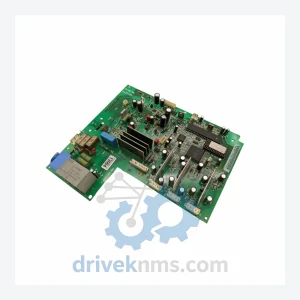
ABB SNAT-7120 Circuit Board – SNAZ7120J Series
ABB SNAT-7120 SNAZ 7120 J SNAZ7120J is listed for SNAZ7120J Series RFQ review. Confirm quantity, condition and destination before quotation.
RFQ-ready industrial model
Model: IRB66603HAC058994-003
Product Overview
Commercial availability is handled through direct RFQ, model verification and export-oriented follow-up rather than public cart checkout.
Datasheet Preview
Use attached product manuals when available. If the manual is not public yet, request the full file directly through RFQ.
Commercial Path
Product pages on DRIVEKNMS are designed to verify model, brand and series first, then move the buyer into one clean quotation path.
Technical Dossier
RFQ support for obsolete parts: Send the model number, required quantity and destination so DriveKNMS can confirm sourcing options before quotation.
| Part Number | 3HAC058994-003 |
| Full Reference | IRB66603HAC058994-003 |
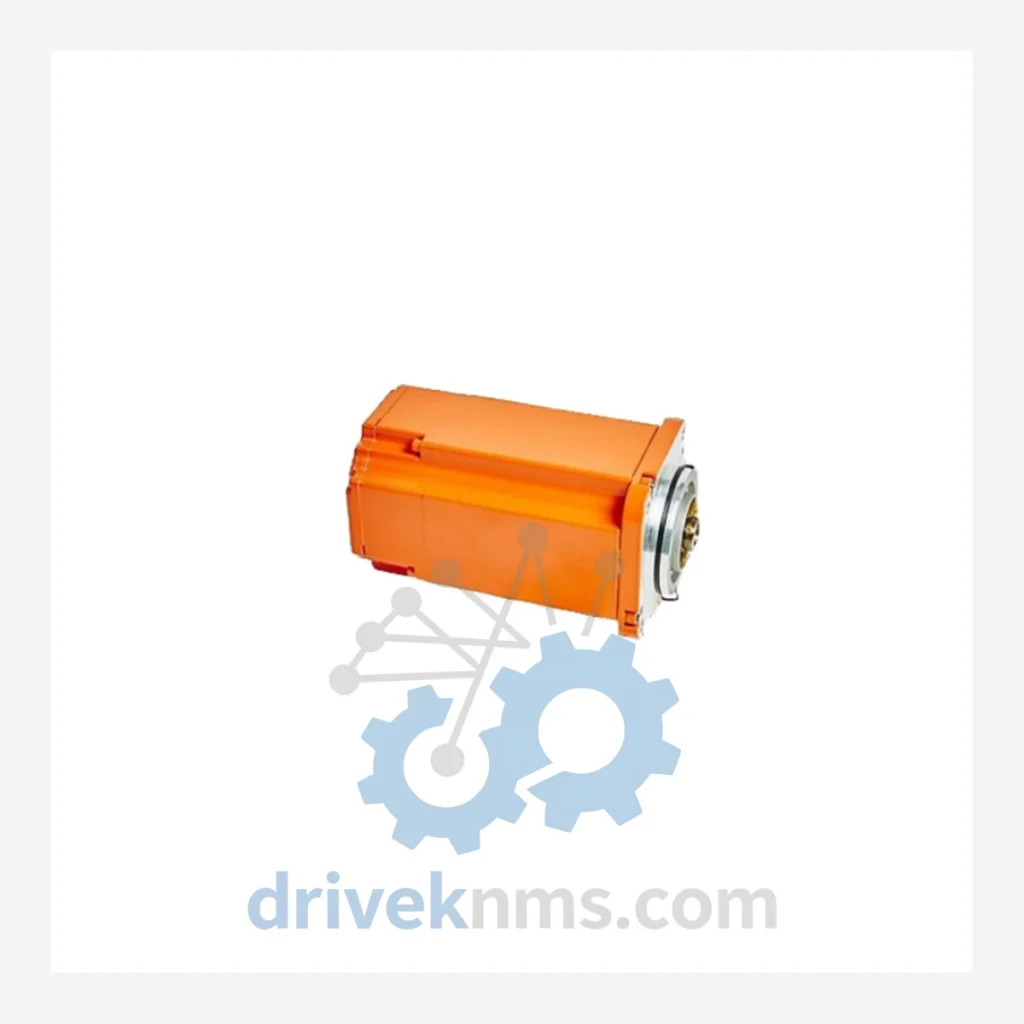
| Description | Two-Axis Servo Motor, Axis 2 |
| Compatible Robot | ABB IRB 6660 Series |
| Motor Type | AC Servo Motor |
| Manufacturer | ABB Robotics |
| Country of Origin | Sweden |
| Discontinuation Status | Discontinued / End-of-Life (EOL) – No longer in active ABB production |
| OEM Availability | Not available through standard ABB distribution channels |
Note: Electrical parameters such as rated torque, encoder resolution, and winding specifications are not published here to prevent misapplication. Contact our technical team for verified datasheet confirmation prior to ordering.
The ABB IRB 6660 was engineered for high-payload, confined-space applications — press-tending, machine loading, and structural welding in automotive and heavy industry. Its mechanical architecture and reach envelope made it a preferred platform for cells designed in the 2008–2018 window. Those cells are now aging into their second decade of operation, and the control architecture, servo drives, and mechanical assemblies that support them are no longer manufactured.
The axis-2 servo motor (3HAC058994-003) is a structural failure point in aging IRB 6660 units. It carries the full dynamic load of the upper arm assembly through high-cycle, high-torque movements. Bearing wear, encoder drift, and winding insulation degradation are the three primary failure modes observed in units exceeding 40,000 operating hours. None of these failure modes provide long warning windows. When the motor fails, the robot fails.
Migrating an IRB 6660 cell to a current-generation ABB IRB 6700 or equivalent platform requires mechanical re-fixturing, new end-of-arm tooling, IRC5 or OmniCore controller integration, and full safety re-validation. In regulated manufacturing environments — automotive Tier 1 suppliers, aerospace subcontractors, food-grade processing — that re-validation process alone can consume 6 to 18 months of engineering time. Holding a verified spare motor on-site eliminates that risk entirely for the cost of a single component.
Extending the operational life of an IRB 6660 cell by 5 to 10 years through targeted spare parts management is not a compromise strategy. It is a capital allocation decision. The math is straightforward: a verified spare motor at a four-to-five-figure cost versus a forced platform migration at seven figures. For plant engineering managers operating under capital expenditure freeze conditions or multi-year depreciation schedules, the spare parts route is the only financially defensible path.
Step 1 – Electrolytic Capacitor Assessment: Internal capacitors in servo motor drive electronics are the first components to degrade with age. Each unit is inspected for capacitor bulge, leakage, and ESR deviation from specification. Units with capacitor anomalies are either reconditioned or removed from saleable inventory.
Step 2 – Firmware Version Verification: Where applicable, embedded firmware versions are confirmed against the compatibility matrix for the IRC5 controller variants used in IRB 6660 installations. Firmware mismatches are a known source of axis faults that are frequently misdiagnosed as mechanical failures.
Step 3 – Pin and Connector Corrosion Inspection: All motor connectors, encoder plugs, and power terminals are inspected under magnification for oxidation, fretting corrosion, and mechanical deformation. Affected contacts are cleaned or the unit is downgraded.
Step 4 – Insulation Resistance Test: Winding insulation is tested to confirm resistance values are within acceptable limits for the motor's rated voltage class. This step screens for winding degradation that would cause early in-service failure.
Step 5 – Functional Rotation and Encoder Signal Test: Where test equipment permits, the motor is rotated under controlled conditions and encoder signal integrity is verified. Units that do not produce clean encoder output are not listed as functional spares.
The 3HAC058994-003 is a direct mechanical and electrical replacement for the original axis-2 motor in the IRB 6660. It mounts to the existing robot arm structure using the original bolt pattern and connects via the original cable harness without modification. No robot programming changes are required. No kinematic recalibration of the robot's work envelope is necessary beyond the standard axis calibration procedure documented in the IRB 6660 product manual.
This drop-in replacement characteristic is the critical operational advantage. Maintenance teams can execute the motor swap during a planned shutdown window — typically 4 to 8 hours for a trained ABB-certified technician — and return the cell to production without involving controls engineers, system integrators, or OEM service contracts. The alternative — a platform migration — requires all of those resources simultaneously, plus capital approval, plus production scheduling accommodation.
For plants running multiple IRB 6660 units, a pre-positioned spare motor in the maintenance store eliminates mean-time-to-repair (MTTR) dependency on external supply chains entirely. That is the operational posture that separates reactive maintenance from asset protection.
Q: How do I confirm the unit is new or quality-reconditioned, not a field-pulled scrap part?
A: Every unit shipped by DriveKNMS is accompanied by an inspection report documenting the condition classification and the tests performed. We do not list field-pulled units without full inspection and classification disclosure.
Continue The Model Path
Move from this exact model into the matching system hub, brand archive, model-family archive or lifecycle sourcing route before sending a final RFQ list.
Related Paths
ABB SNAT-7120 SNAZ 7120 J SNAZ7120J is listed for SNAZ7120J Series RFQ review. Confirm quantity, condition and destination before quotation.
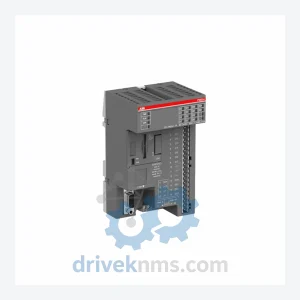
ABB PM564-TP-ETH 1SAP121100R0071 is listed for Servo Drives RFQ review. Confirm quantity, condition and destination before quotation.
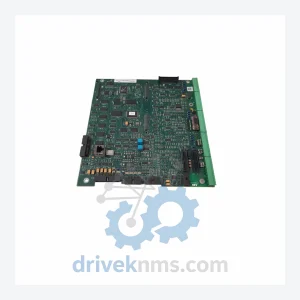
ABB SCDCS-CON-4 is listed for CON-4 Control Board RFQ review. Confirm quantity, condition and destination before quotation.