
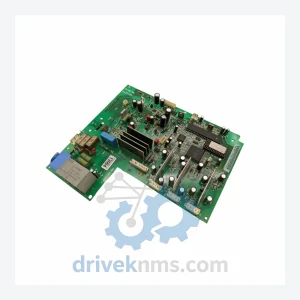
ABB SNAT-7120 Circuit Board – SNAZ7120J Series
ABB SNAT-7120 SNAZ 7120 J SNAZ7120J is listed for SNAZ7120J Series RFQ review. Confirm quantity, condition and destination before quotation.
RFQ-ready industrial model
Model: NAMC-51C
Product Overview
Commercial availability is handled through direct RFQ, model verification and export-oriented follow-up rather than public cart checkout.
Datasheet Preview
Use attached product manuals when available. If the manual is not public yet, request the full file directly through RFQ.
Commercial Path
Product pages on DRIVEKNMS are designed to verify model, brand and series first, then move the buyer into one clean quotation path.
Technical Dossier
The ABB NAMC (New Application Motor Control) series represents the core control board platform deployed across ABB's ACS800 family of industrial AC drives. These boards are installed in critical process industries worldwide — including petrochemical refineries, nuclear auxiliary systems, offshore platforms, pulp and paper mills, and cement plants. The NAMC architecture handles all high-level drive logic: speed and torque reference processing, fieldbus communication arbitration, application macro execution, and fault diagnostics. Due to the ACS800's dominant market share in heavy industry from the late 1990s through the 2010s, NAMC boards remain among the most actively sourced spare parts in the global drive maintenance ecosystem.
The NAMC series was introduced alongside the ACS800 platform in the late 1990s as a replacement for the earlier NAMC boards used in the ACS600 generation. The original NAMC-01 and NAMC-02 variants established the baseline architecture: a dedicated DSP core for motor control algorithms, a separate microcontroller for application logic, and a standardized DDCS (Distributed Drive Control System) fiber-optic communication interface. This dual-processor architecture allowed ABB to separate real-time motor control from application-layer programming, a design decision that significantly improved system reliability in high-cycle industrial environments.
The NAMC-11 introduced expanded memory and improved fieldbus adapter compatibility, supporting the RDCO DDCS communication option board. The NAMC-22 extended this with enhanced application macro storage and improved fault logging resolution. The NAMC-51 and NAMC-51C variants represent the mature phase of the platform, incorporating refined EMC filtering, improved thermal management, and compatibility with the full range of ACS800 option modules including RINT rectifier boards and RDCU drive control units. The NAMC-51C specifically added conformal coating for operation in high-humidity and chemically aggressive environments — a requirement driven by offshore and chemical plant installations.
As the ACS800 platform transitioned to end-of-active-production status, ABB introduced the ACS880 with the BCON and CCON control board architecture. However, the installed base of ACS800 drives globally ensures continued demand for NAMC boards through at least the 2030s, as full drive replacement is economically prohibitive in many plant configurations.
Control & Application Boards:
Communication & Fieldbus Interface Boards (compatible with NAMC platform):
I/O Expansion (NAMC-compatible):
NAMC boards present specific quality control challenges due to their dual-processor architecture and the complexity of the DDCS communication interface. DriveKNMS applies the following test protocol to all NAMC units prior to dispatch:
Continue The Model Path
Move from this exact model into the matching system hub, brand archive, model-family archive or lifecycle sourcing route before sending a final RFQ list.
Related Paths
ABB SNAT-7120 SNAZ 7120 J SNAZ7120J is listed for SNAZ7120J Series RFQ review. Confirm quantity, condition and destination before quotation.
ABB PM564-TP-ETH 1SAP121100R0071 is listed for Servo Drives RFQ review. Confirm quantity, condition and destination before quotation.
ABB SCDCS-CON-4 is listed for CON-4 Control Board RFQ review. Confirm quantity, condition and destination before quotation.