
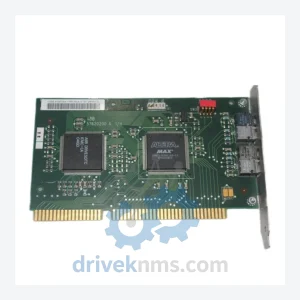
ABB NISA-03 DDCS/ISA Adaptor Module Kit – Obsolete DriveIT Spare Part
ABB NISA-03 is listed for DCS Cards RFQ review. Confirm quantity, condition and destination before quotation.
RFQ-ready industrial model
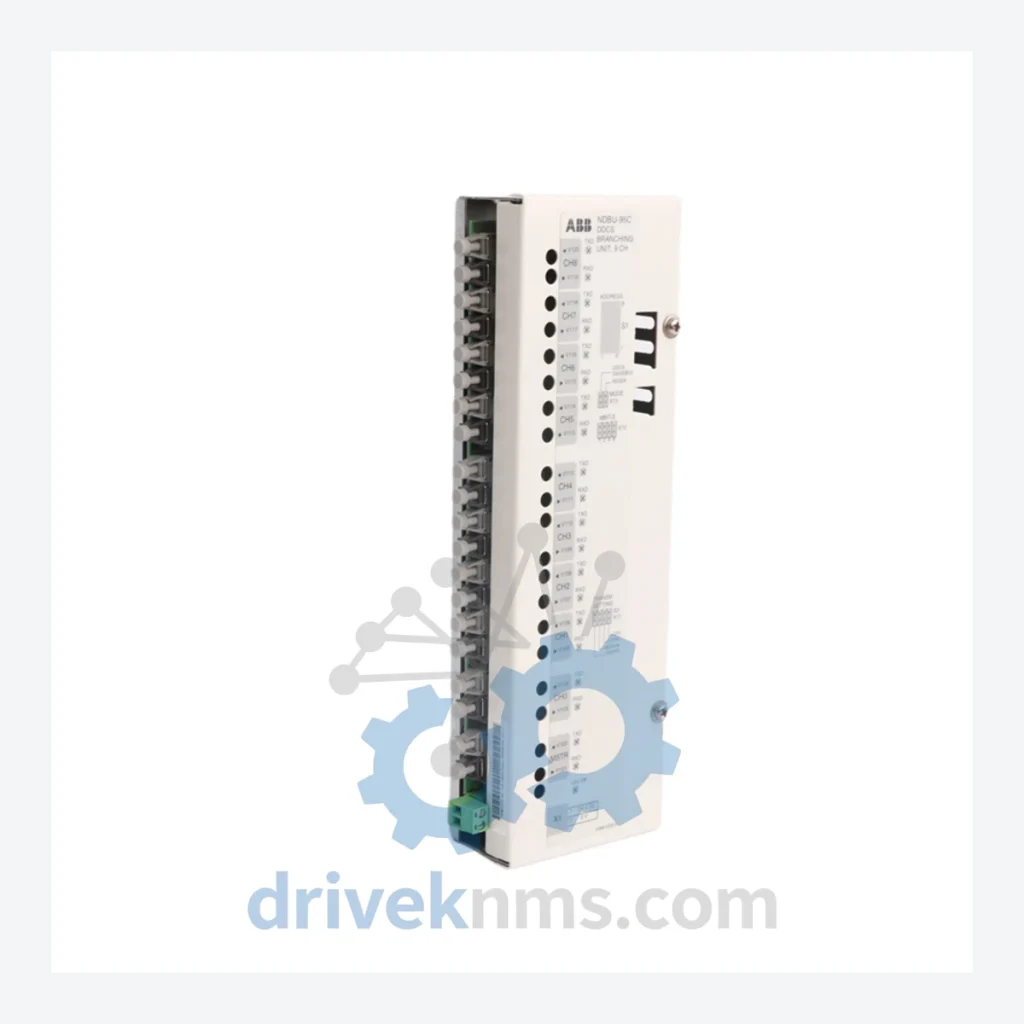
Model: NDBU-95
Product Overview
Commercial availability is handled through direct RFQ, model verification and export-oriented follow-up rather than public cart checkout.
Datasheet Preview
Use attached product manuals when available. If the manual is not public yet, request the full file directly through RFQ.
Commercial Path
Product pages on DRIVEKNMS are designed to verify model, brand and series first, then move the buyer into one clean quotation path.
Technical Dossier
RFQ support for obsolete parts: Send the model number, required quantity and destination so DriveKNMS can confirm sourcing options before quotation.
The NDBU-95 is not a peripheral accessory. It is the structural backbone of the DDCS ring in multi-drive installations. ABB's DDCS architecture was engineered for deterministic, high-speed fiber optic communication between drive control boards and master controllers — a design that delivered exceptional reliability for two decades in steel mills, paper machines, marine propulsion systems, and large HVAC plants.
ABB has since migrated its drive communication architecture to DDCS over Ethernet (DDCS-E) and other modern fieldbus standards. The NDBU-95 was not carried forward. For facilities still operating ACS600 or ACS800 drive systems, this creates a hard constraint: the communication topology cannot be upgraded without replacing every drive node, every control board, and rewriting every application program. The engineering cost alone — before any hardware — routinely exceeds USD 500,000 on a mid-sized installation.
The rational alternative is asset preservation. A verified NDBU-95 spare, held on-site or sourced on demand, keeps the existing system operational for another 5 to 10 years at a fraction of the cost of system migration. For plant managers facing capital expenditure freezes or operating in industries where process continuity is non-negotiable, this is not a workaround — it is a deliberate maintenance strategy.
Facilities that successfully operate legacy ABB drive systems beyond their nominal service life share a common practice: they treat critical communication modules as insurable assets, not consumables. The following approach has been validated across petrochemical, mining, and heavy manufacturing environments:
1. Identify single-point-of-failure modules. The NDBU-95 is a prime example — one unit supports an entire DDCS ring. A failure has no graceful degradation path. Identify every module in your installation that shares this characteristic.
2. Establish a minimum on-hand spare quantity. For the NDBU-95, one cold spare per DDCS ring is the minimum defensible position. Facilities with multiple rings or extended lead-time constraints should hold two.
4. Document firmware and hardware revision levels. ABB released multiple hardware revisions of DDCS-related boards. Confirm that any spare unit matches the revision level of the installed base before storage. DriveKNMS can assist with revision verification.
5. Implement a periodic inspection cycle. Even stored electronic modules degrade. Electrolytic capacitors lose capacitance over time. Connectors oxidize. A structured annual inspection of stored spares — including visual inspection and basic functional verification — prevents the scenario where a spare fails on first use.
Every NDBU-95 unit processed by DriveKNMS passes a structured 5-step quality protocol before it is offered for sale:
Step 1 – Electrolytic Capacitor Assessment: Capacitor aging is the primary failure mode in legacy power electronics. Each unit is inspected for capacitor bulging, leakage, and ESR deviation. Units with degraded capacitors are either recapped with equivalent-spec components or rejected.
Step 2 – Firmware Version Verification: The installed firmware version is documented and cross-referenced against ABB's known revision history. Customers are informed of the exact firmware version prior to shipment.
Step 3 – Connector and Pin Inspection: All fiber optic connectors and board-edge connectors are inspected under magnification for corrosion, pin deformation, and contamination. Fiber optic ports are cleaned to IEC 61300-3-35 cleanliness standards where applicable.
Step 4 – Functional Communication Test: Where test infrastructure permits, units are powered and verified to establish DDCS communication. Test results are documented.
Step 5 – Packaging for Long-Term Storage: Units are packaged in anti-static bags with desiccant, sealed, and labeled with inspection date, firmware version, and hardware revision. This packaging is suitable for long-term storage without further preparation.
This characteristic is what makes the NDBU-95 — and legacy spare parts in general — the lowest-cost path to system continuity. The alternative, a forced migration to a modern drive platform, requires new hardware procurement, new control cabinet engineering, new application programming, new commissioning, and operator retraining. The total cost of that path, measured against the cost of a verified spare module, is not a close comparison.
Q: How do I know the unit is genuine and not a counterfeit?
A: All units are sourced through documented supply chains. ABB part markings, board silk-screen references, and component date codes are verified during intake inspection. Customers may request inspection photographs and documentation prior to purchase.
Q: Can DriveKNMS source specific hardware or firmware revisions?
A: We document the hardware revision and firmware version of every unit in inventory. If you have a specific revision requirement, contact us before purchase and we will confirm availability.
Continue The Model Path
Move from this exact model into the matching system hub, brand archive, model-family archive or lifecycle sourcing route before sending a final RFQ list.
Related Paths
ABB NISA-03 is listed for DCS Cards RFQ review. Confirm quantity, condition and destination before quotation.
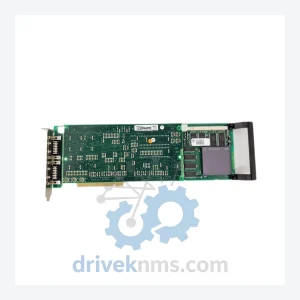
ABB PU514 is listed for DCS Cards RFQ review. Confirm quantity, condition and destination before quotation.
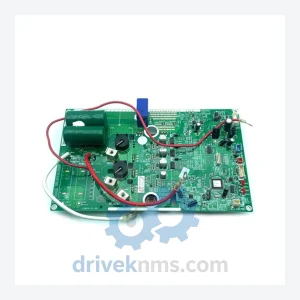
ABB SC300E PAC 031-1053-04 is listed for DCS Cards RFQ review. Confirm quantity, condition and destination before quotation.