
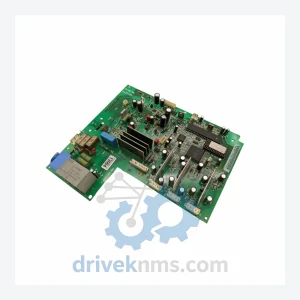
ABB SNAT-7120 Circuit Board – SNAZ7120J Series
ABB SNAT-7120 SNAZ 7120 J SNAZ7120J is listed for SNAZ7120J Series RFQ review. Confirm quantity, condition and destination before quotation.
RFQ-ready industrial model
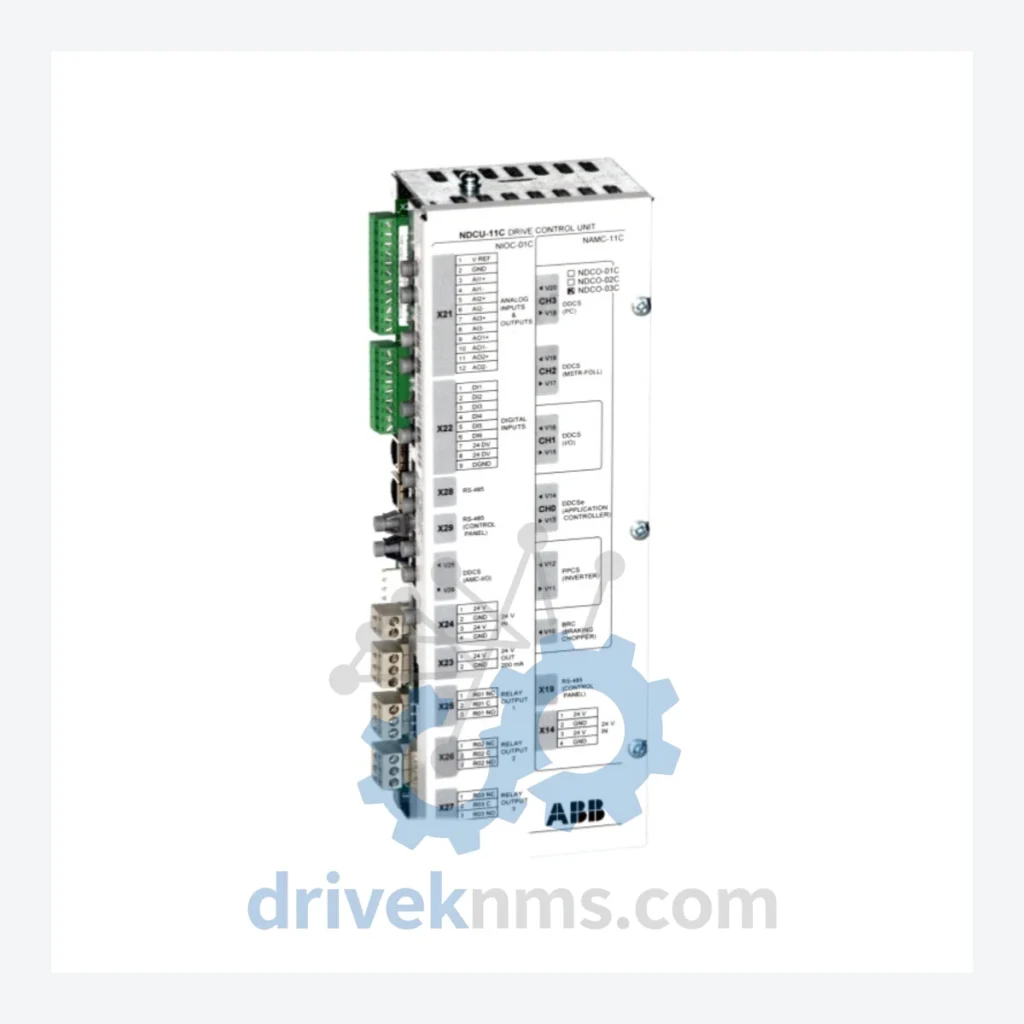
Model: NDCU-11CK 64053868B
Product Overview
Commercial availability is handled through direct RFQ, model verification and export-oriented follow-up rather than public cart checkout.
Datasheet Preview
Use attached product manuals when available. If the manual is not public yet, request the full file directly through RFQ.
Commercial Path
Product pages on DRIVEKNMS are designed to verify model, brand and series first, then move the buyer into one clean quotation path.
Technical Dossier
RFQ support for obsolete parts: Send the model number, required quantity and destination so DriveKNMS can confirm sourcing options before quotation.
| Parameter | Detail |
|---|---|
| Part Number | NDCU-11CK / 64053868B |
| Manufacturer | ABB |
| Compatible Drive Series | ABB ACS800 (Single Drive & Multi-Drive) |
| Module Function | Drive Control Unit (DCU) – motor control, I/O, fieldbus interface |
| Country of Origin | Finland |
| Product Status | Discontinued / Obsolete – no longer manufactured by ABB |
| Typical System Context | ACS800-01, ACS800-04, ACS800-07, ACS800-11, ACS800-17, ACS800-31 |
Note: Electrical parameters not listed here are drive-frame and configuration dependent. We do not publish unverified specifications. Contact us with your full drive nameplate data for compatibility confirmation.
ABB officially discontinued the ACS800 product line, and the NDCU-11CK control board has not been in production for years. Yet the installed base of ACS800 drives remains enormous — particularly in industries where the cost of replacing an entire drive system is measured not just in equipment price, but in weeks of engineering work, process revalidation, and production loss.
The NDCU-11CK is not a peripheral component. It is the primary control intelligence of the drive. It manages the IGBT gate firing sequences, processes encoder feedback for closed-loop vector control, handles the DDCS fiber-optic communication backbone, and interfaces with all external I/O. No third-party substitute exists that replicates this functionality without a full system redesign.
Industries where this part remains operationally critical include: pulp and paper (winder and refiner drives), steel and aluminum rolling mills, offshore and marine propulsion, water treatment pump stations, and mining conveyor systems. In many of these environments, the ACS800 drive is embedded within a larger control architecture — Siemens S7, Rockwell ControlLogix, or legacy Modbus networks — where replacing the drive would cascade into a full controls upgrade.
Sourcing a discontinued control board from the open market carries real risk. DriveKNMS applies a structured 5-step quality process to every NDCU-11CK unit before it is offered for sale:
Step 1 – Visual and Physical Inspection: Full board examination for mechanical damage, burn marks, cracked solder joints, and connector pin integrity. Any unit with physical compromise is rejected at this stage.
Step 2 – Electrolytic Capacitor Assessment: Electrolytic capacitors are the primary age-related failure point on control boards stored for extended periods. Each capacitor is checked for bulging, leakage, and ESR deviation. Units with degraded capacitors are either reconditioned by qualified technicians or removed from inventory.
Step 3 – Firmware Version Verification: The NDCU-11CK firmware version directly affects compatibility with specific ACS800 drive frames and software packages. We document and disclose the firmware revision on every unit so your engineering team can confirm compatibility before installation.
Step 4 – Pin and Connector Corrosion Check: All edge connectors, ribbon cable interfaces, and fiber-optic ports are inspected under magnification for oxidation and corrosion. Affected contacts are cleaned to IPC standards where applicable.
We clearly disclose the condition grade of each unit: New Surplus (unused, original packaging), Tested Refurbished (cleaned, tested, reconditioned), or As-Removed (untested, sold for parts or as-is with full disclosure).
The NDCU-11CK 64053868B is a direct drop-in replacement for the original control board in compatible ACS800 drive frames. No hardware modifications are required for installation. Provided the firmware version matches your existing drive configuration, no motor control parameter re-entry is necessary — the drive's parameter set is stored in the APBU or RMIO memory unit, not on the NDCU board itself.
This means your maintenance team can execute a board swap during a planned or emergency shutdown without involving a drive commissioning engineer. There is no need to re-tune motor control parameters, reconfigure fieldbus node addresses, or revalidate I/O mapping. The drive returns to its pre-failure operating state upon restart.
For facilities managing multiple ACS800 drives, holding one or two NDCU-11CK spares in your MRO inventory eliminates the single largest risk factor in your drive availability profile. The alternative — waiting 8 to 20 weeks for a repair quote on a discontinued board, or initiating an emergency drive replacement project — is a scenario that DriveKNMS exists to help you avoid.
The decision to retire a functioning ACS800 drive system is rarely driven by the drive itself failing beyond recovery. It is almost always driven by the inability to source a specific failed component — most commonly the control board, the IGBT gate driver, or the power supply module. Address the component sourcing problem, and the drive system has a realistic operational life extension of 5 to 10 years.
A structured approach for plant engineering and maintenance management:
1. Conduct a Critical Spare Audit: Identify every ACS800 drive in your facility. For each drive, document the NDCU variant, firmware version, and drive frame size. Cross-reference against your current MRO spare holdings. The gap between what you have and what you need is your actual risk exposure.
2. Prioritize by Production Impact: Not all drives carry equal risk. Drives on critical process lines — where a failure stops production — warrant immediate spare procurement. Drives on redundant or non-critical systems can be addressed in a second phase.
3. Establish a Minimum Spare Holding Policy: For high-criticality ACS800 drives, a minimum of one NDCU-11CK spare per drive frame variant is a defensible maintenance standard. For facilities with five or more identical drives, a 20% spare ratio is a common engineering benchmark.
4. Document Firmware Versions Before Failure: Retrieve and record the firmware version from each NDCU board while the drive is operational. This information is essential for sourcing a compatible replacement and is impossible to recover after a catastrophic board failure.
Q: How do I confirm the unit is genuine ABB and not a counterfeit?
A: All units are sourced through documented supply chains. We provide the board's ABB part number label, serial number, and country of origin markings. We do not source from unverified brokers. Customers may request pre-shipment photos of the specific unit prior to payment.
Q: What if my firmware version does not match?
A: Firmware version mismatches on the NDCU-11CK can in some cases be resolved through ABB's drive software tools, depending on the specific versions involved. We recommend confirming your required firmware version before purchase. Our technical team can advise based on your drive nameplate data.
Q: Can export requirements be reviewed?
A: Destination, documentation and routing requirements are confirmed during RFQ review.
Continue The Model Path
Move from this exact model into the matching system hub, brand archive, model-family archive or lifecycle sourcing route before sending a final RFQ list.
Related Paths
ABB SNAT-7120 SNAZ 7120 J SNAZ7120J is listed for SNAZ7120J Series RFQ review. Confirm quantity, condition and destination before quotation.
ABB PM564-TP-ETH 1SAP121100R0071 is listed for Servo Drives RFQ review. Confirm quantity, condition and destination before quotation.
ABB SCDCS-CON-4 is listed for CON-4 Control Board RFQ review. Confirm quantity, condition and destination before quotation.