
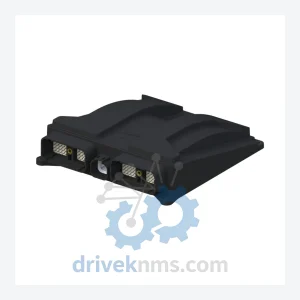
ABB NINP-21C 64268422 Profibus Adapter – NPBA Series
ABB NINP-21C 64268422 is listed for NPBA Series RFQ review. Confirm quantity, condition and destination before quotation.
RFQ-ready industrial model
Model: NPBA-12
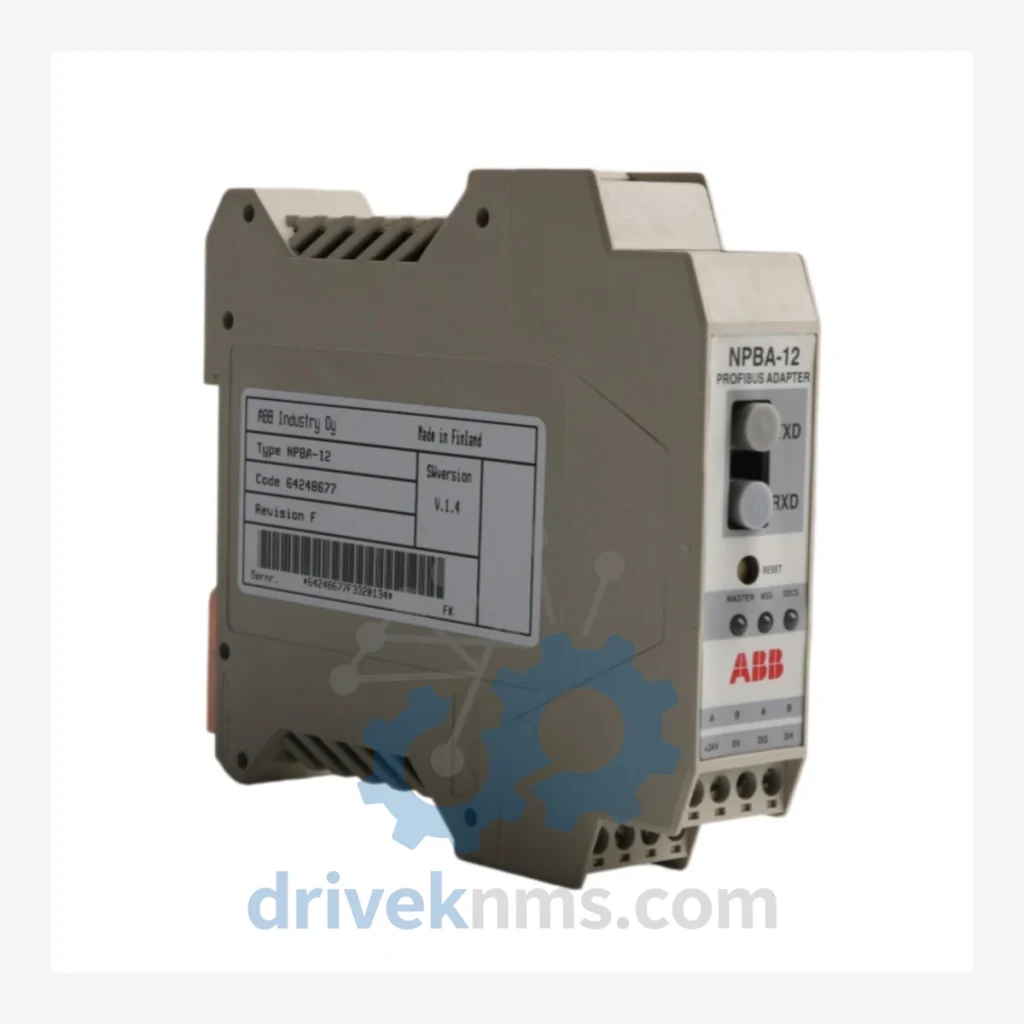
Product Overview
Commercial availability is handled through direct RFQ, model verification and export-oriented follow-up rather than public cart checkout.
Datasheet Preview
Use attached product manuals when available. If the manual is not public yet, request the full file directly through RFQ.
Commercial Path
Product pages on DRIVEKNMS are designed to verify model, brand and series first, then move the buyer into one clean quotation path.
Technical Dossier
The ABB NPBA (Network Protocol Bus Adapter) series represents ABB's standardized fieldbus communication adapter platform, designed for integration with ABB's ACS and DCS drive families — including the ACS 600, ACS 800, ACS 880, and DCS 600 series. These modules are deployed across global heavy industry verticals including petrochemical refineries, nuclear power auxiliary systems, pulp and paper mills, offshore platforms, and large-scale water treatment facilities.
The NPBA platform was introduced in the mid-1990s alongside the ACS 600 drive generation, at a time when industrial fieldbus standardization was fragmenting across competing protocols — PROFIBUS-DP, Modbus RTU, DeviceNet, CANopen, and Interbus-S each commanded significant installed bases in different geographic and industry segments.
ABB's design response was a protocol-agnostic slot adapter architecture: a standardized mechanical and electrical interface on the drive's option board slot, with protocol-specific intelligence contained entirely within the NPBA module itself. This allowed a single drive platform to support multiple fieldbus ecosystems without hardware redesign.
Generation 1 (1995–2002): Initial NPBA modules targeted the dominant industrial protocols of the era — PROFIBUS-DP (NPBA-01), Modbus RTU (NPBA-02), and Interbus-S (NPBA-03). These modules used dedicated ASICs for protocol handling and communicated with the drive via the DDCS fiber-optic ring or the drive's internal option slot bus.
Generation 2 (2002–2010): Expanded protocol coverage to include DeviceNet (NPBA-12), CANopen (NPBA-21), ControlNet (NPBA-11), and LonWorks (NPBA-22). Firmware became field-upgradeable via the drive's control panel on select models. Compatibility was extended to the ACS 800 platform.
Generation 3 / Transition Era (2010–present): With the introduction of the ACS 880 and the FENA/FPBA/FDNA adapter families, ABB began migrating new installations to the FXXX-series adapters. NPBA modules remain fully supported on legacy ACS 600 and ACS 800 installations, but are no longer specified for new drive deployments. ABB classifies the majority of the NPBA range as mature or RFQ availability review, making third-party spare parts suppliers a primary sourcing channel for maintenance operations.
Compatibility note: NPBA modules are not interchangeable with the FENA, FPBA, FDNA, or FCAN adapter families used in ACS 880 drives. Slot form factor, connector pinout, and communication protocol to the drive CPU differ between generations.
The following SKUs represent the documented NPBA series range. Each module occupies one option slot on compatible ABB drives and requires no external power supply beyond the drive's internal 5V/24V option bus.
PROFIBUS-DP Adapters
Modbus Adapters
Interbus-S Adapters
ControlNet Adapters
DeviceNet Adapters
CANopen Adapters
LonWorks Adapters
Ethernet Adapters
DDCS Fiber-Optic Ring Adapters
The NPBA series entered ABB's mature product classification between 2012 and 2018 depending on specific model. ABB's standard spare parts support window for mature products is typically 10 years post-discontinuation, meaning several NPBA variants are now outside or approaching the end of OEM support coverage.
NPBA modules integrate directly into the drive's option slot bus and communicate with the drive CPU via a proprietary parallel bus interface. Failure modes specific to this architecture include: corrupted firmware in the module's onboard flash memory, degraded bus transceivers causing intermittent communication faults, failed oscillator crystals causing protocol timing errors, and oxidized edge connector contacts causing high-resistance connections.
DriveKNMS applies a structured test protocol to all NPBA units prior to dispatch:
Continue The Model Path
Move from this exact model into the matching system hub, brand archive, model-family archive or lifecycle sourcing route before sending a final RFQ list.
Related Paths
ABB NINP-21C 64268422 is listed for NPBA Series RFQ review. Confirm quantity, condition and destination before quotation.
ABB SNAT-7120 SNAZ 7120 J SNAZ7120J is listed for SNAZ7120J Series RFQ review. Confirm quantity, condition and destination before quotation.
ABB PM564-TP-ETH 1SAP121100R0071 is listed for Servo Drives RFQ review. Confirm quantity, condition and destination before quotation.