
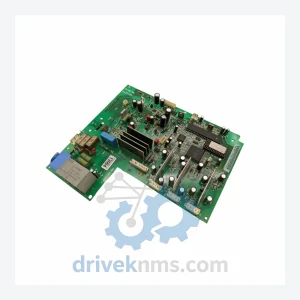
ABB SNAT-7120 Circuit Board – SNAZ7120J Series
ABB SNAT-7120 SNAZ 7120 J SNAZ7120J is listed for SNAZ7120J Series RFQ review. Confirm quantity, condition and destination before quotation.
RFQ-ready industrial model
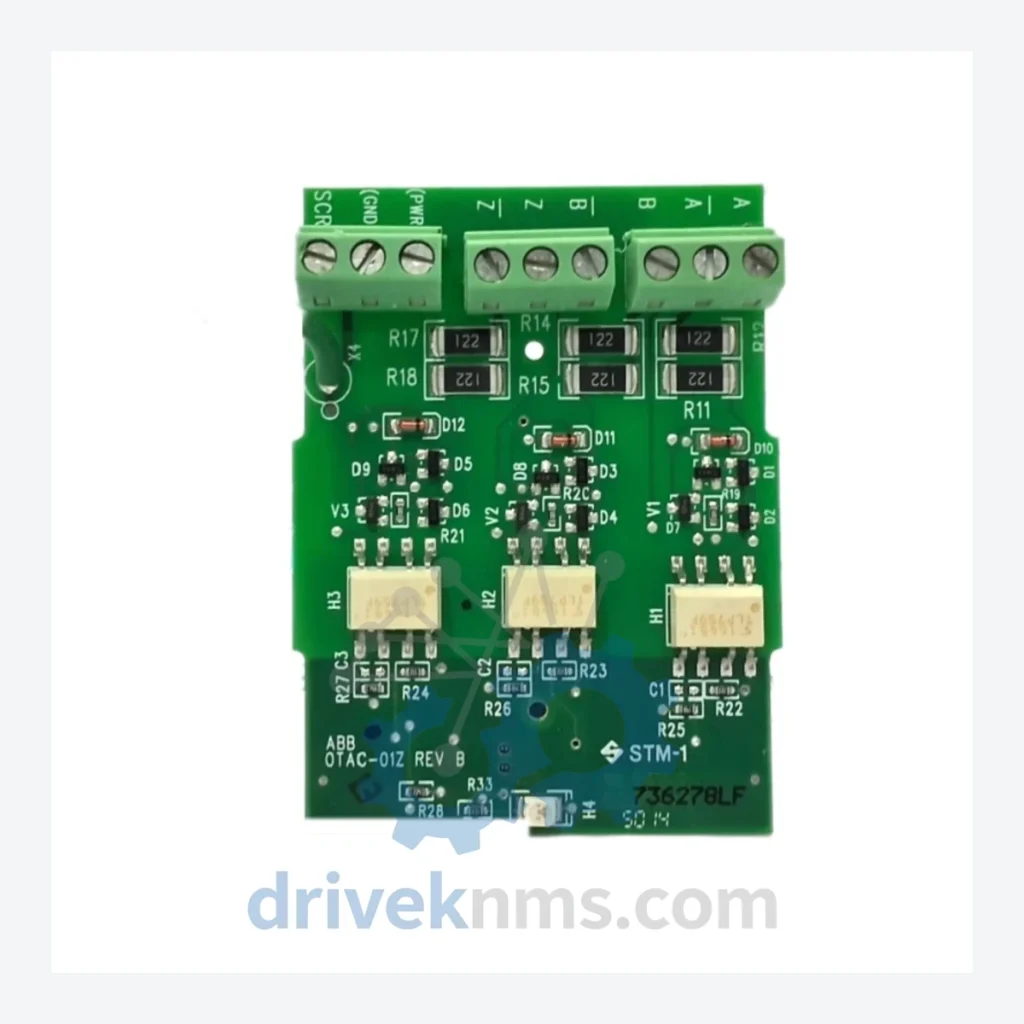
Model: OTAC-01
Product Overview
Commercial availability is handled through direct RFQ, model verification and export-oriented follow-up rather than public cart checkout.
Datasheet Preview
Use attached product manuals when available. If the manual is not public yet, request the full file directly through RFQ.
Commercial Path
Product pages on DRIVEKNMS are designed to verify model, brand and series first, then move the buyer into one clean quotation path.
Technical Dossier
The ABB OTAC series comprises pulse encoder interface modules designed for integration with ABB AC drives — primarily the ACS 600, ACS 800, and ACS 1000 drive families. These modules serve as the critical feedback link between incremental rotary encoders and the drive's speed/position control loop, enabling closed-loop vector control in high-demand industrial applications.
The OTAC designation was introduced by ABB as part of the option board ecosystem for the RDCO/RDNA communication and I/O expansion framework used across the ACS 600 and ACS 800 drive platforms. Early OTAC variants supported single-ended TTL encoder signals with fixed pulse count ranges. Subsequent revisions introduced differential signal support (RS-422), extended pulse frequency handling, and compatibility with the RMIO-02 and RMIO-11 main control boards.
The following SKUs represent the documented OTAC series range. Each module is classified by its primary function within the ABB drive option board architecture:
Pulse Encoder Interface Modules (Speed/Position Feedback)
Associated Option Boards & Compatible Modules (ACS 600 / ACS 800 Platform)
DriveKNMS maintains a dedicated inventory of OTAC series modules sourced from verified industrial decommissioning projects and authorized repair facilities. Each unit is cataloged by hardware revision and firmware compatibility. For critical applications, we recommend sourcing a minimum of two spare OTAC modules per drive installation to cover both scheduled maintenance and unplanned failure events. Inquiries for bulk quantities, specific hardware revisions, or time-critical emergency orders are handled directly by our technical sales team.
OTAC modules interface directly with the drive's main control board via a proprietary option slot connector. Failure modes include corrupted encoder signal output, intermittent communication faults logged as encoder feedback errors (fault codes F-28, F-29 on ACS 800), and complete module non-response due to connector pin oxidation or internal component degradation.
DriveKNMS applies the following test protocol to all OTAC units prior to dispatch: visual inspection of the option slot connector for pin deformation and oxidation; functional bench test using an ACS 800 test rig with a calibrated incremental encoder signal source; verification of pulse count accuracy across the full ppr range; signal integrity measurement on both TTL and RS-422 output channels; and a 24-hour burn-in cycle under simulated load conditions. Units that do not pass all stages are quarantined and not offered for sale.
Continue The Model Path
Move from this exact model into the matching system hub, brand archive, model-family archive or lifecycle sourcing route before sending a final RFQ list.
Related Paths
ABB SNAT-7120 SNAZ 7120 J SNAZ7120J is listed for SNAZ7120J Series RFQ review. Confirm quantity, condition and destination before quotation.
ABB PM564-TP-ETH 1SAP121100R0071 is listed for Servo Drives RFQ review. Confirm quantity, condition and destination before quotation.
ABB SCDCS-CON-4 is listed for CON-4 Control Board RFQ review. Confirm quantity, condition and destination before quotation.