
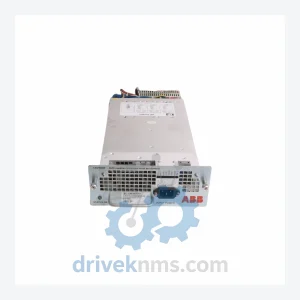
ABB P-HA-RPS-32200000 Power Supply Module – PHARPS32200000
ABB P-HA-RPS-32200000 PHARPS32200000 is listed for Power Supplies RFQ review. Confirm quantity, condition and destination before quotation.
RFQ-ready industrial model
Model: P-HA-RPS-32200000
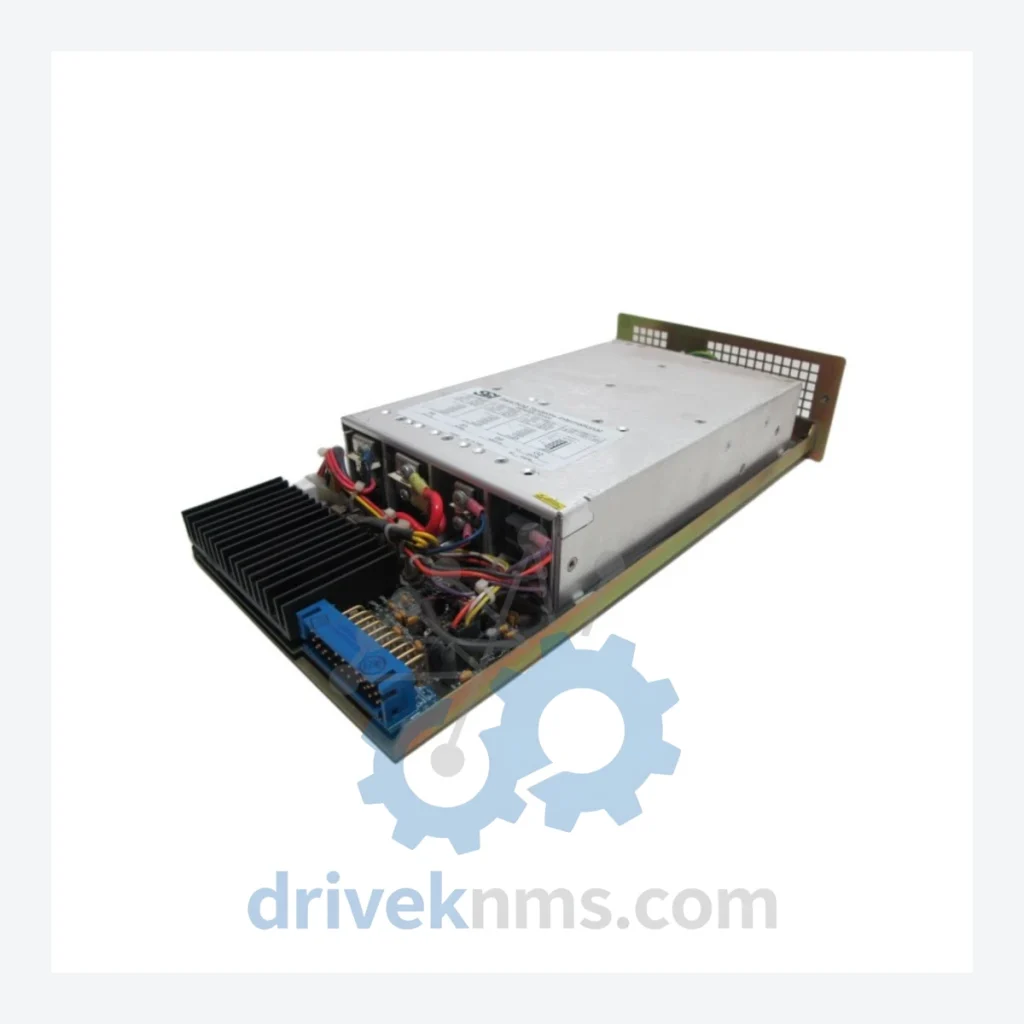
Product Overview
Commercial availability is handled through direct RFQ, model verification and export-oriented follow-up rather than public cart checkout.
Datasheet Preview
Use attached product manuals when available. If the manual is not public yet, request the full file directly through RFQ.
Commercial Path
Product pages on DRIVEKNMS are designed to verify model, brand and series first, then move the buyer into one clean quotation path.
Technical Dossier
RFQ support for obsolete parts: Send the model number, required quantity and destination so DriveKNMS can confirm sourcing options before quotation.
Note: Specific electrical parameters (input voltage range, output current rating) are not published here to prevent misapplication. Please contact our technical team with your system configuration for confirmation before ordering.
The ABB AC500 platform was deployed extensively across water treatment facilities, power generation plants, pulp and paper mills, and automotive assembly lines from the late 1990s through the 2010s. The P-HA-RPS-32200000 power supply module occupies a non-negotiable position in the system architecture: without a functioning unit, the entire PLC rack loses power and the controlled process halts.
Maintaining a dedicated spare of the P-HA-RPS-32200000 eliminates that emergency. It converts an unplanned catastrophic failure into a scheduled 30-minute swap. That is the operational calculus that justifies holding obsolete inventory.
For plant managers evaluating the cost of a spare against the cost of a migration: a single unplanned production stoppage in a mid-scale process facility typically exceeds the cost of a spare module by a factor of 10 to 50. The arithmetic is not complicated.
The following strategy is directed at operations and maintenance managers who are under pressure from corporate asset management teams to retire aging ABB AC500 installations, but who cannot justify the capital expenditure of a full replacement in the current budget cycle.
1. Conduct a failure mode audit, not a replacement audit. The AC500 platform fails in predictable ways. Power supply modules, communication cards, and CPU batteries are the highest-frequency failure points. Identify which modules in your installed base have no verified spare and address those first. A full system replacement is rarely necessary when the failure modes are concentrated in three or four module types.
4. Document firmware versions before any module swap. AC500 CPU and communication modules carry firmware that must be compatible with the application program. Before replacing any module, record the firmware version of the installed unit. DriveKNMS can advise on firmware compatibility for specific module combinations.
5. Treat spare module procurement as capital expenditure, not maintenance expense. Reclassifying critical spare modules as capital assets — rather than consumable maintenance items — allows them to be budgeted through a different approval pathway and held on the balance sheet. This removes the annual budget pressure that causes critical spares to be deferred.
Every P-HA-RPS-32200000 unit supplied by DriveKNMS passes a structured 5-step quality process before dispatch review:
Step 1 – Electrolytic Capacitor Inspection: Power supply modules are the component category most vulnerable to electrolytic capacitor degradation over time. Each unit is inspected for capacitor bulging, electrolyte leakage, and ESR (Equivalent Series Resistance) deviation. Units with capacitor anomalies are either recapped with specification-matched components or rejected.
Step 2 – Firmware Version Verification: Where applicable, the firmware version of the module is recorded and cross-referenced against known compatibility matrices for the AC500 platform. This information is provided to the customer at the time of shipment.
Step 3 – Pin and Connector Corrosion Inspection: All backplane connectors and terminal pins are inspected under magnification for oxidation, corrosion, and mechanical deformation. Affected contacts are treated or the unit is rejected.
Step 4 – Functional Power-On Test: Each unit is powered on and output parameters are verified against the module's design specification. Units that do not meet output stability requirements are not shipped.
Step 5 – Packaging for Long-Term Storage: Units are packaged in anti-static bags with desiccant and sealed for protection during transit and storage. Each unit is individually labeled with its inspection date and condition grade.
Drop-in replacement: The P-HA-RPS-32200000 installs directly into the existing AC500 rack without modification to the backplane, wiring, or application program. No re-engineering is required.
No reprogramming required: The power supply module does not carry application logic. Replacement does not affect the PLC program stored in the CPU module. The system returns to normal operation immediately after swap.
Avoids engineering reconstruction costs: A verified replacement module eliminates the need to engage a system integrator for emergency re-engineering. At typical industrial automation engineering rates, even a 40-hour emergency engagement represents a cost that dwarfs the price of a spare module.
Maintains regulatory compliance continuity: In regulated industries (pharmaceutical, food processing, utilities), a like-for-like module replacement preserves the validated system configuration. A platform migration, by contrast, typically triggers a full revalidation requirement.
Q: Should I buy more than one unit?
A: For any installation where this module is a single point of failure, holding a minimum of two spares is the defensible position. The first spare covers an immediate failure. The second covers the period required to source a replacement after the first spare is consumed — a period that, for obsolete parts, may extend to 6–18 months or longer as market availability declines.
Q: Can you source other ABB AC500 modules?
A: Yes. DriveKNMS specializes in obsolete and hard-to-find ABB automation components across the AC500, AC31, and Advant product families. Submit your full bill of materials to our team for a consolidated sourcing assessment.
Continue The Model Path
Move from this exact model into the matching system hub, brand archive, model-family archive or lifecycle sourcing route before sending a final RFQ list.
Related Paths
ABB P-HA-RPS-32200000 PHARPS32200000 is listed for Power Supplies RFQ review. Confirm quantity, condition and destination before quotation.
ABB SDCD-POW-4 3ADT315100R1001 is listed for Power Supplies RFQ review. Confirm quantity, condition and destination before quotation.
ABB NPOW-62C 64113429B is listed for Power Supplies RFQ review. Confirm quantity, condition and destination before quotation.