
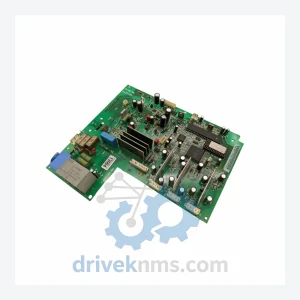
ABB SNAT-7120 Circuit Board – SNAZ7120J Series
ABB SNAT-7120 / SNAZ7120J Circuit Board: Sourcing Strategy & Asset Return Value in a Constrained Global Supply Chain The ABB…
Model: PFEA113-20
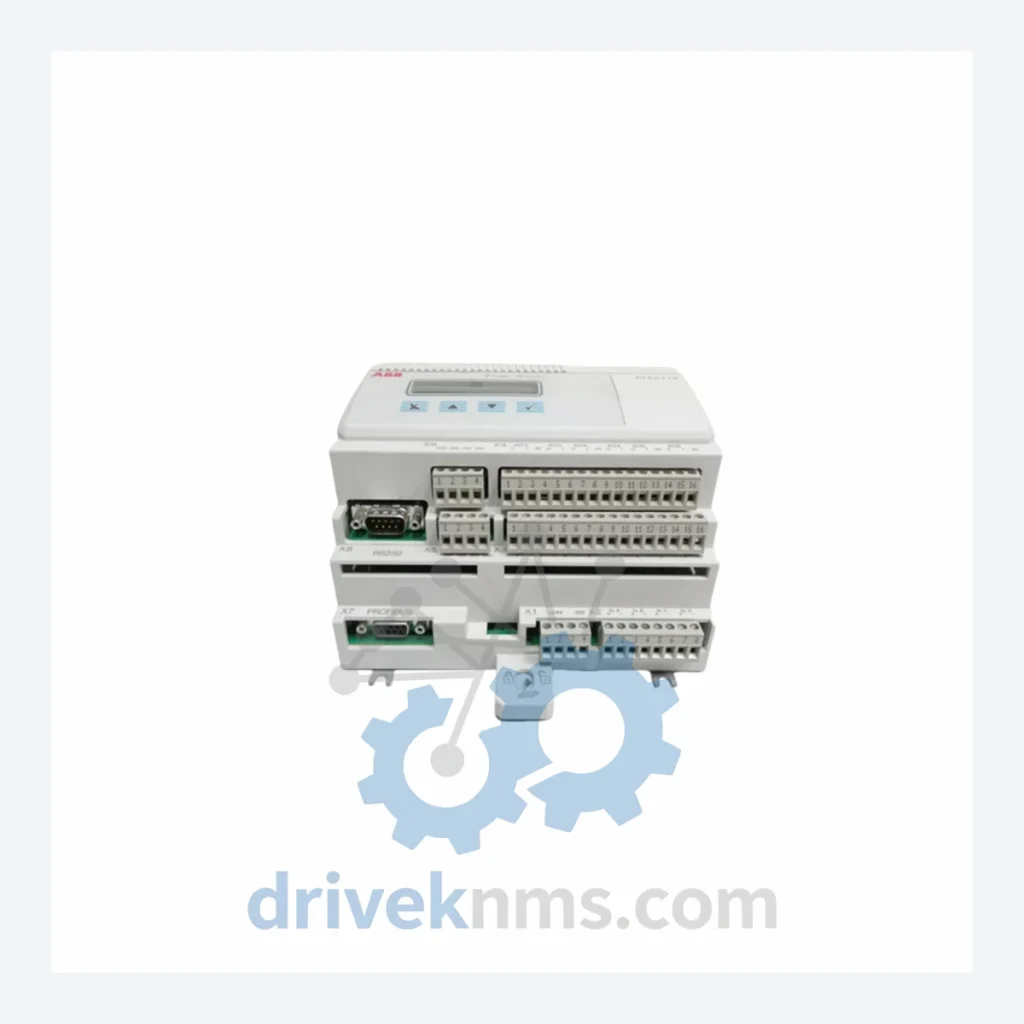
Product Overview
Commercial availability is handled through direct RFQ, model verification and export-oriented follow-up rather than public cart checkout.
Datasheet Preview
Use attached product manuals when available. If the manual is not public yet, request the full file directly through RFQ.
Commercial Path
Product pages on DRIVEKNMS are designed to verify model, brand and series first, then move the buyer into one clean quotation path.
Technical Dossier
The ABB PFEA series represents ABB's dedicated line of tension measurement and control electronics, engineered for continuous industrial processes where web tension regulation is critical to product quality and line stability. These units are deployed across paper mills, metal strip processing lines, textile manufacturing, film extrusion, and converting operations worldwide. In heavy-process environments — including integrated steel mills, specialty chemical plants, and packaging lines running 24/7 — PFEA controllers form the closed-loop backbone between load cell signals and drive systems. Their installed base spans multiple decades, meaning a significant portion of operating units are now in the mature-to-end-of-life phase of their product lifecycle. Replacement hardware is no longer available through standard ABB distribution channels for several variants, making secondary-market sourcing the only viable path for facilities that cannot justify a full line retrofit.
The PFEA series was developed as part of ABB's broader drive and process control ecosystem, designed to interface directly with ABB's SDCS, DCS800, and ACS series drive platforms. Early PFEA units operated as standalone analog tension amplifiers, accepting millivolt-level signals from strain gauge load cells and outputting a conditioned reference signal to the drive speed or torque reference input. Over successive hardware generations, ABB integrated digital communication capability, allowing PFEA modules to participate in fieldbus architectures including PROFIBUS-DP and DeviceNet via plug-in adapter cards.
The transition from purely analog signal conditioning to digitally supervised tension loops introduced firmware versioning as a compatibility variable. Facilities running older SDCS-CON-2 or SDCS-CON-4 drive control boards must verify PFEA firmware compatibility before substituting one PFEA hardware revision for another. Incompatible firmware combinations can result in incorrect tension reference scaling, which in high-speed paper or film lines translates directly to web breaks and unplanned downtime. ABB's product lifecycle documentation confirms that several PFEA variants have reached end-of-manufacturing status, with no announced successor module offering direct backward compatibility in legacy panel configurations.
The following models represent the documented PFEA series range. Each entry reflects the module's primary function within a tension control system. Parameters listed are based on published ABB technical documentation; specifications for discontinued variants should be verified against the original hardware manual before substitution.
PFEA111-20: Single-channel tension amplifier, analog output, 20 VDC supply, standard load cell input range.
PFEA111-65: Single-channel tension amplifier, extended supply range 65 VDC, for high-rail drive cabinet integration.
PFEA112-20: Dual-channel tension amplifier, 20 VDC, supports two independent load cell inputs for dancer roll configurations.
PFEA112-65: Dual-channel tension amplifier, 65 VDC supply, dual load cell input, high-rail cabinet variant.
PFEA113-20: Three-channel tension amplifier, 20 VDC supply, supports three-zone tension measurement in multi-stand rolling or converting lines.
PFEA113-65: Three-channel tension amplifier, 65 VDC supply, high-rail variant for integration with ACS800 or DCS800 drive systems.
PFEA121-20: Single-channel unit with integrated PROFIBUS-DP communication adapter slot, 20 VDC.
PFEA121-65: Single-channel PROFIBUS-capable unit, 65 VDC supply rail.
PFEA122-20: Dual-channel unit with fieldbus adapter slot, 20 VDC, for networked tension monitoring architectures.
PFEA122-65: Dual-channel fieldbus-capable unit, 65 VDC, high-rail cabinet variant.
PFEA123-20: Three-channel unit with fieldbus adapter slot, 20 VDC, supports distributed tension data acquisition over PROFIBUS.
PFEA123-65: Three-channel fieldbus-capable unit, 65 VDC supply.
PFEA131-20: Enhanced single-channel unit with extended diagnostic output and fault relay, 20 VDC.
PFEA132-20: Enhanced dual-channel unit with diagnostic relay outputs, 20 VDC.
PFEA133-20: Enhanced three-channel unit with full diagnostic relay suite, 20 VDC, used in safety-monitored tension zones.
PFEA141-20: Advanced single-channel controller with onboard PID tension regulation loop, 20 VDC.
PFEA142-20: Advanced dual-channel PID tension controller, 20 VDC, for independent zone regulation.
PFEA143-20: Advanced three-channel PID tension controller, 20 VDC, full closed-loop tension management across three process zones.
DriveKNMS maintains a dedicated inventory program for ABB PFEA series hardware, with particular focus on variants that ABB has discontinued from active production. For plant engineering teams operating paper machines, slitter-rewinders, or metal processing lines built around ABB drive systems from the 1990s through the 2010s, the PFEA controller is not a component that can be substituted with a generic alternative without significant re-engineering of the tension control loop.
The cost calculus is straightforward: a full tension control system retrofit on a multi-stand rolling mill or a wide-web paper machine involves not only new hardware procurement but drive parameter re-commissioning, load cell recalibration, HMI software updates, and production downtime measured in days or weeks. Against that cost baseline — which routinely exceeds six figures — sourcing a verified replacement PFEA unit represents a fraction of the expenditure while preserving the existing system architecture intact.
DriveKNMS sources PFEA units through established industrial asset recovery channels, including decommissioned plant equipment, OEM overstock, and controlled secondary market suppliers. All units are individually assessed before listing. Customers requiring long-term spares programs — covering 3 to 10 years of forward inventory — are encouraged to contact our procurement team directly to discuss volume reservation arrangements.
PFEA modules present specific inspection requirements due to their signal conditioning function. A unit that passes basic power-on testing but has degraded analog front-end components will produce systematic tension measurement error — a failure mode that may not trigger any drive fault but will manifest as chronic product quality deviation. DriveKNMS applies the following inspection protocol to all PFEA units prior to dispatch:
Step 1 – Visual and mechanical inspection: Board-level examination for physical damage, connector pin condition, and evidence of thermal stress or contamination on the load cell input terminals.
Step 2 – Electrolytic capacitor assessment: Identification and ESR measurement of all electrolytic capacitors on the analog supply and signal conditioning stages. Capacitors showing elevated ESR or visible degradation are replaced with specification-matched components.
Step 3 – Analog signal path verification: Injection of calibrated millivolt signals at the load cell input terminals, with measurement of output linearity and zero-offset across the full input range.
Step 4 – Firmware version identification: Where accessible, firmware version is read and documented. Customers are advised of the version on dispatch so compatibility with their drive control platform can be confirmed prior to installation.
Step 5 – Functional burn-in: Unit is powered under load for an extended period to screen for early-life component failures before shipment.
Related Paths
ABB SNAT-7120 / SNAZ7120J Circuit Board: Sourcing Strategy & Asset Return Value in a Constrained Global Supply Chain The ABB…
ABB AC500 Series: Comprehensive Module Range and Technical Overview The ABB AC500 is a scalable modular PLC platform deployed across…
ABB SCDCS-CON-4 Control Board – Obsolete DCS Spare Part When a single control board fails in a legacy distributed control…