
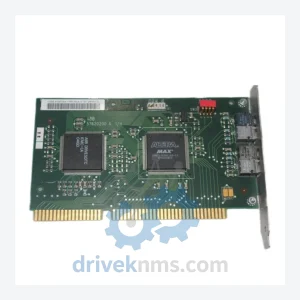
ABB NISA-03 DDCS/ISA Adaptor Module Kit – Obsolete DriveIT Spare Part
ABB NISA-03 is listed for DCS Cards RFQ review. Confirm quantity, condition and destination before quotation.
RFQ-ready industrial model
Model: RDCO-03C
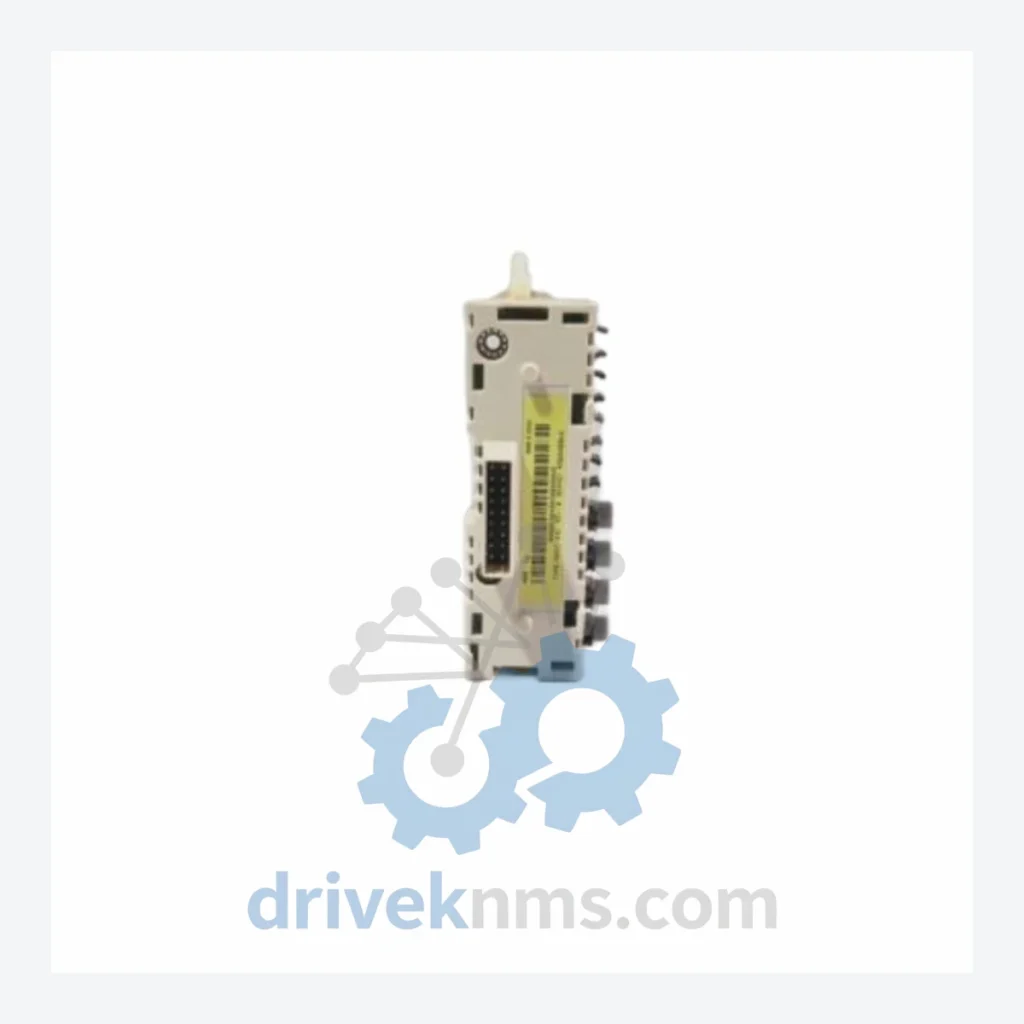
Product Overview
Commercial availability is handled through direct RFQ, model verification and export-oriented follow-up rather than public cart checkout.
Datasheet Preview
Use attached product manuals when available. If the manual is not public yet, request the full file directly through RFQ.
Commercial Path
Product pages on DRIVEKNMS are designed to verify model, brand and series first, then move the buyer into one clean quotation path.
Technical Dossier
The ABB RDCO series comprises DDCS (Distributed Drives Communication System) fiber optic communication adapter modules designed for integration with ABB industrial drives, primarily the ACS600, ACS800, ACS1000, and ACS6000 platforms. These modules are deployed across heavy-process industries including petrochemical refineries, nuclear power auxiliary systems, pulp and paper mills, cement plants, and offshore platforms where deterministic, noise-immune communication between drive controllers and master systems is a non-negotiable operational requirement.
RDCO modules serve as the physical and protocol interface between ABB drives and higher-level control architectures — including ABB's own AC 800M DCS, third-party PLCs, and DDCS master adapters such as the NDCO and RDCO-based ring topologies. Their fiber optic physical layer eliminates ground loop interference and provides galvanic isolation in high-voltage drive cabinets, making them the standard fitment in installations where copper-based fieldbus is unsuitable.
The RDCO series was introduced as part of ABB's DDCS ecosystem in the mid-1990s, concurrent with the launch of the ACS600 direct torque control (DTC) drive platform. The DDCS protocol operates over plastic or glass fiber optic links at a fixed baud rate, using a token-ring or point-to-point topology depending on the channel configuration.
First generation (RDCO-01C / RDCO-02C): Single and dual-channel variants providing basic DDCS connectivity for ACS600 drives. These units used a proprietary ABB optical transceiver and were not interchangeable with later optical standards. Firmware was fixed at manufacture.
Second generation (RDCO-03C): Introduced an additional DDCS channel and improved optical budget, extending maximum fiber run distances. Compatible with ACS600, ACS800 R2–R6 frame sizes, and select ACS1000 configurations. This variant became the most widely deployed unit in the series.
Extended platform support (RDCO-04C): Added a fourth DDCS channel for multi-drive or multi-axis configurations. Targeted at coordinated drive systems in winder, crane, and rolling mill applications.
Compatibility constraints are a critical consideration: RDCO modules are slot-specific and frame-size-specific within ABB drive families. An RDCO-03C fitted to an ACS800 R2 frame is not directly interchangeable with the same part number in an ACS800 R7 frame without verifying the option slot assignment and firmware revision of the drive's RMIO control board. Cross-referencing ABB hardware manuals (e.g., ACS800 Hardware Manual 3AFE64527592) is mandatory before substitution.
As of 2026, the RDCO series is classified as a mature/end-of-life product line within ABB's drive accessories portfolio. ABB has transitioned newer drive platforms (ACS880, ACS580) to PROFIBUS, EtherNet/IP, and PROFINET fieldbus adapters (RPBA, RETA, RELA series). However, the installed base of ACS600 and ACS800 drives — many operating in facilities with 20–30 year asset life expectations — sustains active demand for RDCO spares through at least the 2030s.
The following SKUs represent the documented RDCO series and directly associated DDCS communication components used within ABB drive systems. Each entry reflects a distinct hardware variant with defined channel count, optical interface, or form factor.
RDCO-01C: Single-channel DDCS fiber optic adapter for ACS600 drives; point-to-point master link.
RDCO-02C: Dual-channel DDCS adapter; supports ring topology or two independent point-to-point links on ACS600/ACS800.
RDCO-03C: Three-channel DDCS fiber optic communications module; primary spare for ACS600, ACS800 R2–R6; most common field variant.
RDCO-04C: Four-channel DDCS adapter; used in coordinated multi-drive systems; winder and crane applications.
NDCO-01C: DDCS node adapter for distributed I/O expansion; connects NDIO modules to DDCS ring on ACS600/ACS800.
NDCO-02C: Dual-port DDCS node adapter; supports branched DDCS topologies in large drive systems.
RMIO-01C: Drive control board for ACS800; hosts RDCO option slot; primary board requiring RDCO for DDCS connectivity.
RMIO-02C: Revised RMIO control board variant; compatible with RDCO-01C through RDCO-04C in designated option slot.
AINT-02C: Analog input/output extension module for ACS800; communicates via DDCS internal bus; paired with RDCO in multi-axis setups.
AINT-11C: Extended analog I/O module; 6 AI + 2 AO channels; used with RDCO-equipped ACS800 in process control applications.
RDIO-01C: Digital I/O extension module for ACS800; 8 DI + 8 DO; communicates over DDCS internal channel managed by RDCO.
RDIO-11C: Relay output extension module; 6 relay outputs; DDCS-connected via RDCO option slot assignment.
RTAC-01: Pulse encoder interface module for ACS800; occupies option slot alongside or in place of RDCO depending on drive configuration.
RAIO-01C: Resolver interface module; used in ACS800 servo-class applications; DDCS-linked via RDCO in multi-module configurations.
RDCO-03C (3AFE64527592 ref.): Factory-configured variant with specific firmware revision for ACS1000 medium-voltage drive integration; functionally equivalent to standard RDCO-03C but requires MV-specific commissioning parameters.
NPOW-41C: Auxiliary power supply module for NDCO/RDCO node assemblies in distributed DDCS panel installations.
NINT-41C: DDCS interface board for ACS1000 drives; functional equivalent of RDCO in medium-voltage platform; cross-referenced in RDCO sourcing requests.
RDCO modules are tested against a defined protocol prior to dispatch. The fiber optic transmitter and receiver on each active DDCS channel are verified using an optical power meter to confirm output within ABB's specified range (typically -15 dBm to -8 dBm for plastic fiber variants). DDCS protocol handshake is validated by connecting the module to a reference ACS800 drive running a known firmware version and confirming token-ring establishment and parameter read/write over the DDCS link.
PCB visual inspection covers solder joint integrity on the optical transceiver footprint (a known wear point on aged units), capacitor condition on the 5V rail, and connector pin condition on the drive-side edge connector. Units exhibiting optical output below threshold, intermittent DDCS token loss, or physical damage to the fiber port are rejected and not offered for sale.
Functional burn-in is performed at ambient temperature for a minimum of 4 hours under continuous DDCS communication load to screen for early-life failures associated with aged electrolytic components.
Continue The Model Path
Move from this exact model into the matching system hub, brand archive, model-family archive or lifecycle sourcing route before sending a final RFQ list.
Related Paths
ABB NISA-03 is listed for DCS Cards RFQ review. Confirm quantity, condition and destination before quotation.
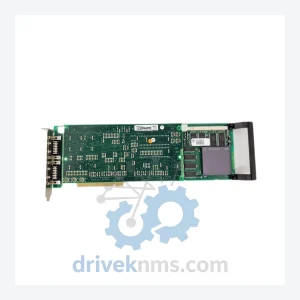
ABB PU514 is listed for DCS Cards RFQ review. Confirm quantity, condition and destination before quotation.
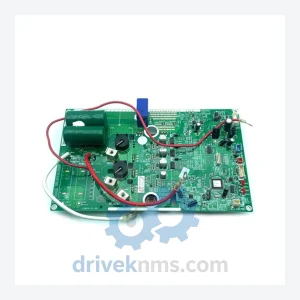
ABB SC300E PAC 031-1053-04 is listed for DCS Cards RFQ review. Confirm quantity, condition and destination before quotation.