Products / ABB / REC670 1MRK000008-NB Control Display
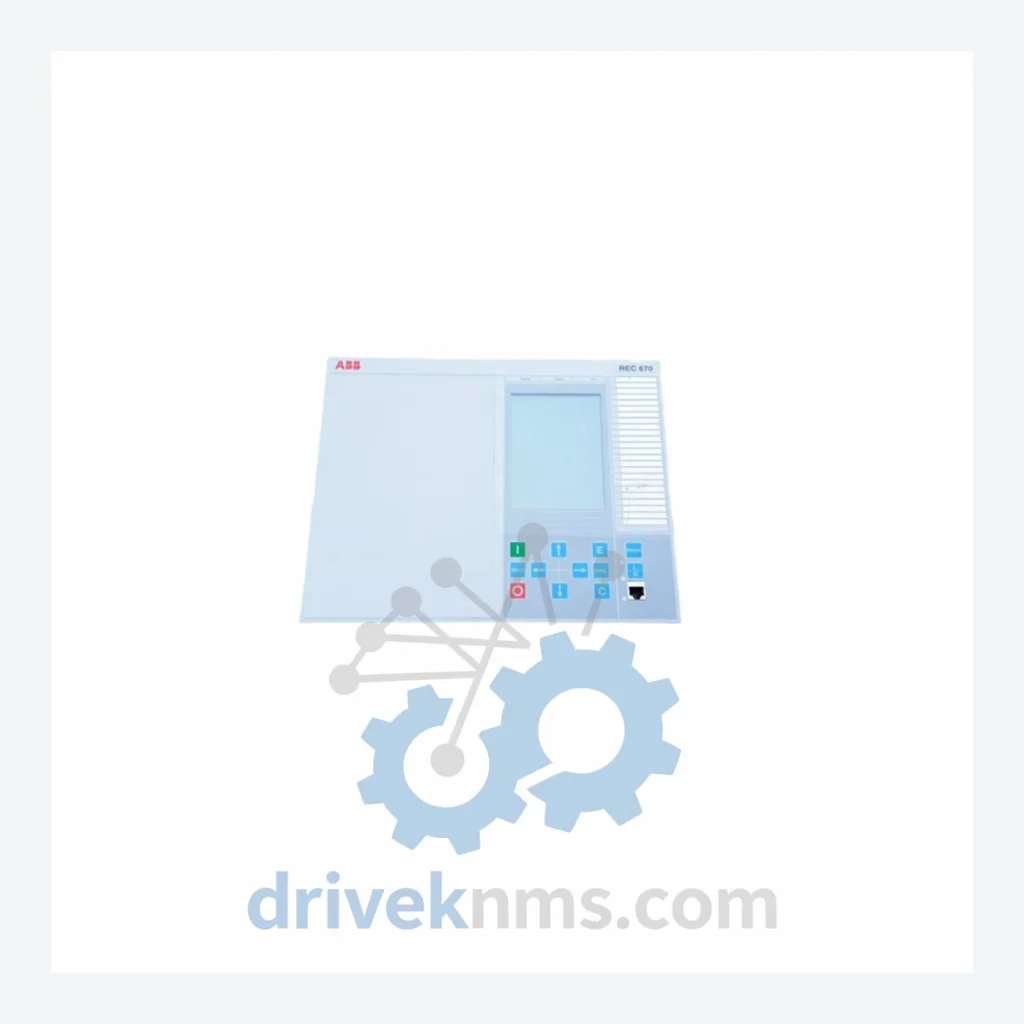
ABB REC670 1MRK000008-NB Control Display

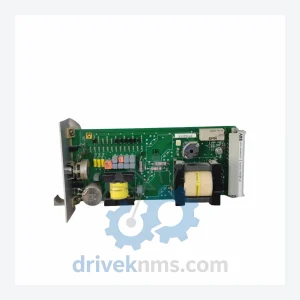
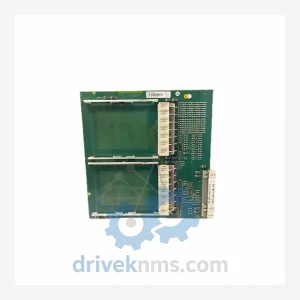
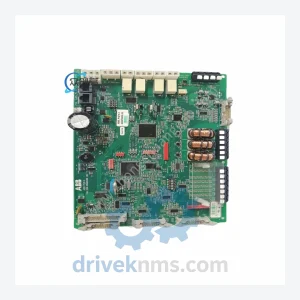
ABB REC670 Modules | REC670 1MRK000008-NB Control Display

Model: REC670 1MRK000008-NB

Brand ABB
Series REC670 1MRK000008-NB Control Display
Model REC670 1MRK000008-NB
RFQ-ready model route Obsolete and surplus sourcing Export follow-up by model list

Product Overview

Commercial availability is handled through direct RFQ, model verification and export-oriented follow-up rather than public cart checkout.

Datasheet Preview

Datasheet Preview

Use attached product manuals when available. If the manual is not public yet, request the full file directly through RFQ.

Request Full Manual

Commercial Path

Use This Page To Confirm The Model, Then Move To RFQ

Product pages on DRIVEKNMS are designed to verify model, brand and series first, then move the buyer into one clean quotation path.

Technical Dossier

Product Details And Specifications

ABB REC670 Series: Comprehensive Module Range and Technical Overview

The ABB REC670 is a bay control and protection IED (Intelligent Electronic Device) belonging to ABB's Relion 670 series platform. It is deployed across high-criticality industrial infrastructure including chemical processing plants, nuclear power stations, oil refineries, and high-voltage substations operating at 110 kV to 500 kV. The REC670 integrates bay-level control, interlocking, and protection functions into a single hardware chassis, reducing panel footprint and simplifying substation automation architecture. Its IEC 61850 Edition 1 and Edition 2 compliance makes it a standard reference device in modern digital substation projects across Europe, Asia-Pacific, and the Middle East. The platform supports GOOSE messaging, sampled values, and MMS communication, enabling seamless integration with SCADA systems and station-level HMIs. Due to its long deployment lifecycle—commonly 15 to 25 years in utility environments—demand for spare modules, replacement displays, and end-of-life support components remains consistently high.

The Evolution of REC670 Architecture

The REC670 was introduced as part of ABB's second-generation Relion platform, succeeding the REX 500 and REB 500 series. Early hardware revisions (pre-2010) used a parallel backplane bus architecture with dedicated I/O slot assignments. From approximately 2012 onward, ABB transitioned to a more modular serial backplane design, improving hot-swap capability and reducing inter-module dependency. The 1MRK000008-NB Control Display unit represents the human-machine interface layer of this architecture, providing local operator access to settings, event logs, and real-time measurements without requiring a laptop or external HMI tool.

Firmware compatibility is a critical consideration for REC670 maintenance. Modules manufactured under the 1MRK prefix follow ABB's internal hardware revision coding. Mixing hardware revisions across a chassis can cause communication faults on the internal IEC 61850 process bus. Customers replacing a 1MRK000008-NB display must verify the firmware version running on the main CPU module (typically 1MRK002912-AA or equivalent) to ensure compatibility. ABB formally discontinued active production of several first-generation REC670 modules around 2019–2021, shifting support to the REC670 2.0 platform. However, installed base units continue to operate in service, creating sustained demand for legacy spare parts.

REC670 Full Catalog & Functionalities (SKU List)

The following SKUs represent verified components within the ABB REC670 / Relion 670 series ecosystem, classified by functional category:

Control & Display Modules

  • 1MRK000008-NB: Local HMI control display panel with LCD, LED indicators, and keypad for on-site parameter access and event review.
  • 1MRK000008-NA: Earlier revision of the local HMI display; functionally equivalent to -NB with minor firmware interface differences.
  • 1MRK002912-AA: Main CPU and communication module; hosts IEC 61850 stack, GOOSE processing, and application logic execution.
  • 1MRK002912-AB: Revised CPU module with expanded memory and dual Ethernet port support for redundant LAN configurations.

Binary Input / Output Modules

  • 1MRK000730-AA: Binary input module, 16-channel, 24–250 VDC range; used for circuit breaker status and external interlock signals.
  • 1MRK000730-AB: Binary input module, 16-channel, extended temperature range variant for outdoor or harsh-environment panels.
  • 1MRK000731-AA: Binary output module, 24-channel, relay contact outputs rated at 8 A continuous; used for trip and alarm circuits.
  • 1MRK000731-AB: Binary output module with enhanced contact durability rating; preferred for high-cycle switching applications.
  • 1MRK000732-AA: Combined BI/BO module, 8 inputs + 8 outputs; used in space-constrained chassis configurations.

Analog Input Modules

  • 1MRK000733-AA: Analog input module, 6-channel; accepts 4–20 mA and 0–10 V signals from transducers and sensors.
  • 1MRK000734-AA: Current transformer input module, 4-channel, 1 A / 5 A selectable; used for protection current measurement.
  • 1MRK000735-AA: Voltage transformer input module, 4-channel, 100 V nominal; used for busbar and feeder voltage measurement.

Communication & Adapter Modules

  • 1MRK000736-AA: IEC 61850 optical Ethernet communication module; supports 100BASE-FX fiber for station bus connectivity.
  • 1MRK000737-AA: Serial communication adapter supporting IEC 60870-5-103 and DNP3 protocols for legacy SCADA integration.
  • 1MRK000738-AA: GPS time synchronization module; provides IRIG-B and PPS signals for event timestamping accuracy to ±1 µs.

Power Supply Modules

  • 1MRK000739-AA: DC power supply module, 24–250 VDC input, 5 VDC / 24 VDC regulated output for chassis backplane and I/O modules.
  • 1MRK000739-AB: Redundant power supply module; supports hot-standby operation with automatic failover for high-availability installations.

Sourcing Hard-to-Find & Obsolete REC670 Parts

DriveKNMS maintains a dedicated inventory program for ABB REC670 components that have reached end-of-active-production status. For utilities and industrial operators running REC670 installations beyond their original design life, sourcing replacement modules through the original equipment manufacturer is frequently not viable due to lead times exceeding 26 weeks or formal product discontinuation notices.

DriveKNMS sources REC670 modules through decommissioned substation equipment, certified refurbishment channels, and direct surplus inventory from EPC contractors. All units are catalogued by hardware revision and firmware version to ensure cross-compatibility with the customer's existing chassis. The 1MRK000008-NB Control Display is among the most frequently requested items due to physical wear on keypad membranes and LCD backlights in long-service installations. DriveKNMS holds stock of both -NA and -NB display revisions and can advise on firmware alignment prior to shipment.

Quality Control for the REC670 Range

REC670 modules present specific testing challenges due to their integrated backplane communication architecture and IEC 61850 protocol stack. DriveKNMS applies the following verification procedures to all REC670 units prior to dispatch:

  • Backplane bus integrity test: Each module is seated in a reference REC670 chassis and subjected to a 48-hour continuous communication cycle to verify stable data exchange on the internal serial bus.
  • Display functional test (1MRK000008-NB): Full LCD pixel mapping, LED indicator verification, keypad actuation test across all 20+ keys, and contrast/backlight intensity measurement.
  • Binary I/O contact resistance measurement: All relay output contacts are tested for contact resistance below 100 mΩ and insulation resistance above 100 MΩ at 500 VDC.
  • Analog input calibration: Current and voltage input modules are calibrated against a traceable reference standard with accuracy verification to ±0.1% of full scale.
  • Firmware version documentation: Each unit ships with a documented firmware version label to allow the end-user to assess compatibility before installation.
  • Thermal cycling: Modules are subjected to a thermal cycle from 0°C to 55°C to screen for latent solder joint or component failures.
WhatsApp Prefilled Inquiry Email [email protected] Phone +86 18359293191 Top Back To Top