
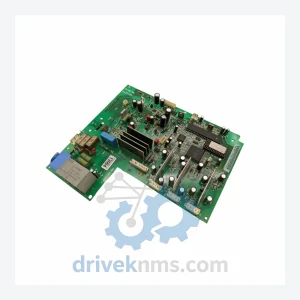
ABB SNAT-7120 Circuit Board – SNAZ7120J Series
ABB SNAT-7120 SNAZ 7120 J SNAZ7120J is listed for SNAZ7120J Series RFQ review. Confirm quantity, condition and destination before quotation.
RFQ-ready industrial model
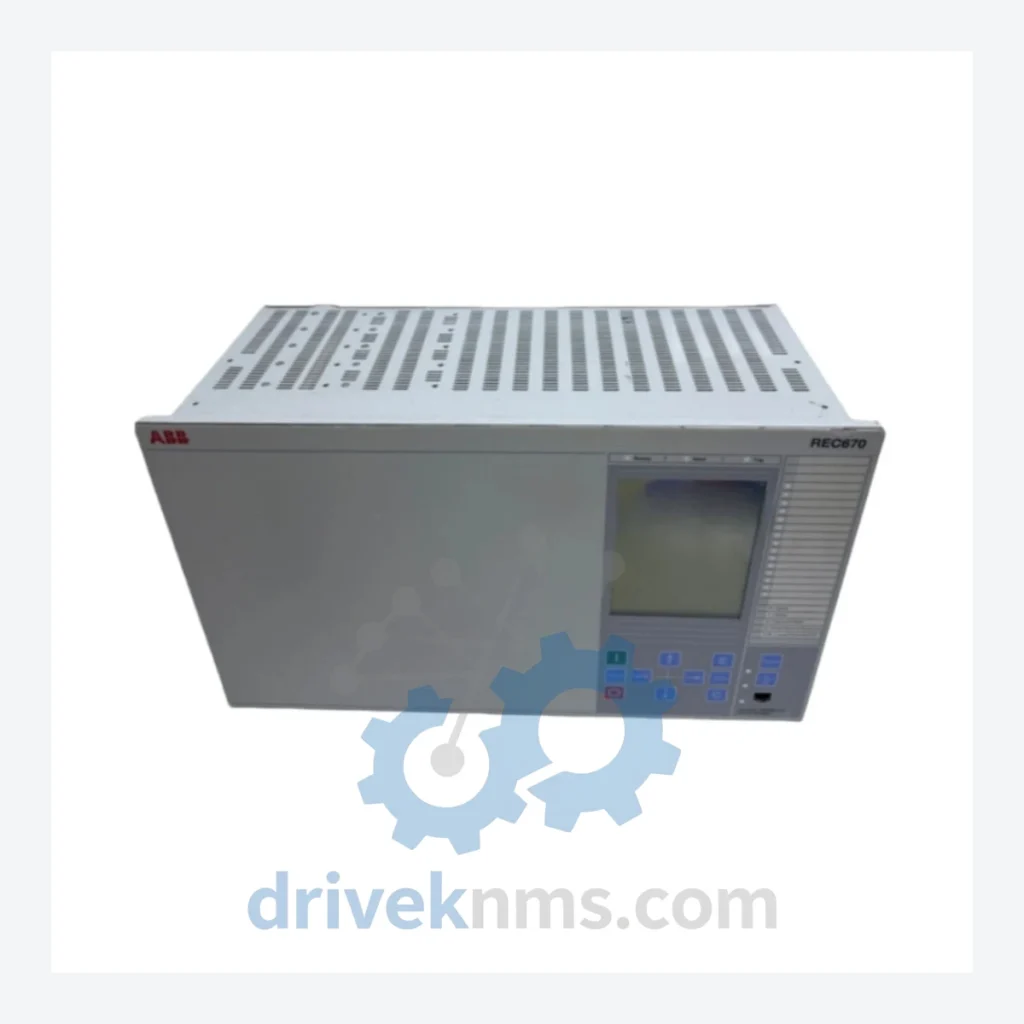
Model: REC670 1MRK002814-AC
Product Overview
Commercial availability is handled through direct RFQ, model verification and export-oriented follow-up rather than public cart checkout.
Datasheet Preview
Use attached product manuals when available. If the manual is not public yet, request the full file directly through RFQ.
Commercial Path
Product pages on DRIVEKNMS are designed to verify model, brand and series first, then move the buyer into one clean quotation path.
Technical Dossier
The ABB Relion 670 series represents one of the most widely deployed protection and control IED (Intelligent Electronic Device) platforms in high-voltage substation infrastructure globally. Installed across power utilities, industrial substations, petrochemical facilities, nuclear auxiliary systems, and offshore platforms, the 670 series has accumulated a substantial installed base since its commercial introduction in the mid-2000s. Its presence spans transmission and distribution networks in Europe, Asia-Pacific, the Middle East, and the Americas.
The platform's longevity in the field — combined with the extended service life of substation assets, which routinely operate for 20 to 30 years — creates a sustained and growing demand for replacement modules, firmware-matched spares, and lifecycle support components. A single failed IED in a protection scheme can result in delayed fault clearance, regulatory non-compliance, or forced outage of a substation bay. The operational consequence of an unplanned IED failure in a critical bay is not measured in the cost of the module — it is measured in the cost of the outage.
The Relion 670 series was introduced by ABB as a successor to the earlier REX 500 and SPACOM platform families, consolidating protection, measurement, control, and communication functions into a single IED hardware architecture. The platform is built on a modular hardware design with a common processing core and application-specific firmware packages that define the IED's protection function set.
Generation 1 (Version 1.0–1.2, circa 2005–2010): Initial hardware release. Binary input/output modules used discrete optocoupler and relay technology. Communication options were limited to SPA-bus, LON, and early IEC 61850 Edition 1 implementations. These units are now approaching or past their recommended service life and represent the highest-risk population in the installed base.
Generation 2 (Version 2.0–2.2, circa 2010–2016): Revised main processing board with improved CPU performance. IEC 61850 Edition 2 support added. Expanded analog input channel counts. Optical Ethernet communication modules introduced. This generation remains the dominant installed variant in most utility networks.
Generation 3 (Version 2.2 onward, circa 2016–present): Current production hardware. Enhanced cybersecurity features (IEC 62351 compliance). Wider temperature range options for harsh environments. Compatibility with PCM600 engineering tool versions 2.7 and above. Backward compatibility with Generation 2 firmware configurations is partial and requires engineering verification.
A critical compatibility constraint across all generations: hardware modules are not universally interchangeable across firmware versions. A replacement module must match the firmware baseline of the installed IED, or a full firmware upgrade must be planned and executed. This constraint makes same-version spare procurement the lowest-risk replacement strategy for operating utilities.
Bay Control & Interlocking
Line Protection
Transformer Protection
Feeder Protection
Busbar & Breaker Protection
Generator Protection
Communication & I/O Modules
ABB's official support lifecycle for the Relion 670 series is structured around firmware version milestones. As each firmware generation reaches end-of-active-support, the corresponding hardware modules transition to a reduced-support status. For utilities and industrial operators, this creates a procurement gap: the IED remains in service, but the OEM no longer stocks replacement modules for the installed firmware version.
The practical consequence is that a failed Generation 1 or early Generation 2 module cannot be replaced with a current-production unit without a firmware migration project — a process that requires engineering resources, protection scheme re-testing, and in many jurisdictions, regulatory re-approval. The total cost of a firmware migration for a single bay routinely exceeds the cost of sourcing an original spare module by a factor of ten or more.
DriveKNMS maintains sourcing relationships across industrial surplus networks in Europe, North America, and Asia. For Relion 670 modules, this includes:
Customers are advised to provide the full article number (e.g., 1MRK002814-AC) and the installed firmware version when inquiring, as these two parameters together determine module compatibility.
The Relion 670 series uses a proprietary backplane bus architecture for inter-module communication within the IED chassis. Standard bench testing procedures used for generic relay hardware are not sufficient to verify the integrity of a 670 series module. DriveKNMS applies the following protocol to all Relion 670 units processed through its facility:
Units that cannot be fully verified due to missing configuration or access restrictions are sold with explicit condition disclosure. DriveKNMS does not represent partially tested units as fully verified.
Continue The Model Path
Move from this exact model into the matching system hub, brand archive, model-family archive or lifecycle sourcing route before sending a final RFQ list.
Related Paths
ABB SNAT-7120 SNAZ 7120 J SNAZ7120J is listed for SNAZ7120J Series RFQ review. Confirm quantity, condition and destination before quotation.
ABB PM564-TP-ETH 1SAP121100R0071 is listed for Servo Drives RFQ review. Confirm quantity, condition and destination before quotation.
ABB SCDCS-CON-4 is listed for CON-4 Control Board RFQ review. Confirm quantity, condition and destination before quotation.