Technical Dossier
Product Details And Specifications
Advantech MIC-3000 Series Technical Notes
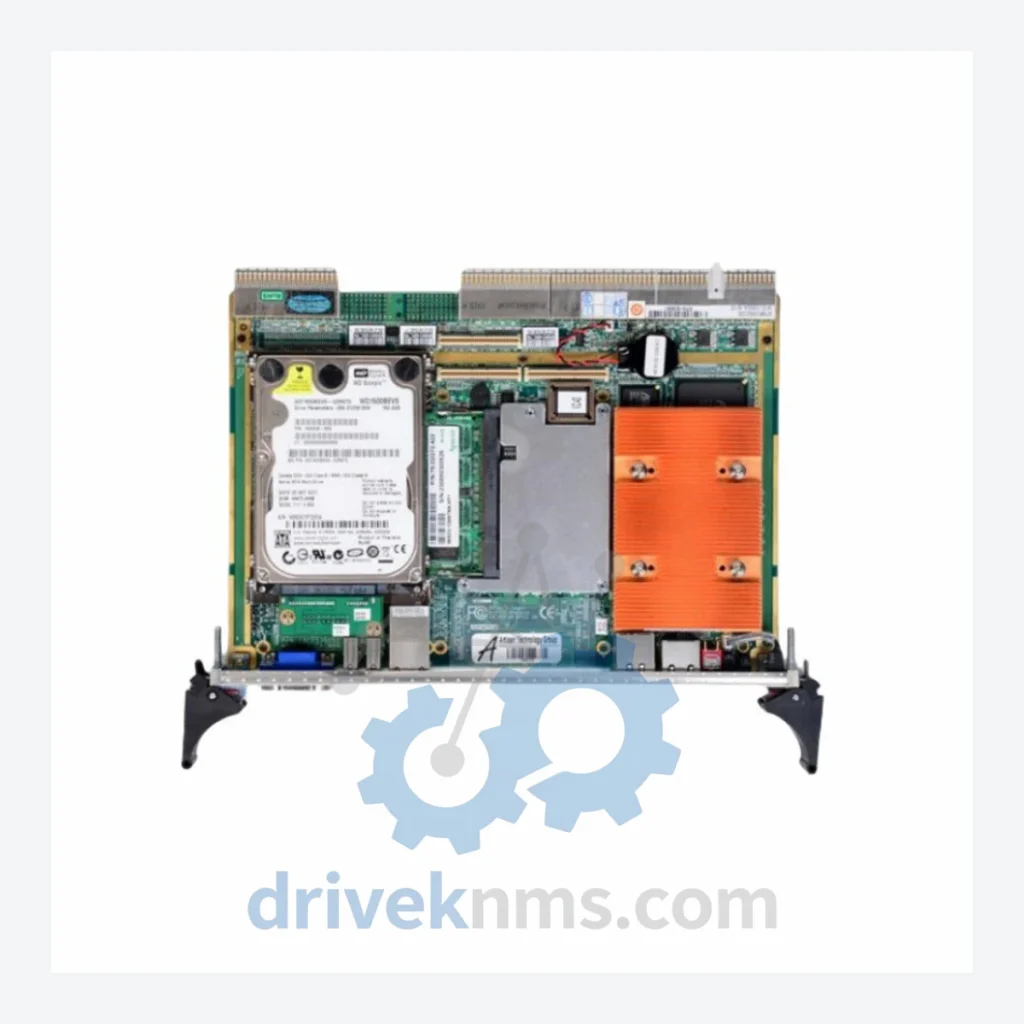
The Advantech MIC-3000 series represents one of the most widely deployed CompactPCI (cPCI) embedded computing platforms in global heavy industry. Installed across petrochemical refineries, nuclear power plant control rooms, offshore oil & gas platforms, and large-scale chemical processing facilities, the MIC-3000 family provides the ruggedized, hot-swap-capable compute and I/O infrastructure required for continuous 24/7 industrial operation. Its compliance with the PICMG 2.x CompactPCI standard ensures mechanical and electrical interoperability across a broad ecosystem of third-party chassis and peripheral modules. The series spans CPU boards, digital I/O, analog I/O, serial communication, and GPIB/timing modules — making it a complete embedded platform rather than a single-function card. The MIC-3392A specifically is an Intel Core 2 Duo processor board in the 6U CompactPCI form factor, designed as a high-performance system slot controller for demanding real-time applications.
The Evolution of MIC-3000 Architecture
The MIC-3000 series traces its architecture to the late 1990s adoption of the CompactPCI (cPCI) standard, which replaced passive VMEbus backplanes with a PCI-based, hot-swap-capable interconnect. Early MIC-3000 boards used Intel Pentium III and Celeron processors with 32-bit/33 MHz PCI buses. The mid-generation transition introduced Intel Pentium M and Core Duo processors, doubling compute density while maintaining backward-compatible 6U mechanical form factors. The MIC-3392A represents the mature phase of this evolution, integrating Intel Core 2 Duo silicon with up to 4 GB DDR2 ECC RAM, dual GbE ports, and SATA storage — all within the PICMG 2.0 R3.0 compliant backplane interface. Later Advantech platforms migrated toward CompactPCI Serial (PICMG CPCI-S.0) and COM Express, but the MIC-3000 cPCI ecosystem remains in active service at sites where platform replacement is cost-prohibitive. Compatibility considerations: MIC-3000 CPU boards require a 6U cPCI chassis with a system slot; peripheral I/O modules occupy peripheral slots and communicate via the J1/J2 connector set. Cross-generation mixing of CPU boards is possible within the same chassis provided bus speed and hot-swap controller compatibility is verified.
MIC-3000 Full Catalog & Functionalities (SKU List)
CPU / Processor Boards
- MIC-3392A: 6U cPCI Intel Core 2 Duo processor board, dual GbE, 4 GB DDR2 ECC, SATA, system slot controller.
- MIC-3391: 6U cPCI Intel Core 2 Duo single-board computer, VGA/DVI output, dual GbE, CompactFlash socket.
- MIC-3390: 6U cPCI Intel Pentium M processor board, 400/533 MHz FSB, up to 2 GB DDR SDRAM, dual LAN.
- MIC-3388: 6U cPCI Intel Pentium 4 / Celeron D processor board, 800 MHz FSB, AGP graphics, dual GbE.
- MIC-3386: 6U cPCI Intel Pentium III / Celeron processor board, 133 MHz FSB, up to 512 MB SDRAM.
- MIC-3384: 6U cPCI Intel Pentium III processor board, 100 MHz FSB, PMC expansion site, dual LAN.
Digital I/O Modules
- MIC-3756: 6U cPCI 64-channel isolated digital I/O module, 32 DI / 32 DO, 24 VDC logic, OPTO-22 compatible.
- MIC-3753: 6U cPCI 48-channel TTL digital I/O module, programmable direction per port, 8255-compatible interface.
- MIC-3751: 6U cPCI 32-channel isolated digital input module, 24 VDC, high-speed interrupt-driven acquisition.
Analog I/O Modules
- MIC-3716: 6U cPCI 16-channel 16-bit analog input module, 250 kS/s aggregate, programmable gain, FIFO buffer.
- MIC-3714: 6U cPCI 32-channel 14-bit analog input module, 100 kS/s, single-ended or differential configuration.
- MIC-3724: 6U cPCI 4-channel 16-bit analog output module, ±10 V / 0–20 mA, simultaneous update.
Serial Communication Modules
- MIC-3612: 6U cPCI 4-port RS-232/422/485 serial communication module, 921.6 kbps max, 16C950 UART.
- MIC-3610: 6U cPCI 2-port RS-232/422/485 serial module, software-selectable termination, surge protection.
GPIB / Timing / Other
- MIC-3488: 6U cPCI IEEE-488.2 GPIB controller module, full talker/listener/controller capability, NI-488.2 compatible driver.
- MIC-3620: 6U cPCI CAN bus communication module, dual isolated CAN channels, CANopen / DeviceNet protocol support.