
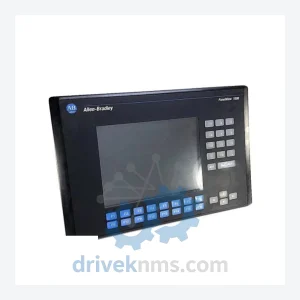
Allen-Bradley 2711-K10C15L1
Allen-Bradley PanelView 1000 Color Keypad is listed for PanelView RFQ review. Confirm quantity, condition and destination before quotation.
RFQ-ready industrial model
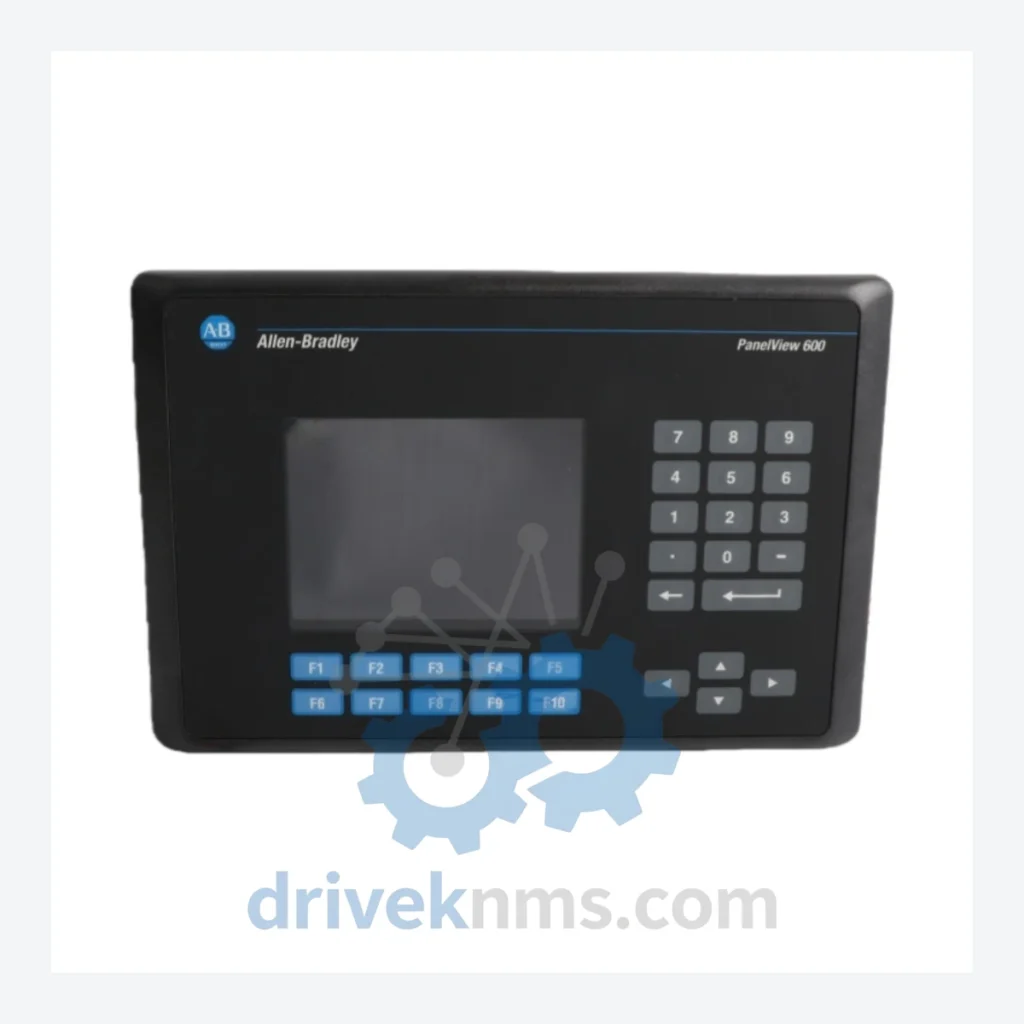
Model: 2711-K6C16
Product Overview
Commercial availability is handled through direct RFQ, model verification and export-oriented follow-up rather than public cart checkout.
Datasheet Preview
Use attached product manuals when available. If the manual is not public yet, request the full file directly through RFQ.
Commercial Path
Product pages on DRIVEKNMS are designed to verify model, brand and series first, then move the buyer into one clean quotation path.
Technical Dossier
DriveKNMS reviews sourcing options for discontinued components through RFQ handling before quotation.
RFQ support for obsolete parts: Send the model number, required quantity and destination so DriveKNMS can confirm sourcing options before quotation.
| Parameter | Detail |
|---|---|
| Manufacturer | Allen-Bradley (Rockwell Automation) |
| Part Number | 2711-K6C16 |
| Series | PanelView 550 |
| Discontinuation Status | Discontinued – No longer manufactured or sold through standard Rockwell channels |
| Display Size | 5.5-inch monochrome keypad/touchscreen |
| Communication | DH-485 / DH+ / Remote I/O (model-dependent configuration) |
| Power Supply | 24V DC |
| Compatible Systems | Allen-Bradley SLC 500, PLC-5, MicroLogix series |
| Country of Origin | United States |
| Condition Available | New surplus / Professionally refurbished |
The PanelView 550 platform was the standard operator interface across thousands of discrete manufacturing, water treatment, and material handling installations throughout the 1990s and 2000s. Its integration with Allen-Bradley SLC 500 and PLC-5 controllers via DH-485 and Remote I/O was deeply embedded at the hardware and software level. Replacing the HMI in isolation is not straightforward — the communication protocol, ladder logic addressing, and tag structures are tightly coupled to the controller platform.
Q: How are RFQ terms confirmed?
A: Quantity, required condition, documentation needs, destination and sourcing route are confirmed during RFQ review before quotation.
Sourcing a drop-in 2711-K6C16 replacement eliminates all of that. The existing program, communication configuration, and operator interface screens transfer without modification. Production resumes. The capital expenditure decision is deferred to a planned budget cycle rather than forced by an emergency breakdown.
This is the core logic behind strategic obsolete parts inventory: it converts an unplanned capital event into a controlled maintenance cost.
For operations management teams under pressure to defer system replacement, the following approach has been applied successfully across legacy Allen-Bradley and comparable platforms:
3. Condition Monitoring, Not Replacement Cycles. Obsolete hardware does not have a fixed service life. Electrolytic capacitors in power supply sections degrade over time and are the most common failure point in aged HMI units. A targeted inspection and capacitor replacement program — not a blanket replacement schedule — extends service life at minimal cost.
4. Firmware and Configuration Documentation. Before a unit fails, extract and archive the current firmware version and all configuration parameters. For the PanelView 550 series, this means backing up the application file via PanelBuilder 32 or PanelBuilder 1400e. A replacement unit without the correct application file is not functional.
5. Supplier Qualification. Not all obsolete parts sources carry equivalent risk. Counterfeit and non-functional units circulate in the secondary market for high-demand discontinued parts. Establish a relationship with a supplier who performs incoming inspection and provides traceable documentation before a breakdown forces a rushed, unverified purchase.
Applied consistently, this framework has allowed facilities to operate legacy Allen-Bradley systems reliably for five to ten years beyond the point at which standard support ended — without the capital disruption of a forced migration.
Every 2711-K6C16 unit processed by DriveKNMS passes a five-stage inspection protocol before it is offered for sale:
Step 1 – Visual and Mechanical Inspection. Full external examination for physical damage, connector pin condition, keypad integrity, and display surface condition. Units with cracked housings, bent pins, or damaged membrane keypads are rejected at this stage.
Step 2 – Electrolytic Capacitor Assessment. Internal inspection targeting capacitor condition. Aged electrolytic capacitors are the primary failure mechanism in units that have been in storage or service for extended periods. Capacitors showing signs of bulging, leakage, or measured ESR deviation are replaced before the unit proceeds.
Step 3 – Firmware Version Verification. The installed firmware version is documented and cross-referenced against known compatibility requirements for SLC 500 and PLC-5 controller firmware revisions. Incompatible firmware combinations are flagged and disclosed.
Step 4 – Pin and Contact Corrosion Check. All communication and power connector pins are inspected under magnification for oxidation and corrosion. Affected contacts are cleaned or the unit is rejected depending on severity.
Step 5 – Functional Power-On Test. The unit is powered and tested for display operation, keypad response, and communication port activity. Only units that pass all five stages are released for sale.
Drop-in replacement compatibility. The 2711-K6C16 installs directly into existing panel cutouts and connects to existing DH-485 or Remote I/O wiring without modification. No rewiring, no new cable assemblies.
No reprogramming required. The replacement unit accepts the existing PanelBuilder application file. Operator screens, alarm configurations, and data display logic transfer without change. Engineering time is limited to the file download procedure.
No control system changes. The SLC 500 or PLC-5 controller program does not require modification. Communication node addressing is preserved. The replacement is transparent to the rest of the control architecture.
Avoids engineering reconstruction costs. A forced migration to a current-generation HMI platform requires new software licensing, communication infrastructure, and in most cases a complete rewrite of the operator interface application. The cost differential between sourcing a verified 2711-K6C16 and executing a migration is not marginal — it is typically an order of magnitude.
Q: How is condition confirmed before quotation?
A: Available condition, photos, test records and documentation are checked according to the requested model and sourcing channel before a formal RFQ response.
How do I know the unit is genuine and not counterfeit?
All units are inspected against known Allen-Bradley manufacturing markings, date codes, and board-level characteristics. Units that do not pass authenticity verification are not offered for sale. Documentation is available on request.
Continue The Model Path
Move from this exact model into the matching system hub, brand archive, model-family archive or lifecycle sourcing route before sending a final RFQ list.
Related Paths
Allen-Bradley PanelView 1000 Color Keypad is listed for PanelView RFQ review. Confirm quantity, condition and destination before quotation.
Allen-Bradley 2711-B5A1 is listed for PanelView RFQ review. Confirm quantity, condition and destination before quotation.
Allen-Bradley 2711-K3A17L1 is listed for PanelView RFQ review. Confirm quantity, condition and destination before quotation.