
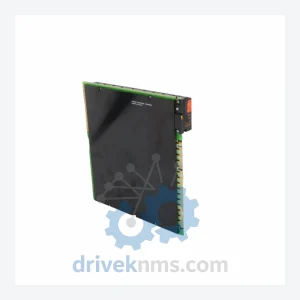
Alstom 8143-4002
Alstom 8143-4002 is listed for Servo Drives RFQ review. Confirm quantity, condition and destination before quotation.
RFQ-ready industrial model
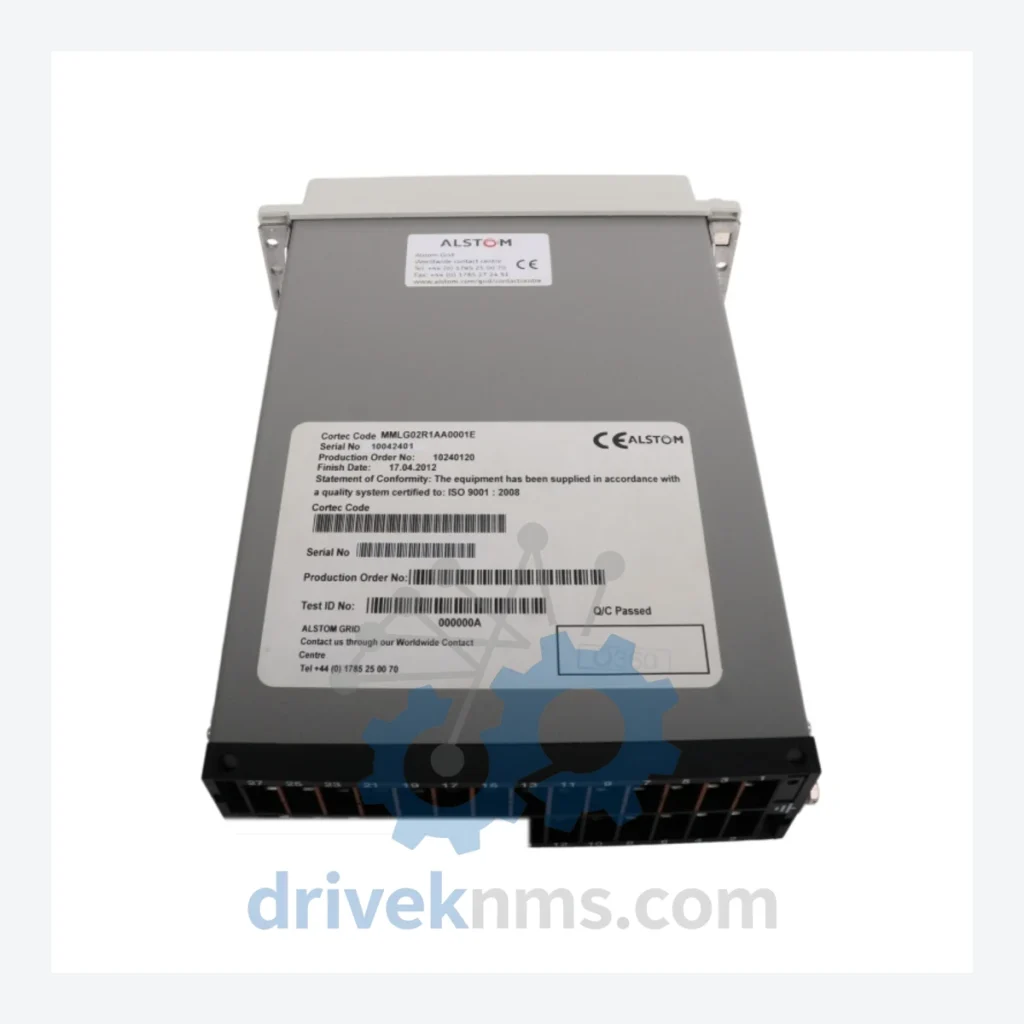
Model: MMLG02 MMLG02R1AA0001E
Product Overview
Commercial availability is handled through direct RFQ, model verification and export-oriented follow-up rather than public cart checkout.
Datasheet Preview
Use attached product manuals when available. If the manual is not public yet, request the full file directly through RFQ.
Commercial Path
Product pages on DRIVEKNMS are designed to verify model, brand and series first, then move the buyer into one clean quotation path.
Technical Dossier
RFQ support for obsolete parts: Send the model number, required quantity and destination so DriveKNMS can confirm sourcing options before quotation.
| Parameter | Detail |
|---|---|
| Manufacturer | Alstom (formerly GEC Alsthom) |
| Part Number | MMLG02R1AA0001E |
| Model Series | MMLG02 |
| Component Type | Relay Test Block / Isolating Test Block |
| Compatible Relay Families | Alstom MiCOM, GEC Alsthom MCGG, MCAG, MCAU series protection relays |
| Country of Origin | France |
| Discontinuation Status | Confirmed Obsolete – No longer manufactured or supported by Alstom/GE Grid Solutions |
| Typical Installation | Secondary protection panels, substation relay cubicles, industrial switchgear |
Note: Electrical parameters specific to individual installation configurations are not published here. Contact our technical team for application-specific verification before ordering.
The MMLG02 test block occupies a structurally critical position in legacy Alstom protection schemes. Its function is not decorative — it provides the physical isolation interface that allows protection engineers to test relay operation without de-energizing the primary circuit. In substations running MCGG21, MCGG52, or MCAG14 overcurrent and earth-fault relays, the MMLG02 is the only test block that mates correctly with the relay's secondary terminal arrangement.
When this component is unavailable, protection relay testing cannot be performed to IEC 60255 or IEEE C37.90 standards. This creates a compliance gap that grid operators and industrial facility managers cannot ignore. Regulatory bodies in most jurisdictions require periodic protection relay testing as a condition of operating license. A missing test block is not a minor inconvenience — it is a documented maintenance failure that exposes the operator to liability.
The installed base of GEC Alsthom and early Alstom MiCOM protection systems remains substantial across power utilities in Europe, the Middle East, Southeast Asia, and Latin America. These systems were engineered for 30-40 year service lives, and many are operating well within their designed protection performance envelope. The economic argument for maintaining them with original spare parts — rather than replacing entire panels — is straightforward: the cost of a verified MMLG02R1AA0001E is a fraction of one percent of the cost of a panel replacement project. Extending the operational life of a protection relay panel by 5 to 10 years through targeted spare part procurement is one of the highest-return maintenance decisions available to a substation asset manager.
The practical strategy is not complicated. Identify the relay types installed in each panel. Cross-reference the test block model required for each relay family. Procure a minimum of two spare test blocks per panel — one for active use, one held in climate-controlled storage. This approach has been used by transmission system operators and large industrial facilities to defer capital expenditure on protection panel replacement by a decade or more, while maintaining full compliance with protection testing schedules.
Every MMLG02R1AA0001E unit processed by DriveKNMS passes a structured 5-step quality verification protocol before it is offered for sale. This protocol was developed specifically for obsolete electromechanical and early solid-state protection components, where age-related degradation follows predictable failure modes.
Step 1 – Electrolytic Capacitor Assessment: Where applicable, capacitor condition is evaluated for electrolyte leakage, bulging, and capacitance drift. Aged electrolytic capacitors are the most common cause of latent failure in legacy relay auxiliary components.
Step 2 – Firmware & Version Verification: For units with embedded firmware or version-specific hardware configurations, the revision level is confirmed and documented against the original Alstom part number suffix (R1AA0001E).
Step 3 – Terminal and Pin Corrosion Inspection: All contact surfaces, terminal blocks, and connector pins are inspected under magnification for oxidation, pitting, and mechanical deformation. Contact resistance is verified where test access permits.
Step 4 – Mechanical Integrity Check: Housing, mounting clips, and locking mechanisms are inspected for cracks, deformation, and missing hardware. Test block operation (insertion/withdrawal cycle) is physically verified.
Step 5 – Documentation and Traceability: Each unit is assigned an internal inspection record. Available original packaging, date codes, and manufacturer markings are documented and provided to the buyer on request.
The MMLG02R1AA0001E installs as a direct, drop-in replacement for the original test block position in compatible Alstom and GEC Alsthom relay panels. No panel wiring modifications are required. No relay re-programming is involved. The protection relay itself does not require reconfiguration — the test block interface is purely mechanical and electrical, not software-dependent.
This matters because the alternative — sourcing a non-original test block and adapting the panel wiring — introduces engineering risk, requires documented change management, and typically triggers a full protection scheme re-commissioning test. The cost of that engineering work alone frequently exceeds the cost of locating and purchasing the correct original part by a factor of ten or more. Using the correct MMLG02R1AA0001E eliminates that risk entirely and keeps the protection scheme within its original type-tested configuration.
Continue The Model Path
Move from this exact model into the matching system hub, brand archive, model-family archive or lifecycle sourcing route before sending a final RFQ list.
Related Paths
Alstom 8143-4002 is listed for Servo Drives RFQ review. Confirm quantity, condition and destination before quotation.
Alstom 8177-4002 is listed for Automation Control Series RFQ review. Confirm quantity, condition and destination before quotation.
Alstom 8222-4001 is listed for Servo Drives RFQ review. Confirm quantity, condition and destination before quotation.