Technical Dossier
Product Details And Specifications
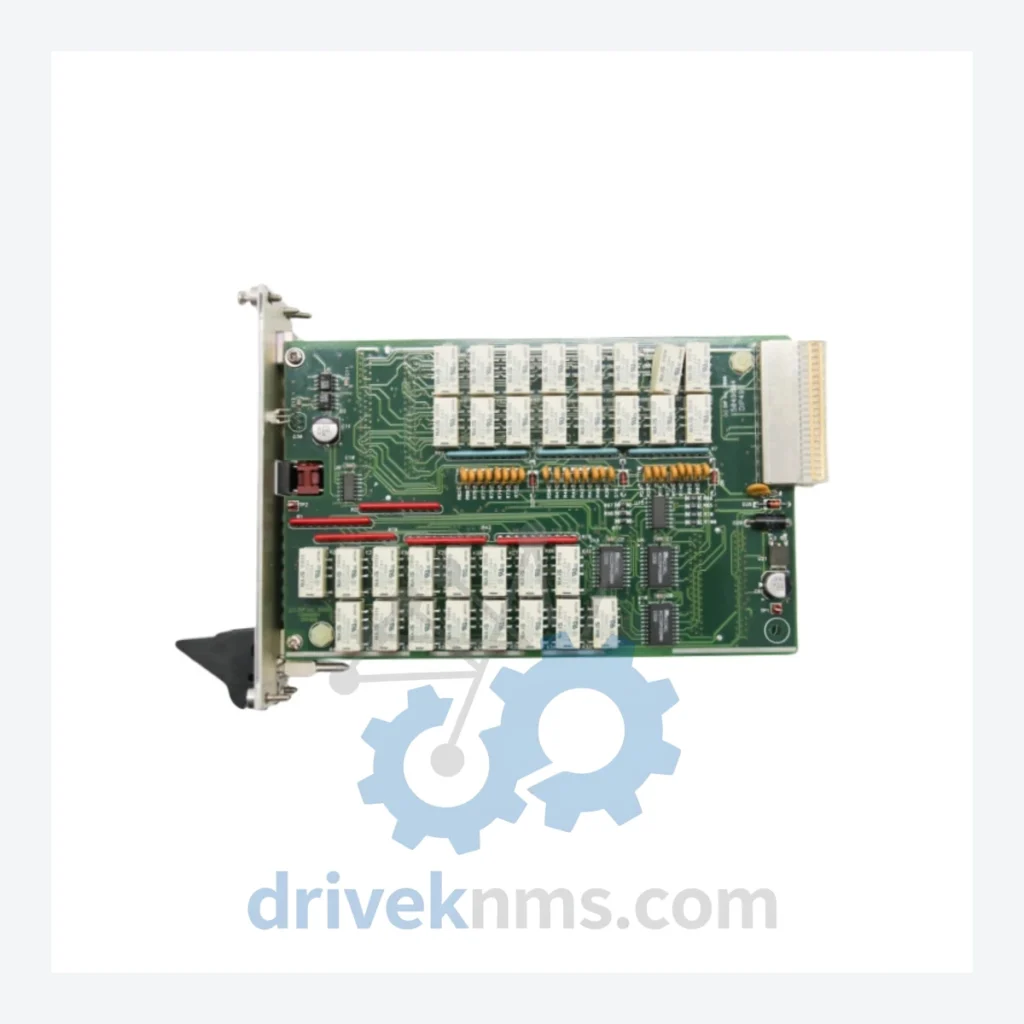
Applied Materials CDN497 Interlock Control Module – Obsolete CVD System Spare Part
RFQ support for obsolete parts: Send the model number, required quantity and destination so DriveKNMS can confirm sourcing options before quotation.
Technical Specifications
Note: Specific electrical parameters (voltage ratings, signal I/O specifications) are not published here to prevent misapplication. Contact our technical team for verified datasheet confirmation prior to ordering.
Solving the Discontinued Hardware Crisis
Applied Materials CVD systems — particularly the Centura and P5000 platforms — remain in active production use at facilities worldwide, despite being decades-old designs. The interlock control architecture on these platforms is deeply integrated into process safety logic. The CDN497 module sits at the intersection of gas panel interlocks, RF power interlocks, and chamber pressure safety circuits. There is no generic substitute. A replacement requires exact form, fit, and function compatibility — or the entire interlock validation sequence must be re-engineered from scratch.
For a fab running 24/7 production, the cost of that re-engineering is not theoretical. It involves process engineers, safety certification reviews, and in many jurisdictions, third-party equipment audits before the tool can return to production. Facilities that have sourced a verified CDN497 replacement have consistently reported returning the tool to qualified production status within one shift. Facilities that attempted to engineer around the missing module have reported outages measured in weeks.
How to Extend Your CVD System Life by 5–10 Years Through Strategic Spare Parts Management
Factory management teams facing pressure to retire aging Applied Materials CVD tools often underestimate the true cost of the alternative. A new CVD platform acquisition involves capital expenditure, installation qualification (IQ), operational qualification (OQ), process qualification (PQ), and a process transfer period during which yield is unpredictable. For a mature, stable process running on a P5000 or Centura, that transition risk is substantial.
DriveKNMS specializes in sourcing and holding exactly this category of component. We work with maintenance engineering teams to identify critical path modules, verify authenticity and condition, and provide documented traceability for each unit — which matters when your tool's maintenance records are subject to audit.
Condition & Reliability Assurance
Every CDN497 module that leaves our facility has passed a five-stage inspection protocol developed specifically for obsolete industrial control hardware:
- Stage 1 – Visual and Mechanical Inspection: Full board-level inspection for physical damage, corrosion, and connector pin integrity. Oxidized or corroded pins are disqualifying without remediation.
- Stage 2 – Electrolytic Capacitor Assessment: Electrolytic capacitors are the primary failure mode in aged control electronics. Each capacitor is evaluated for ESR (equivalent series resistance) drift and capacitance loss. Units with out-of-specification capacitors are either recapped with equivalent-rated components or rejected.
- Stage 3 – Firmware and Configuration Verification: Where applicable, firmware revision is documented and compared against known compatible versions for the target platform. No firmware modifications are made without explicit customer authorization.
- Stage 4 – Functional Bench Test: The module is powered and tested against its known functional parameters in a controlled bench environment prior to shipment.
- Stage 5 – Packaging and ESD Protection: All modules are packaged in anti-static bags with desiccant, inside rigid foam-lined shipping containers rated for international freight.
Key Features for System Maintenance
- Drop-in Replacement: The CDN497 is a direct form-fit-function replacement for the original module. No hardware modifications to the host system are required.
- No Reprogramming Required: The module retains its original configuration. Installation does not require process engineers or controls specialists — standard maintenance technician competency is sufficient.
- Avoids Engineering Rework Costs: Using a verified OEM-equivalent replacement eliminates the need for interlock re-validation, safety re-certification, or process re-qualification that would be triggered by a non-equivalent substitution.
- Documented Traceability: Each unit ships with inspection documentation, condition classification, and part number cross-reference records suitable for inclusion in your tool's maintenance log.
Should I buy more than one unit?
For any tool running in active production, a minimum of one reserve unit is advisable. For facilities with multiple CVD tools of the same platform generation, a shared pool of two to three units is a standard risk mitigation posture. Secondary market availability of the CDN497 is not guaranteed to persist — procurement decisions made today reflect a different supply environment than decisions deferred by 12–24 months.