Technical Dossier
Product Details And Specifications
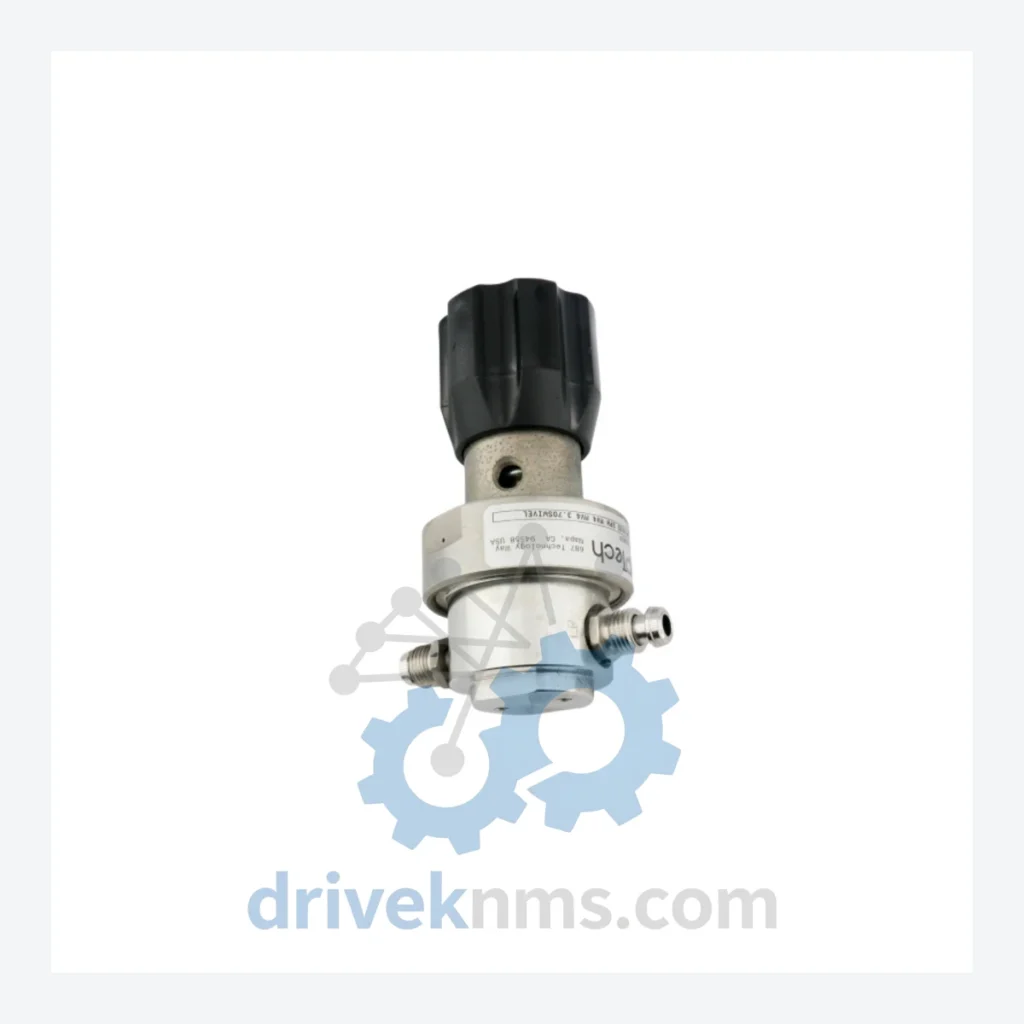
APTECH AP1406TSM 2PW MV4 MVE4 P Pressure Regulator – Obsolete AP14 Series Spare Part
The AP1406TSM, paired with the AP1402TS in this dual-regulator configuration (P/N 63039620193, 7030_02), was designed for precision gas pressure control in high-purity process environments. Its discontinuation does not reduce its operational value — it increases the urgency of securing verified replacement units before secondary market supply is exhausted.
RFQ support for obsolete parts: Send the model number, required quantity and destination so DriveKNMS can confirm sourcing options before quotation.
Solving the Discontinued Hardware Crisis
The AP14 series regulators were widely deployed in semiconductor wafer fabrication lines, specialty chemical delivery systems, and high-purity gas panels — environments where process consistency is non-negotiable and where the installed base of supporting infrastructure represents decades of capital investment. APTECH's discontinuation of this series left a significant installed base without a factory-supported upgrade path.
The core problem facing maintenance engineers is not the regulator itself — it is the system architecture built around it. Replacing an AP1406TSM with a modern equivalent is not a drop-in exercise. Fitting dimensions, port configurations, flow coefficients, and material compatibility with process gases must all be re-verified. In a cleanroom or hazardous gas environment, that re-verification process involves safety reviews, process qualification runs, and regulatory documentation that can take months and cost more than the original system installation.
Sourcing a verified AP1406TSM from secondary market inventory eliminates that entire re-qualification burden. The system continues to operate within its validated parameters. Maintenance records remain unbroken. The capital expenditure case for a full system replacement — which management may be pressuring engineering teams to justify — loses its urgency.
Extending Automation Asset Life by 5–10 Years: A Practical Framework
Plant managers facing pressure to retire legacy systems often operate under a false assumption: that discontinuation of a component equals end-of-life for the system. In practice, a disciplined spare parts strategy can extend the productive life of a well-maintained process system by five to ten years at a fraction of the cost of replacement capital.
This approach converts an unpredictable failure risk into a managed maintenance program. For a facility operating a process line with a replacement cost in the millions, the investment in a structured obsolete-parts inventory is not a cost — it is an insurance policy with a calculable return.
Condition & Reliability Assurance
DriveKNMS applies a five-step quality assurance process to all obsolete and hard-to-find components before dispatch review.
Step 1 – Visual and Mechanical Inspection: Each unit is examined for physical damage, port thread integrity, body corrosion, and seal condition. Units with compromised wetted surfaces are rejected.
Step 2 – Electrolytic Capacitor Assessment (where applicable): For units with integrated electronics or solenoid actuation, capacitor condition is evaluated for signs of aging, bulging, or electrolyte leakage.
Step 3 – Firmware and Configuration Verification: Where the unit carries programmable or configurable elements, version and configuration state are documented and reported to the buyer.
Step 4 – Pin and Connector Corrosion Check: All electrical connectors and signal pins are inspected under magnification for oxidation, fretting corrosion, and contact integrity.
Step 5 – Traceability Documentation: Each unit ships with a condition report, inspection record, and available original documentation. Buyers receive full visibility into the unit's assessed state before installation.
DriveKNMS does not misrepresent condition grades. Units are classified as New (sealed original packaging), Surplus New (unused, removed from storage), or Refurbished (tested, restored to functional specification) — and priced accordingly.
Key Features for System Maintenance
How do I confirm the unit is genuine and not counterfeit?
All APTECH units sourced by DriveKNMS are inspected against known-good reference units for markings, material finish, and dimensional conformance. Traceability documentation is provided with each shipment. We do not source from unverified brokers.