
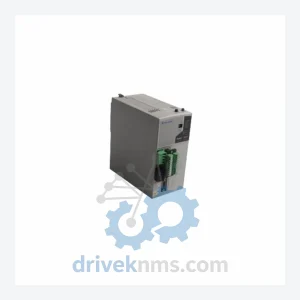
Bosch KM3300 Modules KM 3300-T 054915-103 KM3300
Bosch KM 3300-T 054915-103 KM3300 is listed for 3300 RFQ review. Confirm quantity, condition and destination before quotation.
RFQ-ready industrial model
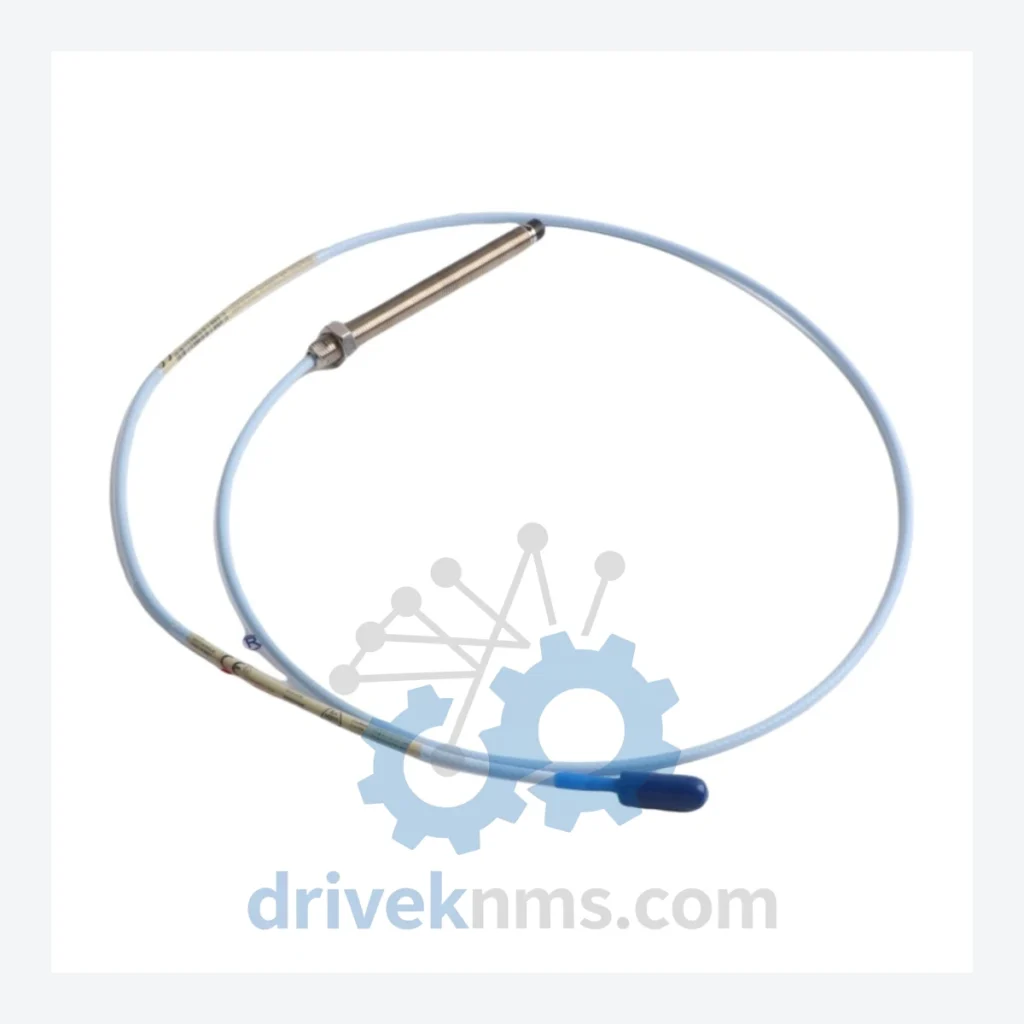
Model: 330101-00-48-10-02-00
Product Overview
Commercial availability is handled through direct RFQ, model verification and export-oriented follow-up rather than public cart checkout.
Datasheet Preview
Use attached product manuals when available. If the manual is not public yet, request the full file directly through RFQ.
Commercial Path
Product pages on DRIVEKNMS are designed to verify model, brand and series first, then move the buyer into one clean quotation path.
Technical Dossier
The Bently Nevada 3300 Series is one of the most widely deployed eddy-current proximity measurement systems in global heavy industry. Installed across petrochemical refineries, nuclear power stations, LNG terminals, steel mills, and rotating machinery platforms, the 3300 Series provides continuous, non-contact measurement of shaft radial vibration, axial position, differential expansion, and eccentricity. Its modular architecture — separating the probe, extension cable, and proximitor into discrete, field-replaceable components — has made it the de facto standard for turbomachinery protection systems operating under API 670 requirements.
The 3300 Series was designed around the eddy-current measurement principle: a high-frequency oscillator drives a coil in the probe tip, and the resulting electromagnetic field interacts with the conductive target shaft. Changes in gap distance alter the field impedance, producing a voltage output linear to displacement. This analog signal chain — probe → extension cable → proximitor — has remained architecturally consistent across the series lifetime, which is both its strength (backward compatibility) and its procurement challenge (aging components, discontinued part numbers).
Early Generation (3300/5mm, 3300/8mm, 3300/11mm): Defined by probe tip diameter and gap range. The 5mm probe targets gaps of 0.25–2.25 mm; the 8mm probe covers 0.25–2.54 mm; the 11mm probe extends to 0.25–2.79 mm. These variants were designed for different shaft diameters and machine frame geometries.
Mid-Generation (3300 XL Series): Introduced extended temperature ratings and improved EMI shielding. The XL designation indicates compatibility with higher ambient temperature environments (up to 177°C at the probe tip), making them suitable for hot-section turbine applications.
Extension Cable Standardization: The 3300 Series uses armored coaxial extension cables in standard lengths of 1m, 2m, 3m, 5m, and 9m. Cable length directly affects the system scale factor (mV/mil or mV/mm), and mismatched cable lengths are a documented source of measurement error during maintenance replacement.
Proximitor Evolution: Early proximitors (3300/05, 3300/08, 3300/11) were panel-mount units. Later variants introduced DIN-rail mounting and dual-channel configurations. The proximitor contains the oscillator-demodulator circuit and outputs a DC voltage proportional to gap. It is the most failure-prone component in the signal chain due to internal oscillator drift over time.
Transition to 3500 Series: Bently Nevada introduced the 3500 Series rack-based monitoring system as the digital successor. The 3500 Series supports the same probe/cable hardware but replaces the analog proximitor with a digital I/O module, enabling integration with DCS/SCADA via Modbus, Profibus, and Ethernet. Facilities running 3300 Series proximitors that cannot justify a full 3500 upgrade often pursue a hybrid strategy: retaining 3300 probes and cables while upgrading the monitoring rack.
Proximity Probes (by tip diameter):
Extension Cables:
Proximitors / Signal Conditioners:
Accessories & Mounting Hardware:
For facilities evaluating migration to the 3500 Series, DriveKNMS can supply both legacy 3300 components for interim maintenance and 3500 I/O modules for phased upgrade programs, allowing procurement teams to manage transition costs across multiple budget cycles.
The 3300 Series signal chain is sensitive to component-level degradation that does not always manifest as a hard failure. A proximitor with a drifted oscillator frequency will produce a shifted scale factor, causing the monitoring system to under-read or over-read vibration amplitude — a condition that can mask developing machinery faults or trigger false alarms. Standard continuity testing is insufficient to detect this failure mode.
DriveKNMS applies the following test protocol to all 3300 Series units prior to shipment:
Q: How are RFQ terms confirmed?
A: Quantity, required condition, documentation needs, destination and sourcing route are confirmed during RFQ review before quotation.
Continue The Model Path
Move from this exact model into the matching system hub, brand archive, model-family archive or lifecycle sourcing route before sending a final RFQ list.
Related Paths
Bosch KM 3300-T 054915-103 KM3300 is listed for 3300 RFQ review. Confirm quantity, condition and destination before quotation.
ProSoft Technology 3300-MBP is listed for 3300 RFQ review. Confirm quantity, condition and destination before quotation.
Fanuc A06B-6400-H102 A20B-3300-0381 is listed for 3300 RFQ review. Confirm quantity, condition and destination before quotation.