
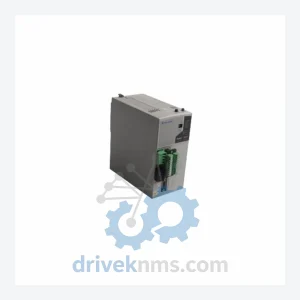
Bosch KM3300 Modules KM 3300-T 054915-103 KM3300
Bosch KM 3300-T 054915-103 KM3300 is listed for 3300 RFQ review. Confirm quantity, condition and destination before quotation.
RFQ-ready industrial model
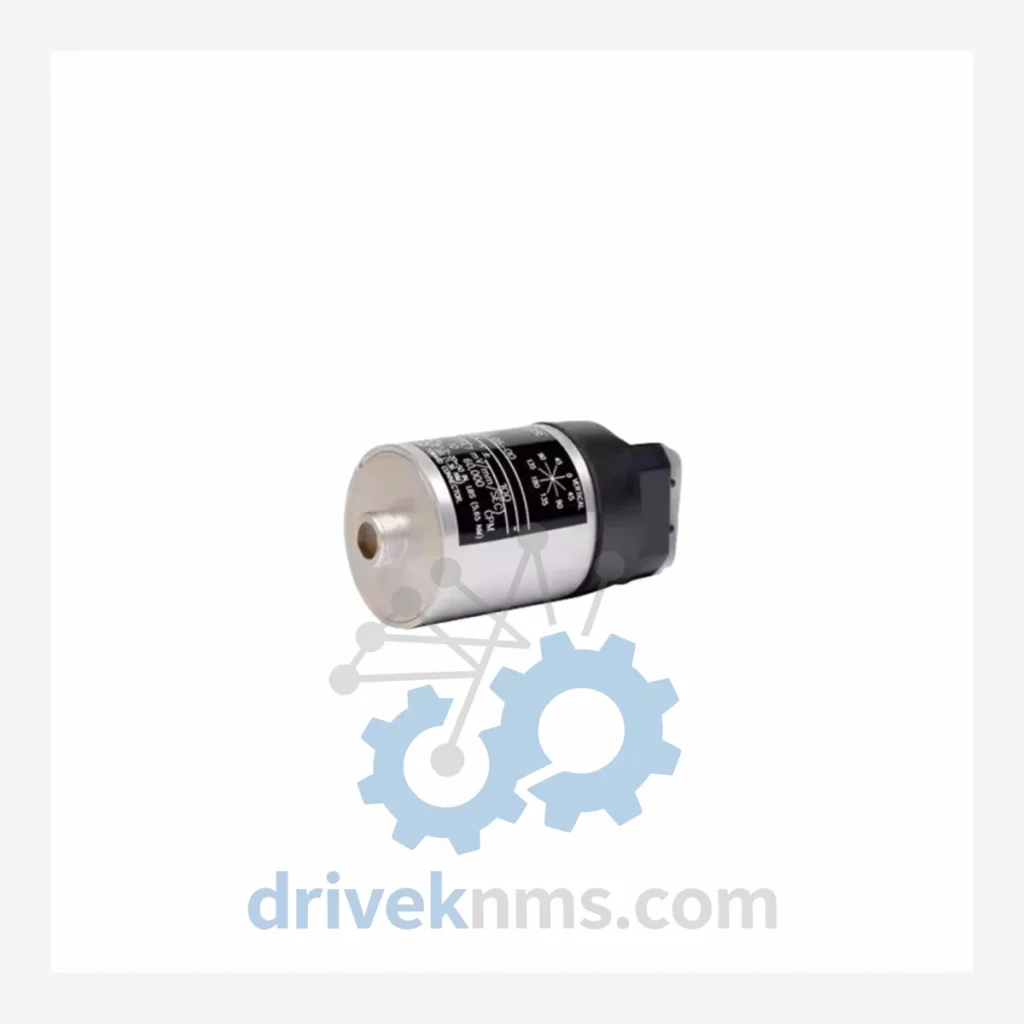
Model: 330703-020-110-10-01-05
Product Overview
Commercial availability is handled through direct RFQ, model verification and export-oriented follow-up rather than public cart checkout.
Datasheet Preview
Use attached product manuals when available. If the manual is not public yet, request the full file directly through RFQ.
Commercial Path
Product pages on DRIVEKNMS are designed to verify model, brand and series first, then move the buyer into one clean quotation path.
Technical Dossier
RFQ support for obsolete parts: Send the model number, required quantity and destination so DriveKNMS can confirm sourcing options before quotation.
| Parameter | Detail |
|---|---|
| Part Number | 330703-020-110-10-01-05 |
| Brand | Bently Nevada |
| Series | 3300 XL Proximity Transducer System |
| Product Type | Proximity Transducer System |
| Discontinuation Status | Obsolete – No longer manufactured or supplied by OEM |
| Country of Origin | United States |
| Compatible Systems | Bently Nevada 3300 Series machinery protection systems; commonly deployed with GE / Baker Hughes monitoring racks |
| Application | Shaft radial vibration, axial position, and speed measurement on rotating machinery |
Note: Electrical parameters such as sensitivity, gap voltage range, and frequency response are model-configuration-dependent. Confirmed specifications are provided upon request with unit verification documentation.
The Bently Nevada 3300 Series has been the industry reference for machinery protection on critical rotating assets for decades. Its eddy-current proximity measurement principle — non-contact, immune to process fluid contamination, and capable of sub-micron resolution — made it the default specification for API 670-compliant installations worldwide. The 330703-020-110-10-01-05 transducer system is a field-replaceable unit within that architecture. Its connector pinout, cable impedance characteristics, and signal conditioning interface are matched to the 3300 Series monitor cards. Substituting a non-OEM or cross-generation replacement without full system re-validation introduces measurement uncertainty that is unacceptable in machinery protection applications.
Plants that have standardized on this platform face a binary choice when a unit fails: source an exact replacement, or commit to a platform migration. Migration requires new monitor cards, new cabling infrastructure, updated system documentation, and — critically — a re-validation shutdown. For a single compressor train, that shutdown window alone can cost more than a year's worth of spare parts procurement. Sourcing a verified 330703-020-110-10-01-05 from DriveKNMS eliminates that decision entirely and restores the asset to its validated operating state.
The economic case for legacy system life extension is straightforward when the numbers are examined without bias. A modern turbomachinery train with an installed Bently Nevada 3300 Series protection system represents a capital investment that does not depreciate on a linear schedule — the mechanical asset retains value as long as it operates within design parameters. The monitoring and protection system is the lowest-cost component in that equation, yet it is the one most likely to trigger a forced upgrade cycle when spare parts become unavailable.
A structured spare parts strategy for the 3300 Series platform should address three categories of risk. First, single-point-of-failure components: transducer systems, extension cables, and proximitor modules that have no redundancy in the installed architecture. Second, wear-sensitive items: components with finite service life that should be rotated on a planned basis rather than run to failure. Third, configuration-locked items: parts whose firmware or calibration state is matched to a specific monitor configuration and cannot be freely substituted.
Sourcing obsolete instrumentation from secondary markets carries legitimate risk. DriveKNMS applies a five-stage inspection protocol to every 330703-020-110-10-01-05 unit before it is offered for sale.
Stage 1 – Physical Inspection: Full external examination for connector damage, cable jacket integrity, and housing condition. Units with evidence of field abuse or improper storage are rejected at this stage.
Stage 2 – Electrolytic Capacitor Assessment: Internal inspection for electrolytic capacitor aging, including ESR measurement where accessible. Capacitor degradation is the primary failure mode for stored electronic assemblies and is not detectable by functional testing alone.
Stage 3 – Pin and Contact Verification: Connector pin inspection under magnification for corrosion, fretting wear, and mechanical deformation. Contact resistance measurement against OEM specification.
Stage 4 – Firmware and Configuration Verification: Where applicable, firmware version is documented and cross-referenced against the unit's part number suffix to confirm configuration compatibility.
Units that pass all five stages are classified as Verified Serviceable. Units that pass physical and electrical inspection but show cosmetic wear are classified as Refurbished – Functionally Equivalent. Both classifications are clearly disclosed at point of sale.
Drop-in Replacement: The 330703-020-110-10-01-05 is a direct physical and electrical replacement for the original installed unit. No modification to the monitor rack, no recalibration of the system, and no changes to the existing cable infrastructure are required in standard installations.
No Reprogramming Required: The transducer system operates as a passive analog device within the 3300 Series architecture. There is no firmware to configure and no system-level programming required upon installation.
Avoids Engineering Rework Costs: Installing a verified OEM-equivalent spare preserves the existing system validation status. There is no requirement to re-submit for API 670 compliance review or to update P&ID documentation, which would be mandatory following a platform migration.
How do I confirm the unit is new or high-quality refurbished?
Every unit is accompanied by an inspection report documenting the five-stage QA process described above. Condition classification (Verified Serviceable or Refurbished – Functionally Equivalent) is stated on the invoice. We do not sell units that have not passed our inspection protocol.
Should I purchase more than one unit?
For any asset where this transducer system is a single-point-of-failure component, holding at least one spare unit in controlled storage is the minimum prudent position. For critical assets running continuous processes, two spare units per monitored point is the standard recommendation. Proper storage — dry, temperature-stable, away from strong magnetic fields — preserves unit condition for five or more years.
Continue The Model Path
Move from this exact model into the matching system hub, brand archive, model-family archive or lifecycle sourcing route before sending a final RFQ list.
Related Paths
Bosch KM 3300-T 054915-103 KM3300 is listed for 3300 RFQ review. Confirm quantity, condition and destination before quotation.
ProSoft Technology 3300-MBP is listed for 3300 RFQ review. Confirm quantity, condition and destination before quotation.
Fanuc A06B-6400-H102 A20B-3300-0381 is listed for 3300 RFQ review. Confirm quantity, condition and destination before quotation.